
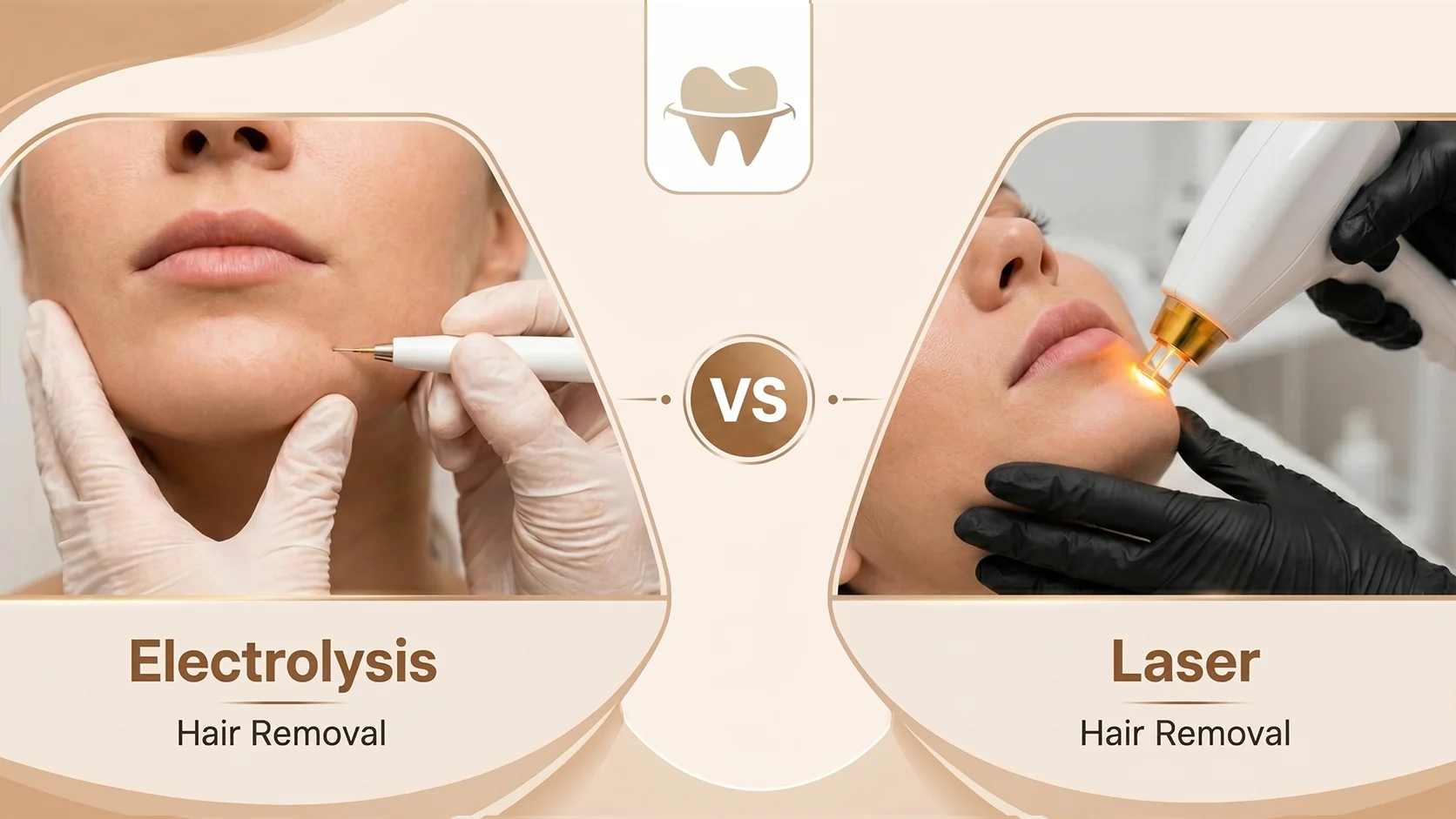
Electrolysis vs laser hair removal—which is right for you? Discover key differences, costs, effectiveness, and permanent results for facial and body hair.
Unwanted hair is frustrating—and temporary fixes like shaving and waxing don’t last. If you’re looking for a long-term solution, electrolysis and laser hair removal are the two leading options—but they work very differently
Understanding the difference between both is essential before investing your time and resources. The wrong choice can lead to disappointing results, wasted money, or even skin complications.
This comprehensive guide breaks down every aspect of electrolysis hair removal vs laser, helping you make an informed decision based on your unique hair color, skin tone, pain tolerance, budget, and goals.
What Is Electrolysis?
It is the only FDA-approved method for permanent hair removal. The procedure uses a fine, sterile probe inserted into each individual hair follicle. A small electrical current is delivered to destroy the hair’s growth center (the papilla). Once destroyed, that follicle cannot produce hair again.
Electrolysis works on all hair colors and skin types because it targets each follicle individually, independent of pigment. This makes it the only option for those with white, blonde, red, or gray hair—colors that laser cannot effectively treat.
Here is the additional point expanded within the “What Is Electrolysis?” section of the blog.
How Electrolysis Works Step by Step
Understanding the procedure helps alleviate anxiety and sets realistic expectations. A typical electrolysis session follows a precise, methodical process:
Step 1: Preparation
The treatment area is thoroughly cleansed to remove oils, makeup, or lotions. A sterile, single-use, ultra-fine probe (thinner than a human hair) is selected based on the hair thickness and follicle depth.
Step 2: Probe Insertion
A trained electrologist inserts the fine probe alongside the hair shaft directly into the hair follicle opening. No needles are used—the probe simply follows the natural pathway of the hair. Most patients feel nothing during insertion due to the probe’s microscopic size.
Step 3: Electrical Current Delivery
A controlled, low-level electrical current is delivered through the probe for just a few seconds. This current targets and destroys the follicle’s regenerative cells—specifically the papilla and germinative cells responsible for producing new hair. The current is calibrated precisely to the follicle depth and diameter.
Step 4: Hair Removal
The treated hair is gently grasped with sterile forceps and slid out with minimal resistance. If resistance is felt, the follicle may not have been fully destroyed, and the hair may require retreatment during a future session. A properly treated hair slips out effortlessly.
Step 5: Post-Treatment Care
The area may show slight redness or minor swelling, which typically subsides within a few hours. Patients are advised to avoid sun exposure, harsh skincare products, and makeup on treated areas for 24-48 hours.
This entire sequence takes only a few seconds per hair. Because each hair requires individual treatment, electrolysis demands patience—but delivers the only truly permanent results available.
What Is Laser Hair Removal?
Laser hair removal uses concentrated beams of light (laser energy) that target melanin (the pigment in hair). The light energy converts to heat, damaging the hair follicle and inhibiting future growth.
Unlike electrolysis, laser treats multiple hairs simultaneously. A single laser pulse can cover an area roughly the size of a coin, making it significantly faster for larger body areas like legs, backs, or chests.
However, does laser hair removal work on all hair types? No. Because laser targets melanin, it works best on dark hair and light skin. The contrast between hair pigment and skin pigment allows the laser to distinguish between the two. Advances in technology have made lasers safer for darker skin tones, but white, blonde, red, and gray hair remain challenging or impossible to treat.
Which is better: Electrolysis or Laser Hair Removal?
Electrolysis is best for permanent removal and all hair types. Laser is better for faster treatment of large areas with dark hair.
Key Differences Between Electrolysis and Laser Hair Removal
Understanding the difference between both treatments requires examining multiple factors. Below is a comprehensive comparison.
1. Permanence
Electrolysis: The only truly permanent hair removal method approved by the FDA. Once a follicle is destroyed, hair cannot regrow.
Laser: Clinically described as “permanent hair reduction,” not complete removal. Many patients experience significant, long-lasting reduction, but some hair may eventually regrow, often finer and lighter than before.
2. Treatment Speed
Electrolysis: Very slow. Each hair is treated individually. A small area like the upper lip may take 15-30 minutes per session. Larger areas require many sessions over months or years.
Laser: Fast. A full upper lip takes 1-2 minutes. Legs take 30-45 minutes. The ability to treat multiple follicles simultaneously makes laser practical for large areas.
3. Hair and Skin Compatibility
Electrolysis: Works on every hair color (white, blonde, red, gray, brown, black) and every skin tone (fair to dark). No restrictions.
Laser: Best results on dark hair and light skin. White, blonde, red, and gray hairs lack sufficient melanin for the laser to detect. Newer Nd:YAG lasers can treat darker skin tones safely, but very light or fine hair remains difficult.
4. Pain Level
Electrolysis: Described as a sharp, brief sting or heat sensation. Most patients tolerate it well, and numbing cream can be applied beforehand.
Laser: Often compared to a rubber band snapping against skin. Modern lasers include cooling mechanisms to reduce discomfort. Pain varies by area—more sensitive areas like the bikini line or face feel more intense.
5. Number of Sessions Required
Electrolysis: Requires multiple sessions because each hair follicle must be treated during its active growth phase (anagen). Hairs in dormant phases are not affected. Full treatment may require 15-30 sessions spaced weekly or bi-weekly.
Laser: Typically requires 6-8 sessions spaced 4-6 weeks apart. Maintenance sessions once or twice yearly may be needed to address regrowth.
6. Cost Comparison
Laser hair removal vs electrolysis cost comparison: Electrolysis is typically charged by time (per minute or hour). Laser is charged by area per session.
- Electrolysis: $50-$150 per session for small areas. Large areas cost significantly more due to time required.
- Laser: $100-$400 per session depending on area size. Packages reduce per-session cost.
Comparison Table
| Feature | Electrolysis | Laser Hair Removal |
| Permanence | FDA-approved for permanent hair removal. Destroyed follicles never regrow. | FDA-approved for permanent hair reduction. Some regrowth may occur, often finer and lighter. |
| Treatment Method | Inserts a fine probe into each individual hair follicle and delivers an electrical current. | Uses concentrated light energy (laser) to target melanin pigment in multiple hairs simultaneously. |
| Speed | Slow. Each hair is treated individually. Upper lip: 15-30 min per session. | Fast. Treats multiple hairs at once. Upper lip: 1-2 min per session. |
| Hair Color Compatibility | Works on ALL hair colors: white, blonde, red, gray, brown, and black. | Best on dark brown or black hair. Ineffective on white, blonde, red, and gray hair. |
| Skin Tone Compatibility | Works on ALL skin tones from fair to dark. No restrictions. | Best on light to medium skin. Newer lasers can treat darker skin but risk remains. |
| Pain Level | Sharp, brief sting or heat sensation per hair. Managed with numbing cream. | Rubber band snap sensation. Modern lasers include cooling devices for comfort. |
| Number of Sessions | 15-30 sessions typically needed. Sessions spaced weekly or bi-weekly. | 6-8 sessions typically needed. Sessions spaced 4-6 weeks apart. |
| Treatment Areas | Best for small areas: upper lip, chin, eyebrows, bikini line, areolas. | Best for large areas: legs, back, chest, arms, full bikini, full face. |
| Cost Structure | Charged by time (per minute or hour). $50-$150 per hour. | Charged by area per session. $50-$600 per session depending on body part. |
| Maintenance Required | None once all active follicles are treated. | Occasional touch-up sessions (1-2 times yearly) to maintain results. |
| Suitable Candidates | Anyone with unwanted hair regardless of color or skin tone. | Ideal for dark-haired, light-skinned individuals. Limited for light hair or dark skin. |
Over complete treatment, both methods are comparable in total investment. Electrolysis costs accumulate over many short sessions. Laser costs come in fewer, larger payments.
Electrolysis vs Laser for Facial Hair
Electrolysis facial hair removal is the gold standard for upper lip, chin, sideburns, and eyebrows. Why? The face has sensitive skin, fine hairs, and often lighter-colored hairs that lasers cannot target effectively.
For those seeking to remove facial hair permanently, electrolysis offers certainty. Each hair is destroyed individually, and once gone, it never returns. Laser may reduce facial hair but often leaves lighter, finer regrowth.
However, for individuals with very dark facial hair and light skin, laser can be highly effective and much faster. Upper lip laser sessions take only one to two minutes, compared to 15-30 minutes for electrolysis.
Remove Hair Permanently: Making Your Choice
How to remove hair permanently depends entirely on your hair color, skin tone, treatment area size, budget, and patience level.
Choose electrolysis if:
- You have white, blonde, red, or gray hair
- You have dark skin (though newer lasers work on darker tones)
- You want absolute permanence
- You need to treat small areas like eyebrows, upper lip, chin
- You are willing to commit to multiple sessions over time
Choose laser if:
- You have dark hair and light to medium skin
- You want to treat large areas like legs, back, arms, chest
- You prefer fewer, faster sessions
- You want significant reduction (not necessarily complete removal)
Consider combining both: Some patients use laser to clear large areas of dark hair, then electrolysis to remove any remaining lighter or resistant hairs. This hybrid approach maximizes efficiency and results.
Electrolysis Hair Removal Cost
Hair removal cost through this process varies by clinic, location, and treatment area.
- Per session (15-30 minutes): $30-$75
- Per hour: $70-$150
- Full treatment for upper lip: $200-$500 total
- Full treatment for chin: $300-$800 total
Most electrologists sell packages of multiple sessions at discounted rates. Because electrolysis requires many sessions, ask about package pricing before committing.
Laser Hair Removal Cost
Laser costs are typically per session per body area.
- Upper lip: $50-$150 per session
- Underarms: $75-$200 per session
- Bikini line: $100-$300 per session
- Lower legs: $150-$350 per session
- Full back: $300-$600 per session
Most patients need 6-8 sessions, so multiply these figures accordingly. Many clinics offer significant discounts for purchasing full treatment packages upfront.
Which Process Is More Painful?
Pain perception is subjective, but general consensus ranks electrolysis as slightly more uncomfortable due to the precision of each insertion. Laser pain is brief—each pulse lasts milliseconds—but can be intense in sensitive areas. Both are manageable with numbing cream and experienced practitioners.
Does Laser Hair Removal Work on All Skin Types?
Earlier lasers were unsafe for darker skin tones due to risk of burns, hyperpigmentation, or scarring. Today’s lasers can safely treat darker skin. However, the requirement for melanin remains—laser still struggles with light-colored hair regardless of skin tone.
Which Method Is Right for You?
The difference between both procedures ultimately comes down to individual factors. Book consultations with both an electrologist and a laser clinic. Ask to see before-and-after photos of patients with similar hair and skin to yours. Be wary of anyone promising absolute results without first assessing your unique characteristics.
At-Home Devices: Do They Work?
At-home laser and IPL devices exist but are significantly less powerful than professional equipment. They may reduce hair temporarily for some users but rarely achieve permanent results. Professional treatments remain far more effective and safer.
Conclusion
Choosing between electrolysis and laser hair removal requires honest self-assessment. Your hair color, skin tone, treatment area, budget, and permanence expectations all play roles.
Electrolysis destroys each follicle individually with electricity, slow but permanent and universal. Laser uses light to target multiple follicles simultaneously, fast but limited by hair color and skin tone contrast.
Neither is inherently better. The best method is the one that matches your specific situation.
So, laser or electrolysis? Let Teeth and Gums guide you. Call today.
Frequently Asked Questions
What is the difference between electrolysis and laser hair removal?
Electrolysis uses an electrical current to destroy each hair follicle individually, offering permanent removal for all hair colors and skin types. Laser uses light energy to target melanin, treating multiple hairs at once, but works best on dark hair and light skin.
Does laser hair removal work on all hair types?
No. Laser targets melanin, so it works best on dark brown or black hair. White, blonde, red, and gray hairs lack sufficient pigment for the laser to detect effectively. Electrolysis remains the only option for these hair colors.
How to remove hair permanently from the face?
Electrolysis facial hair removal is the only permanent solution for facial hair. Each hair is treated individually, and destroyed follicles never regrow. Laser may reduce facial hair but is not considered permanent removal.
What is the cost difference between laser and electrolysis?
Laser hair removal vs electrolysis cost comparison varies by area. Electrolysis is charged hourly ($50-$150/hour). Laser is charged per session per area ($50-$600). Total treatment costs are comparable, but laser requires fewer sessions while electrolysis requires more frequent, shorter visits.
How can I remove facial hair permanently at home?
No at-home method offers permanent facial hair removal. Professional electrolysis performed by a licensed electrologist is the only FDA-approved permanent solution. At-home devices may temporarily reduce hair but cannot destroy follicles permanently.

0 Comments