SUMMARY
- A 2025 peer-reviewed clinical study found 92% of braces patients achieved satisfactory alignment vs 84% of aligner patients — a gap that was not statistically significant for mild-to-moderate cases (Journal of Neonatal Surgery, 2025)
- Clear aligners finished treatment 1.7 months faster on average than braces in adult patients (PMC, 2025)
- Patient satisfaction scored significantly higher with aligners for aesthetics (8.7/10 vs 5.4/10) and comfort (8.2/10 vs 4.9/10), but treatment effectiveness was equal between both groups (Journal of Pharmacy and Bioallied Sciences, 2025)
- Only 70% of aligner patients adhered to the recommended 20–22 hours/day wear time — vs 100% compliance with fixed braces (Journal of Neonatal Surgery, 2025)
- In Pakistan, metal braces cost PKR 80,000–150,000 vs clear aligners at PKR 100,000–400,000, depending on brand and case complexity
- The global clear aligners market was valued at USD 8.29 billion in 2025 and is projected to reach USD 56.81 billion by 2033 (Grand View Research, 2026)
Every smile has a story — and sometimes, it needs a little help to become its most confident and healthy version.
Wanting straight teeth isn’t just about a beautiful smile; it’s about comfort, confidence, and long-term dental health. In fact, millions of people worldwide choose orthodontic treatment every year for a straightened smile arc.
In the world of orthodontics, two major treatments have dominated: traditional braces and clear aligners. With so many options and innovations in orthodontics today, choosing between clear aligners and traditional braces can feel overwhelming.
Recent clinical evidence shows that both clear aligners and teeth braces offer successful tooth movement and can create beautiful, functional smiles. But how do they compare? And when should you choose one over the other?
If you’re unsure where to begin, this article breaks down both treatments to help you understand which might suit you best.
What Are Teeth Straightening Treatments?
Before diving into the comparison, let’s clear up what each option is and what it does.
Clear Aligners: The Invisible Option
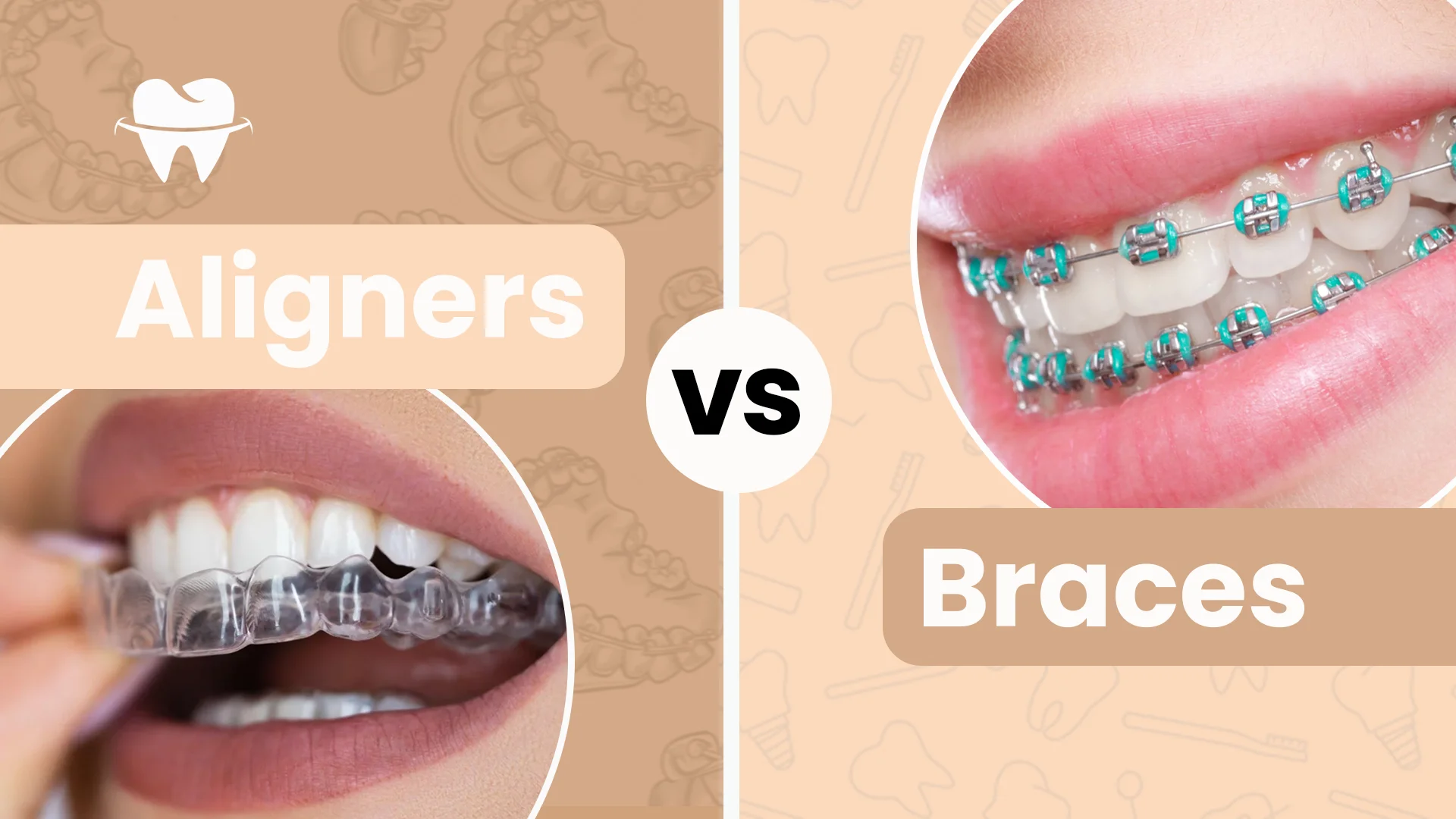
Clear aligners are custom-made, transparent plastic trays designed to fit snugly over your teeth. They apply gentle, controlled pressure to shift teeth into place over time. Most people replace these trays every one to two weeks as treatment progresses.
One of the key features of clear aligners is that they are removable. You can take them out to eat, drink, brush, and floss — making daily life feel less restricted than with braces.
Types of Aligners
- Clear aligners (e.g., Invisalign)
- In-house custom clear aligners
- At-home aligner systems
- Hybrid aligner systems (doctor-supervised)
Traditional Braces: Time-Tested and Strong
Braces have been used for decades and consist of brackets bonded to your teeth, connected by wires. These brackets and wires apply consistent pressure to guide your teeth into their proper positions. The aligners are always functional because they stay on your teeth until your orthodontist removes them.
Braces can be made of different materials, like metal or ceramic braces. While they are commonly seen primarily in teens, many adults now choose braces when their dental needs require powerful correction.
Types of Braces
- Metal braces
- Ceramic braces
- Lingual braces (behind the teeth)
- Self-ligating braces
Aligners vs Braces: Full Comparison Table
| Factor | Clear Aligners | Traditional Braces |
|---|---|---|
| Visibility | Nearly invisible | Noticeable (metal or ceramic) |
| Removability | Yes — remove to eat and clean | Fixed — cannot be removed |
| Compliance required | 20–22 hrs/day (patient-dependent) | 100% — no patient effort needed |
| Comfort | Smoother; less soft tissue irritation | Can irritate cheeks/gums after adjustments |
| Pain (first week) | Lower pain scores | Higher pain; 65% required pain relief vs 25% for aligners |
| Eating restrictions | None (remove trays before eating) | Avoid hard, sticky, and chewy foods |
| Oral hygiene | Easier — remove trays to brush/floss | Harder — requires special brushes around brackets |
| Gum health | Better periodontal outcomes | Higher gum inflammation risk (20% vs 5%) |
| Effectiveness — mild/moderate cases | Comparable to braces | Comparable to aligners |
| Effectiveness — complex cases | Limited — less torque/rotation control | Superior — more precise 3D control |
| Alignment success rate | 84% satisfactory (mild–moderate) | 92% satisfactory (all cases) |
| Average treatment time | 14.2 months (adult avg) | 16.2–18.4 months (adult avg) |
| Patient satisfaction (overall) | Higher (4.4/5) | Lower (3.6/5) |
| Treatment effectiveness score | 9.0/10 | 8.8/10 (no significant difference) |
| Pakistan cost range (PKR) | 100,000 – 400,000 | 80,000 – 250,000 |
| Insurance coverage in Pakistan | Rarely covered | Rarely covered |
| Best for | Mild–moderate cases; aesthetics-focused | Moderate–complex cases; reliability-focused |
Data sources: Journal of Neonatal Surgery (2025), PMC Comparative Study (2025), Journal of Pharmacy and Bioallied Sciences (2025)
Aligners vs Braces: Key Differences You Should Know
Let’s take a deeper dive into this orthodontic world so you can know better what to choose for your dental health.
1. How Do They Work?
Even though both treatments aim to move your teeth, they work in slightly different ways.
How Aligners Move Teeth
Clear aligners use a series of slightly different trays that apply gentle pressure to specific teeth. Every week or two, you switch to a new aligner that continues the process. Because they are removable, aligners rely on you wearing them for most of the day (usually about 20–22 hours).
How Braces Move Teeth
Braces use metal or ceramic brackets and wires that stay on your teeth all the time. Your orthodontist periodically tightens or adjusts the wire to continue the pressure, and this slowly guides teeth into place.
Both methods use controlled force to reposition teeth over time, but braces work continuously, whereas aligners work only when worn.
2. Everyday Comfort and Lifestyle
One of the first things people think about is how orthodontic treatment fits into daily life.
Comfort and Convenience
Clear Aligners:
Aligners are made from smooth plastic, so they generally cause less irritation to your gums and cheeks compared to braces. You can remove them for meals and brushing, making oral hygiene easier and more convenient.
Traditional Braces:
Braces can sometimes irritate soft tissues inside your mouth, especially right after adjustments. They are fixed, so you don’t worry about forgetting to wear them — but they can make cleaning your teeth more challenging.
Visibility and Appearance
A big consideration for many people, especially adults, is how treatment affects their appearance.
- Clear Aligners are nearly invisible when worn, which means you can smile confidently during treatment.
- Braces, even ceramic ones, are more noticeable. Some patients enjoy choosing fun colors for the bands, but others dislike the visible metal look.
3. Daily Habits: Eating and Oral Hygiene
Your eating habits and daily dental care are important parts of orthodontic life.
Removability Matters
- Clear aligners can be taken out for eating, which means no food restrictions. You can enjoy meals normally — just remember to brush before putting your aligners back in.
- Braces, on the other hand, come with a list of foods to avoid. Hard or sticky items like popcorn, nuts, or chewy sweets can damage brackets or wires.
Keeping Your Teeth Clean
- With aligners, you brush and floss just like normal because you remove the trays before cleaning.
- With braces, you need to clean around brackets and wires carefully to avoid plaque buildup. This often means special brushes and extra time.
4. Treatment Time: How Long Does It Take?
How long it takes to achieve your smile goals depends on your individual case — but here’s a general idea.
Clear Aligners:
Most aligner treatments take around 12–18 months, though in some easier cases, it can be shorter.
Traditional Braces:
Braces may take slightly longer, often 18–24 months or more, especially for complex cases.
Aligners may work faster in simpler cases, but braces are often more efficient at handling complicated movements.
5. Which Works Best: Comparing Effectiveness
The following is a brief effectiveness comparison of the aligners and the braces.
Mild to Moderate Misalignment
For mild to moderate dental issues — like minor crowding or spacing problems — clear aligners are highly effective and growing in popularity. They are comfortable and convenient to wear and take off. Many patients experience noticeable results within the first few months.
Complex Cases
When the problem is more severe — such as significant bite issues or complicated tooth rotations — traditional braces still have the edge. Because braces exert continuous and precise force, they are better suited for complex movements that require finer control.
Effectiveness in Real Life
Clinical research shows that both clear aligners and braces can successfully straighten teeth. Still, braces tend to perform better in achieving certain detailed tooth positions, especially when complex corrections are needed.
That said, aligners often achieve results faster in simpler cases and lead to high patient satisfaction due to comfort and visibility.
Cost Comparison: Pakistan 2026
Full Cost Breakdown by Treatment Type (Pakistan)
| Treatment Type | Cost Range (PKR) | What Affects Price |
|---|---|---|
| Metal braces | 80,000 – 250,000 | City, clinic, case complexity |
| Ceramic braces | 120,000 – 350,000 | Bracket brand, clinic infrastructure |
| Lingual braces | 200,000 – 500,000 | Specialist availability, lab costs |
| Self-ligating braces | 150,000 – 300,000 | Bracket system used |
| Local/in-house clear aligners | 100,000 – 250,000 | Number of trays, severity |
| ClearPath aligners (Pakistan-made) | 150,000 – 300,000 | Case complexity |
| Invisalign (international) | 300,000 – 600,000+ | Align Technology lab fees |
City-Wise Metal Braces Cost for Reference
| City | Average Cost (PKR) |
|---|---|
| Lahore | 90,000 – 200,000 |
| Karachi | 85,000 – 190,000 |
| Islamabad | 100,000 – 220,000 |
| Faisalabad | 70,000 – 150,000 |
| Multan | 65,000 – 130,000 |
Insurance note: Most Pakistani health insurance plans do not cover orthodontic treatment. Some corporate group schemes include partial benefits — check your policy before assuming you’ll be reimbursed.
Monthly cost perspective: A standard metal braces course in Lahore (PKR 120,000 over 20 months) works out to approximately PKR 6,000 per month. A local aligner treatment (PKR 200,000 over 14 months) is approximately PKR 14,300 per month. For budget-sensitive patients, braces deliver more treatment per rupee.
Choosing the Right Option for You
Choose Clear Aligners If
- Your case is mild to moderate — minor crowding, spacing, or mild bite issues
- Aesthetics matter significantly to you during treatment (working professionally, frequent public engagement)
- You have strong self-discipline and can genuinely commit to 20–22 hours of daily wear
- You want easier oral hygiene without working around brackets and wires
- You have good gum health and want to maintain it during treatment
- Adults with lifestyle preferences that make fixed braces inconvenient
Choose Traditional Braces If
- Your case is moderate to complex — significant crowding, bite correction, rotations, or skeletal issues
- You are not confident in your ability to wear aligners consistently for 20+ hours per day
- You want the most cost-effective fixed treatment option in Pakistan
- Complex movements are needed — torque control, vertical alignment, root positioning
- You are a teenager — compliance issues with aligners are more common in younger patients
- You need a reliable outcome with continuous force regardless of lifestyle variables
Quick-Decision Matrix
| Your Situation | Recommended Option |
|---|---|
| Mild spacing only | Either — discuss with orthodontist |
| Moderate crowding | Both viable — aligner compliance is key |
| Significant bite correction needed | Braces |
| Working professional, aesthetics priority | Clear aligners (if case is suitable) |
| Teenager | Braces (compliance advantage) |
| Budget is primary concern | Metal braces |
| Gum health concerns | Clear aligners |
| Unwilling to wear 20+ hrs/day | Braces only |
Summing Up
Both clear aligners and traditional braces are effective ways to straighten teeth and improve your smile. The right choice depends on your dental needs, lifestyle, and comfort preferences. Aligners offer flexibility and a discreet look, while braces provide strong, reliable results for complex cases. A professional orthodontic consultation is the best way to decide what works for you.
Are you looking for a dental clinic to get your orthodontic treatment? Head out to Teeth and Gums Dental Clinic in Lahore and experience quality treatment with comfort.
Frequently Asked Questions
Should you get aligners or braces?
Clear aligners work well if you have mild to moderate orthodontic issues, maintain excellent oral hygiene, and can commit to wearing them consistently. Traditional braces might be your best bet if you have complex bite problems, tend to lose things easily, or want the most cost-effective treatment option.
What is the success rate of aligners?
Success rates for clear aligners range from 80% to 96% for mild to moderate cases, while severe misalignments may need alternative options. Key factors affecting success include patient compliance, the dentist’s experience, case complexity, and advanced technology used in treatment planning.
Do aligners hurt more than braces?
Both cause mild discomfort; aligners feel smoother, while braces may irritate cheeks and gums after adjustments.