SUMMARY
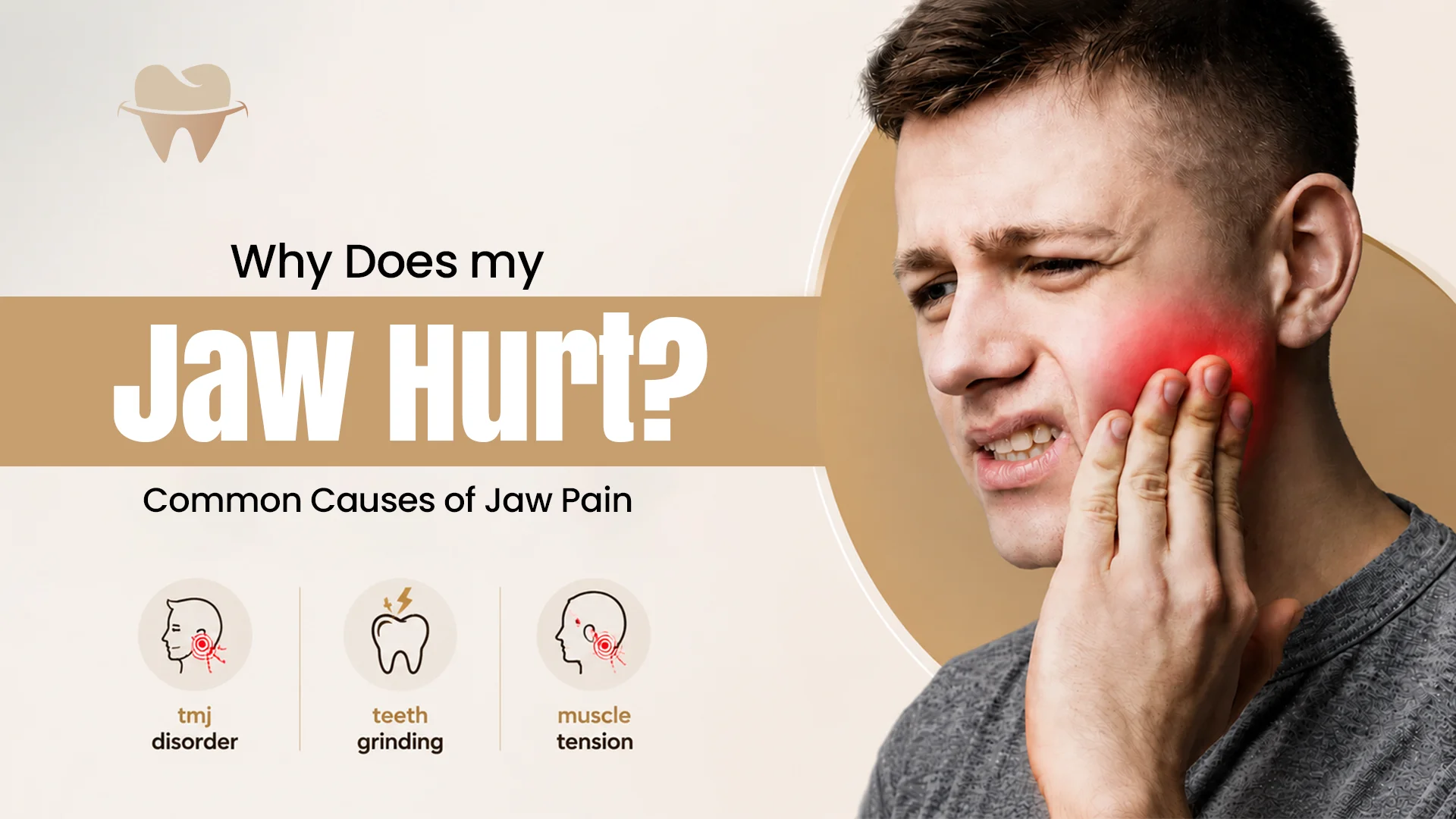
- Causes of jaw pain include TMJ disorders, teeth grinding, dental issues, arthritis, sinusitis, ear infections, jaw injuries, and stress.
- Jaw pain on the left side often involves chewing habits, uneven bite, or TMJ disorder affecting one joint.
- Ear and jaw pain commonly occur together due to the anatomical proximity and shared nerve pathways.
- Jaw pain on the right side near the ear typically indicates either right-sided TMJ disorder, an ear infection, a dental issue, or sinusitis.
- Lower jaw pain causes include impacted wisdom teeth, teeth grinding, and dental problems affecting the lower molars.
- Most jaw pain improves with self-care, but persistent pain, swelling, fever, or jaw lock require professional attention.
You wake up with a dull ache near your ear. Your jaw feels stiff when you try to open your mouth. Chewing your breakfast is uncomfortable. By midday, the pain has radiated to your temple, and you are left wondering: why does my jaw hurt?
Jaw pain is surprisingly common. It affects millions of people worldwide, yet many suffer in silence, unsure whether to see a doctor, a dentist, or wait for it to pass. The truth is that jaw pain can stem from various sources. Some simple and self-limiting, others requiring professional intervention. Understanding the causes of jaw pain is the first step toward relief.
This comprehensive guide explores the most common reasons for jaw discomfort, explains why pain sometimes appears on only one side, and helps you recognize when it is time to seek professional help.
Quick Definitions
| Term | Definition |
| Temporomandibular Joint (TMJ) | The hinge joint connecting your jawbone to your skull, located just in front of each ear |
| TMJ Disorder (TMD) | A condition affecting the jaw joint and surrounding muscles, causing pain and dysfunction |
| Bruxism | The habit of clenching or grinding teeth, often during sleep or times of stress |
| Referred Pain | Pain felt in one area of the body that originates from another location |
What Is the Temporomandibular Joint?
Before understanding why your jaw hurts, it helps to understand the joint itself. The temporomandibular joint (TMJ) acts like a sliding hinge, connecting your lower jaw (mandible) to your skull. There is one joint on each side of your face, located just in front of each ear.
The joint consists of:
- The temporal bone of the skull (the socket)
- The condyle of the lower jaw (the ball)
- A small shock-absorbing disc of cartilage that sits between them
- Surrounding ligaments and muscles that control jaw movement
- The joint contains lubricating fluid that reduces friction during movement. Inflammation or reduced fluid production can cause stiffness and pain.
This complex structure allows you to open and close your mouth, chew, speak, and yawn. When something goes wrong with any component; the joint, the disc, the muscles, or the ligaments, you experience jaw pain.
Jaw Pain Reasons: Common Causes
Jaw pain can stem from a wide range of sources. Some simple and self-limiting, others requiring professional intervention. Understanding the underlying cause is the first step toward effective treatment and lasting relief.
1. TMJ Disorders (TMD)
The most common reason to your jawbone spasm is TMJ disorder. Causes of this persistent ache related to TMD include:
- Disc displacement: The cartilage disc slips out of its normal position
- Muscle spasm: The muscles around the jaw tighten up, producing pain
- Arthritis: Osteoarthritis or rheumatoid arthritis damages the joint’s cartilage
- Joint injury: A blow or impact damages the joint structures
- Ligament Strain or Injury: This can lead to joint instability, pain, and a feeling of looseness in the jaw.
2. Teeth Grinding and Clenching (Bruxism)
Bruxism is one of the most common jaw pain reasons. When you grind or clench your teeth (often during sleep or times of stress) you overwork the jaw muscles. This overuse produces tightening and soreness, leading to:
- Morning jaw pain
- Headaches
- Tooth sensitivity
- Worn tooth enamel
- TMJ joint stress from grinding
3. Dental Problems
Dental issues frequently cause jaw pain. Common dental causes include:
- Tooth decay or abscess
- Impacted wisdom teeth
- Periodontal disease
- Ill-fitting crowns or fillings
- Bruxism-Related Tooth Damage
4. Arthritis
Arthritis can affect the TMJ just like any other joint in the body. Both osteoarthritis (wear-and-tear) and rheumatoid arthritis (autoimmune) can cause mandible pain, stiffness, and limited movement.
5. Sinusitis
Sinus infections frequently cause jaw pain, particularly in the upper jaw near the back teeth. The swelling and pressure from sinus inflammation can radiate to the jaw area.
6. Ear Infections
Ear infections can cause ear and jaw pain because of the close anatomical relationship between the ear and TMJ. Inflammation from an ear infection can spread to surrounding tissues, including those around the jaw joint.
7. Jaw Injuries
Trauma to the jaw (from accidents, falls, or sports injuries) can cause fractures, dislocations, or muscle strains, all of which make your jawbone hurt.
8. Stress and Anxiety
Stress is a significant contributing factor. Many people unconsciously clench their jaw or grind their teeth when stressed, leading to muscle tension and jaw pain.
9. Referred Pain from Other Conditions
Sometimes jaw pain originates from elsewhere in the body. Heart conditions (particularly angina or heart attack) can cause referred pain to the jaw, especially on the left side. Other conditions like trigeminal neuralgia, salivary gland infections, and even tumors can also make your mandible throb.
10. Habits and Lifestyle Factors
Certain habits put stress on the jaw joint and surrounding muscles:
- Gum chewing
- Nail biting
- Chewing ice or hard foods
- Holding objects between teeth
- Excessive Caffeine or Alcohol Consumption
Jaw Pain Reasons: Quick Reference
| Cause | Description | Common Symptoms |
| TMJ Disorders | Problems with the jaw joint, including disc displacement, arthritis, or joint injury | Pain near ear, clicking/popping sounds, limited mouth opening, pain when chewing |
| Teeth Grinding (Bruxism) | Clenching or grinding teeth, often during sleep or times of stress | Morning jaw pain, headaches, tooth sensitivity, worn tooth enamel |
| Dental Problems | Tooth decay, abscess, impacted wisdom teeth, gum disease, or ill-fitting restorations | Localized tooth pain, tenderness, swelling, pain when biting |
| Arthritis | Osteoarthritis or rheumatoid arthritis affecting the TMJ | Stiffness, pain, limited movement, joint tenderness |
| Sinusitis | Inflammation of the sinuses, causing pressure radiating to the upper jaw | Upper jaw pain, facial pressure, nasal congestion, headache |
| Ear Infections | Infection in the middle or inner ear causing referred pain to the jaw | Ear and jaw pain, fever, hearing changes, ear fullness |
| Jaw Injuries | Trauma from accidents, falls, or sports injuries causing fractures, dislocations, or muscle strains | Sudden pain, swelling, bruising, difficulty opening mouth |
| Stress and Anxiety | Unconscious muscle tension and clenching during stressful periods | Tight jaw muscles, headaches, sleep disruption |
| Habits and Lifestyle | Chewing gum, nail biting, chewing ice, or holding objects between teeth | Gradual onset of jaw fatigue, soreness, muscle tension |
| Referred Pain | Pain originating from other areas (heart conditions, trigeminal neuralgia, salivary gland infections) | Pain in jaw without clear dental or joint cause; left-side jaw pain may indicate cardiac issues |
Jaw Pain on the Left Side
Many people experience jaw pain on the left side. Reasons are specific to that side. Pain on one side is common with TMJ disorders because the two joints may not be equally affected.
Why Pain Occurs on One Side
Each TMJ operates independently, and one joint can be more inflamed, more misaligned, or more stressed than the other. Common jaw pain left side reasons include:
- Chewing preference: If you habitually chew on the left side, you place more stress on that joint
- Unbalanced bite: Misalignment can put uneven pressure on one side
- Sleep position: Sleeping on one side may compress that joint
- Localized injury: Trauma may affect only one side
- Uneven grinding: Teeth-grinding may be worse on one side
Conditions That Cause Unilateral Pain
The reasons behind pain on the left side may also include:
- Ear infection: Infections can affect one ear and radiate pain to the same-side jaw
- Sinusitis: Sinus inflammation is often one-sided
- Dental abscess: An infected tooth on the left side
- Trigeminal neuralgia: A nerve condition that affects one side of the face
- TMJ Disorder Affecting One Joint: The right and left temporomandibular joints operate independently, and one can become inflamed, misaligned, or stressed while the other remains unaffected.
Ear and Jaw Pain: The Connection
Ear and jaw pain frequently occur together because of the close anatomical relationship. The TMJ is located just in front of the ear, and the two structures share nerve pathways.
Why Ear and Jaw Pain Occur Together
The trigeminal nerve provides sensation to both the jaw joint and the ear area. When one structure is inflamed or irritated, the brain can interpret the pain as coming from the other, a phenomenon called “referred pain”.
Jaw Pain on the Right Side
When you experience jaw pain on the right side near ear, it often indicates TMJ disorder affecting the right joint. Other causes include:
- Ear infection on the right side
- Sinusitis affecting the right maxillary sinus
- Dental abscess in a right-side tooth
- Trauma to the right side of the jaw
- The distinction is important because treatment differs depending on the underlying cause.
If the pain is from an ear infection, antibiotics may be needed. If it is from TMJ disorder, you may need dental care, physical therapy, or lifestyle changes.
Lower Jaw Pain Causes
Lower jaw pain causes are like those affecting the upper jaw but may also involve specific conditions:
- Impacted wisdom teeth: Pain often localized to the lower back jaw
- Tooth grinding: Pressure concentrated on lower molars
- Oral cancer: Rare but serious cause of persistent pain
- Osteomyelitis: Bone infection affecting the mandible
- Dental Abscess or Infection: An infected tooth or abscess in the lower jaw can cause severe, throbbing pain that may radiate to the ear, neck, or temple, often accompanied by swelling and fever.
Jaw Pain Symptoms: What to Watch For
Jaw pain symptoms vary depending on the underlying cause. Common symptoms include:
| Symptom | What It Indicates |
| Pain or tenderness in the jaw | TMJ disorder, dental issue, or muscle strain |
| Clicking or popping sounds | Disc displacement in the TMJ |
| Limited mouth opening | Joint locking or muscle spasm |
| Pain when chewing | TMJ disorder or dental problem |
| Headache | Often associated with bruxism or TMJ disorder |
| Ear pain or fullness | TMJ disorder or ear infection |
| Neck or facial pain | Radiating pain from jaw |
| Tooth pain with jaw tenderness | Dental issue |
When Clicking Is Not a Concern
TMJ disorders can cause a clicking sound or grating sensation when you open or close your mouth. However, if there is no pain or limitation of movement, treatment is typically not needed. The clicking alone is not a reason for concern.
Jaw Pain Treatment Options
Treatment for jaw pain depends on the underlying cause, ranging from simple self-care at home to professional dental or medical intervention. Identifying the root cause ensures you receive the most effective and appropriate care for lasting relief.
Home Remedies and Self-Care
For mild jaw pain, these self-care strategies may help:
- Rest the jaw: Eat soft foods and avoid chewing gum
- Apply heat or cold: Warm compresses relax muscles; cold packs reduce swelling
- Stress management: Practice relaxation techniques
- Gentle jaw exercises: Open and close slowly to improve mobility
- Avoid extreme jaw movements: Yawn with support (hand under chin)
Professional Treatment
If home remedies do not work, professional jaw pain treatment may be necessary:
- Dental examination: Check for tooth grinding, misalignment, or dental issues
- Custom night guard: Protects teeth and reduces muscle strain
- Physical therapy: Strengthens jaw muscles and improves mobility
- Medications: Anti-inflammatory drugs, muscle relaxants, or pain relievers
- TMJ injections: Corticosteroid injections for inflammation
- Surgery: Reserved for severe, unresponsive cases
When to Seek Immediate Care
Seek urgent medical attention if you experience:
- Fever or swelling suggesting infection
- Pain following a jaw injury or trauma
- Inability to open or close your mouth (jaw lock)
- Severe, unbearable pain
- Numbness or tingling in the face
Final Thoughts
Jaw pain is never fun, but understanding the reason is the first step toward relief. Whether it’s a TMJ disorder, a dental problem, or an ear infection, identifying the root cause allows you to pursue the right treatment.
If your jaw pain persists for more than a few days, consult a dentist or doctor. They can conduct a thorough examination, often including X-rays, to determine the cause and recommend appropriate treatment.
Most cases of jaw pain resolve with conservative treatment and do not require surgery. With the right care, you can return to eating, speaking, and smiling without discomfort.
Experiencing persistent jaw pain near your ear or on one side of your face? At Teeth and Gums, we specialize in diagnosing and treating TMJ disorders and other causes of jaw pain.
Schedule your jaw pain consultation with us and take the first step toward lasting relief.
Frequently Asked Questions
What are the most common jaw pain reasons?
The most common jaw pain reasons include TMJ disorders, teeth grinding (bruxism), dental problems, arthritis, sinusitis, ear infections, and jaw injuries. Stress and anxiety often contribute by causing muscle tension.
Why do I have jaw pain left side only?
Jaw pain left side reasons include chewing predominantly on that side, an uneven bite favoring one side, TMJ disorder affecting only the left joint, left-side sinusitis, left ear infection, or a dental abscess in a left-side tooth.
What causes ear and jaw pain together?
Ear and jaw pain occur together because the TMJ is located just in front of the ear and shares nerve pathways with the ear. TMJ disorders, ear infections, and arthritis can all cause pain in both areas.
What should I do for jaw pain right side near ear?
Jaw pain right side near ear may indicate right-sided TMJ disorder, right ear infection, or right-side sinusitis. Try warm compresses, soft foods, and over-the-counter pain relief. If pain persists beyond a few days, consult a dentist or doctor.
What are lower jaw pain causes?
Lower jaw pain causes include impacted wisdom teeth, teeth grinding, dental infections or abscesses, TMJ disorders affecting the lower joint, and, rarely, osteomyelitis (bone infection) or oral cancer.
How can I stop jaw pain from teeth grinding?
Use a custom-fitted night guard to protect your teeth and reduce muscle strain. Practice stress management techniques, avoid caffeine before bed, and consult your dentist for personalized treatment options.
When should I see a doctor or dentist for jaw pain?
See a professional if jaw pain persists for more than a few days, if you have fever or swelling, if pain follows an injury, if you cannot open or close your mouth, or if pain is severe and not relieved by home care.