Summary
- Smile solutions cover a wide range of cosmetic and restorative dental treatments; from whitening and veneers to implants and full smile makeovers.
- The right treatment depends on the specific concern: colour, shape, alignment, missing teeth, or structural damage.
- Costs in Lahore are significantly lower than equivalent treatments in the UK, UAE, or the US.
- Snap-on smiles offer a non-invasive, reversible option for patients not yet ready for permanent treatment.
- A proper smile assessment always comes before treatment; the best smile dental clinic will never skip this step.
- Smile solution results are long-lasting when the correct treatment is matched to the correct case.
A small, stinging sore appears inside your cheek or on your tongue, seemingly out of nowhere, and suddenly every meal is uncomfortable. Mouth ulcers are one of the most common oral health complaints, affecting most people at some point, and while they are rarely serious, the pain is completely out of proportion to their size.
This guide covers what causes mouth ulcers, the different types, how to treat them, and how to reduce how often they come back.
Quick answer: A mouth ulcer is a small, painful, non-contagious sore inside the mouth, usually caused by minor injury, stress, acidic or spicy foods, or a nutritional deficiency. Most minor ulcers heal on their own within 7 to 14 days. A saltwater rinse and an over-the-counter oral gel usually give the fastest relief. See a dentist if a sore lasts more than two weeks, is unusually large, or keeps coming back.
What Is a Mouth Ulcer?
A mouth ulcer is an open sore that forms when the mucous membrane lining the inside of the mouth breaks down. The tissue beneath becomes exposed, inflamed, and painful.
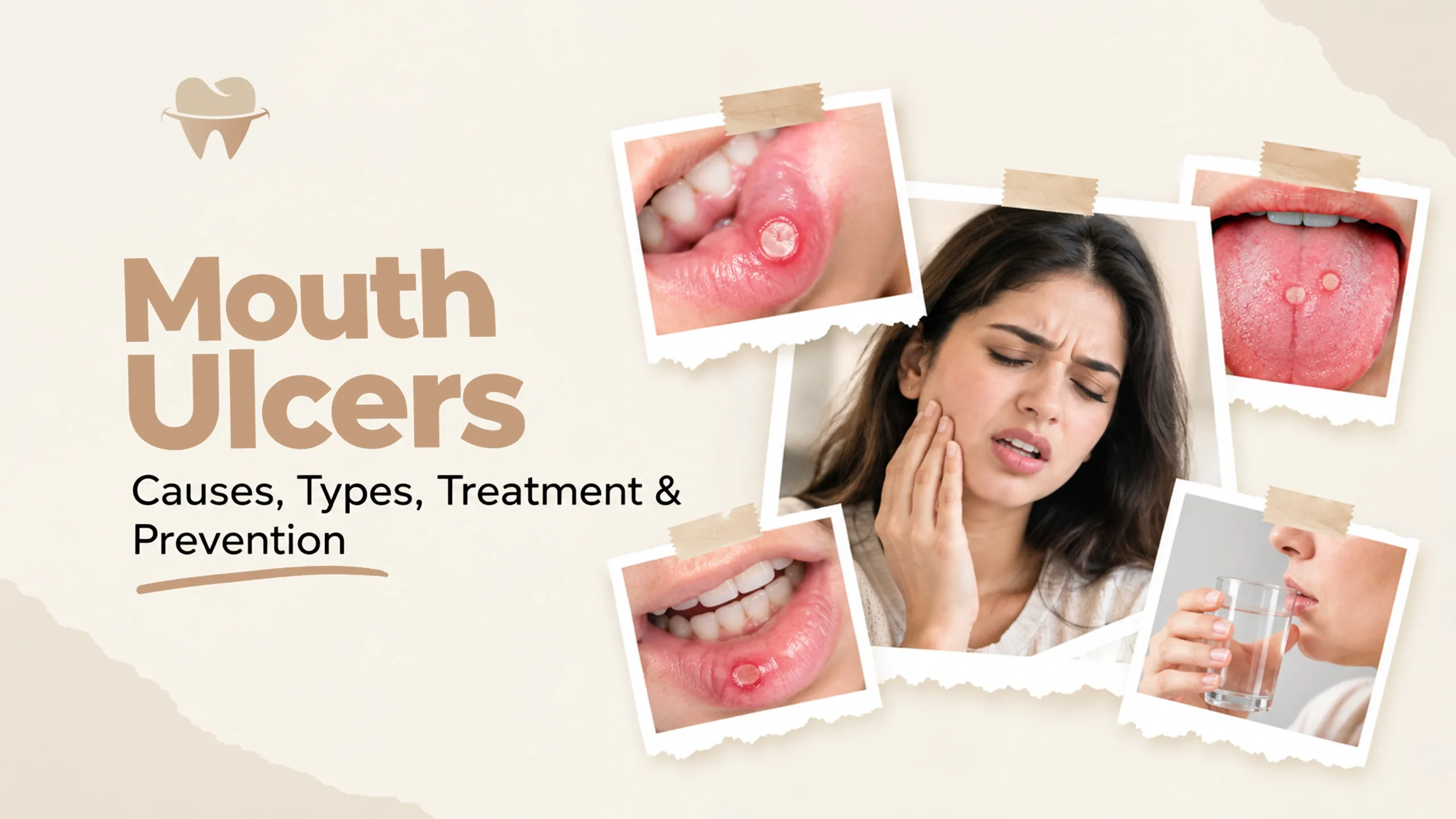
The sore is typically round or oval. It has a grey or yellowish centre and a clearly defined red border. It can appear on the inner cheeks, the inner lips, the tongue, the gums, or the floor of the mouth.
An oral ulcer is not the same as a cold sore. Cold sores appear on the outside of the lips and are caused by the herpes simplex virus. Mouth ulcers form inside the oral cavity and are not contagious.
At least one in five people develops a mouth ulcer at some point in their lives, with women being affected more frequently than men. Some people experience them only once or twice. Others have them repeatedly, a condition known as recurrent aphthous stomatitis.
Types of Mouth Ulcers
Not every mouth ulcer is the same. They are generally grouped into three types based on size and severity.
| Type | Size | Healing time | Scarring |
|---|---|---|---|
| Minor ulcers | Under 1 cm | 7 to 14 days | None |
| Major ulcers | Over 1 cm, deeper | Up to 6 weeks | Possible |
| Herpetiform ulcers | Tiny, in clusters | 7 to 14 days | None |
Minor Aphthous Ulcers
This is the most common type of mouth ulcer. Minor aphthae heal without scarring within seven to ten days, with or without treatment. They are typically small, under one centimetre in diameter, and appear singly or in small clusters. They are painful but manageable.
Major Aphthous Ulcers
These are larger and deeper. They take longer to heal, sometimes several weeks, and may leave a small scar. They are less common but significantly more painful and disruptive.
Herpetiform Ulcers
Despite the name, these are not caused by the herpes virus. They appear as clusters of many tiny ulcers. Sometimes, ten to a hundred at once, that can merge into larger irregular sores. Herpetiform ulcers occur only on the lining mucosa of the mouth. They are the least common of the three types.
Traumatic Ulcers
These result from a specific physical injury, a bitten cheek, a sharp tooth edge, an ill-fitting denture, a toothbrush slip. They are not aphthous ulcers. They usually heal at a moderate speed if the source of the injury is removed. For example, if poorly fitting dentures are removed or replaced.
Ulcers Associated with Systemic Conditions
Some oral ulcers are symptoms of broader health conditions. Mouth ulcers are associated with conditions including gingivostomatitis, herpes simplex, leukoplakia, oral cancer, oral lichen planus, and oral thrush. These require diagnosis and management beyond standard ulcer treatment.
Reasons for Mouth Ulcer: What Causes Them
The exact cause is not always clear, but several triggers are well established.
| Trigger | How it contributes |
|---|---|
| Minor mouth injury | Accidentally biting the cheek, aggressive brushing, or a sharp edge on a filling, brace, or denture |
| Acidic or spicy foods | Citrus fruits, tomatoes, and spicy dishes are frequently reported triggers |
| Nutritional deficiency | Low vitamin B12, iron, or folic acid is linked to more frequent ulcers |
| Stress and lack of sleep | Can weaken the immune response and trigger outbreaks |
| Hormonal changes | Some people notice more ulcers around their menstrual cycle |
| Toothpaste ingredients | Sodium lauryl sulphate (SLS) is linked to more frequent ulcers in some people |
| Family history | A genetic tendency toward recurrent ulcers is common |
Minor Physical Trauma
Trauma to the mouth is a common cause of oral ulcers. A sharp edge of a tooth, accidental biting, particularly common with sharp canine teeth, sharp or abrasive food, poorly fitting dentures, dental braces, or trauma from a toothbrush can all produce a mouth sore.
This is the most straightforward category. Remove the source of injury and the ulcer heals. Leave it in place and it often persists or worsens.
Stress and Anxiety
Psychological stress is consistently linked with aphthous ulcer outbreaks. The mechanism involves the immune system; stress suppresses normal immune regulation, which may trigger an inflammatory response in the oral mucosa. Many patients notice they develop ulcers during exams, work pressure, or major life changes.
Nutritional Deficiencies
Blood tests are taken by a GP or hospital clinician to see if the patient is deficient in iron, vitamins B12 and folate. Low levels of these vitamins and minerals may make ulcers worse.
Lacking certain vitamins such as vitamin B12 and folic acid, and minerals such as iron, are established risk factors for mouth ulcers. Addressing these deficiencies often reduces recurrence significantly.
Hormonal Changes
Hormonal changes during menopause, puberty, and pregnancy may trigger mouth ulcers. Some women notice a clear cyclical pattern, with ulcers appearing in the days before menstruation and resolving afterwards.
Certain Medications
Medications such as pain killers and beta-blockers have been associated with mouth ulcer development. If a new ulcer pattern coincides with starting a medication, a pharmacist or doctor should be consulted.
Notably, sodium lauryl sulfate (SLS), one of the main ingredients in most toothpastes, has been implicated in increased incidence of oral ulcers. Switching to an SLS-free toothpaste is worth trying for patients with frequent recurrences.
Immune System Response
Recurring ulcers are thought to occur due to the body’s own immune response. The immune system mistakenly attacks the cells of the oral mucosa, causing the tissue to break down. This is why aphthous ulcers are not contagious, they are not caused by an external pathogen.
Underlying Medical Conditions
Conditions like Crohn’s disease or coeliac disease, or iron or vitamin B12 deficiency, may trigger ulcers to form. Recurrent oral ulcers can be the presenting symptom of an underlying gastrointestinal or autoimmune condition that has not yet been diagnosed.
Oral Infections
A mouth infection, whether viral, bacterial, or fungal, can produce ulceration as part of its presentation. Viral, bacterial, fungal, and protozoal processes can all lead to oral ulceration. Oral thrush (candidiasis), hand-foot-and-mouth disease, and herpetic gingivostomatitis are among the more common infective causes.
Tobacco Use
Tobacco chewing is a significant risk factor not only for ulcers but for more serious oral pathology. Tobacco chewing predisposes to oral cancer, and oral cancer may present as a non-healing ulcer.
Mouth Ulcer Symptoms: What to Look For
Most mouth sores are self-evident. But knowing which symptoms matter helps patients understand when to treat at home and when to seek professional assessment.
Typical symptoms of a benign mouth ulcer:
- A round or oval sore with a grey or yellowish centre
- A red, clearly defined border
- Pain or tenderness at the site, often worse when eating, drinking, or talking
- A burning or tingling sensation that begins one to two days before the ulcer appears
- Mild swelling of the surrounding tissue
Symptoms that require professional assessment:
- An ulcer that has not healed after three weeks
- An ulcer that is growing in size
- Ulcers that are unusually large, deep, or bleeding
- Difficulty swallowing or opening the mouth
- Weight loss alongside recurring ulcers
- Ulcers accompanied by skin rashes, joint pain, or eye symptoms
- A painless ulcer, pain is a reassuring sign; a painless mouth sore is more concerning
A painless, non-healing ulcer in the mouth should always be assessed by a dentist. Oral cancer can present this way, and early detection significantly improves outcomes.
Mouth Ulcer Treatment
At the Clinic
The goal of treatment is to relieve symptoms. The cause, if known, should be treated. Gentle, thorough oral hygiene may relieve some of the symptoms.
Professional treatment options include:
Topical corticosteroids. Applied directly to the ulcer, these reduce inflammation and speed healing. They are the most effective clinical treatment for aphthous ulcers. Available as gels, pastes, and mouthwashes.
Topical anaesthetics. Lignocaine gel or spray reduces pain at the ulcer site. It does not speed healing but makes eating and talking significantly more comfortable.
Antiseptic mouthwashes. Chlorhexidine gluconate mouthwash reduces the bacterial load around the ulcer and helps prevent secondary infection. It does not cure the ulcer but reduces pain and supports healing.
Cauterisation. For persistent or particularly painful ulcers, a dentist may use a chemical agent or soft tissue laser to cauterise the sore. This destroys the nerve endings at the site, providing immediate pain relief, and encourages faster tissue healing.
Systemic treatment. For severe or very frequent recurrences, systemic medication, including oral steroids or specialist immunosuppressants, may be prescribed after investigation.
Mouth Ulcer Medicines: What Is Available
Several mouth ulcer medicines are widely used and clinically supported:
Benzydamine hydrochloride (Difflam): An anti-inflammatory mouthwash or spray that reduces pain and inflammation. Particularly useful for larger or multiple ulcers.
Chlorhexidine mouthwash: Reduces bacterial colonisation around the ulcer. Available over the counter in most pharmacies in Pakistan.
Hydrocortisone buccal tablets: Dissolved against the ulcer, these deliver a corticosteroid directly to the site. Most effective when started at the first sign of an ulcer developing.
Triamcinolone dental paste: A corticosteroid paste applied topically to the ulcer surface. Provides a protective coating while reducing inflammation.
Lignocaine gel: A topical anaesthetic for immediate pain relief. Particularly helpful before meals.
Vitamin B12, iron, and folate supplements: Indicated where blood tests confirm a deficiency. Correcting the deficiency reduces recurrence in deficient patients.
In Pakistan, most of these medicines are available without prescription at pharmacies. However, if ulcers are recurring frequently or not responding to over-the-counter options, a dental or medical assessment is the appropriate next step.
Mouth Ulcer Home Treatment: What Helps
For minor, uncomplicated ulcers, mouth ulcer home treatment is often sufficient. Several evidence-informed approaches reduce pain and support healing.
Saltwater Rinse
Dissolve half a teaspoon of table salt in a glass of warm water. Rinse for thirty seconds and spit. Repeat three to four times daily. Salt draws fluid from the inflamed tissue, reduces swelling, and creates a mildly hostile environment for bacteria. It stings initially, that is normal.
Honey
Medical-grade honey has documented antibacterial and anti-inflammatory properties. Apply a small amount directly to the ulcer using a clean fingertip or cotton bud. Leave it in place for as long as possible. Repeat two to three times daily.
Coconut Oil
Coconut oil contains lauric acid, which has antimicrobial properties. Apply a small amount to the ulcer surface. It also forms a mild barrier over the sore, reducing irritation from food and drink.
Aloe Vera Gel
Pure aloe vera gel, not the cosmetic variety containing alcohol, can be applied directly to the ulcer. It has soothing and anti-inflammatory properties and is well-tolerated by most patients.
Turmeric Paste
Mix a small amount of turmeric with water to form a paste. Apply to the ulcer for a few minutes, then rinse. Curcumin, the active compound in turmeric, has anti-inflammatory properties that are well-documented, including some small studies on oral ulcers.
Ice
Holding a small piece of ice against the ulcer reduces blood flow to the area and numbs the nerve endings temporarily. It does not speed healing but provides quick, accessible pain relief.
Avoiding Irritants
Remove foods and drinks that make the ulcer worse. Citrus fruits, spicy food, crisps, and very hot drinks all aggravate inflamed mucosa. This is not a treatment, but avoiding irritants reduces pain and gives the tissue the best environment to heal.
Curing Mouth Ulcers Fast Naturally
This is the most common search patients make. The honest answer is that no natural treatment closes a mouth ulcer overnight. Healing takes time because tissue regeneration is a biological process that cannot be bypassed.
What natural treatments can do, and do effectively, is reduce pain, reduce inflammation, keep the site clean, and support the conditions in which healing happens faster.
The fastest natural approach combines:
- Saltwater rinse: three times daily
- Honey or aloe vera: applied directly to the ulcer after each rinse
- Avoiding all known irritants: citrus, spice, hot drinks, crisps
- Adequate rest and hydration: stress and dehydration slow healing
- Vitamin B12 and iron: especially if deficiency is suspected
Minor aphthous ulcers following this approach typically resolve within five to seven days. Without it, the same ulcer may take ten days or longer.
Mouth Ulcer vs Cold Sore: What Is the Difference?
These two are often confused but are not the same condition.
| Feature | Mouth ulcer | Cold sore |
|---|---|---|
| Location | Inside the mouth | Usually outside, on or around the lips |
| Cause | Injury, stress, diet, or deficiency | Herpes simplex virus (HSV-1) |
| Appearance | Shallow sore, white or yellow centre | Fluid-filled blisters that crust over |
| Contagious | No | Yes |
When to See a Dentist
Most mouth ulcers heal without any treatment and do not need a dental visit. See a dentist for mouth ulcer treatment if a sore lasts longer than two to three weeks, is unusually large or keeps spreading, is extremely painful or stops you eating and drinking properly, comes with a fever or swollen glands, or if you are getting ulcers more than two or three times a year. Persistent or unusual ulcers occasionally point to an underlying condition that needs proper diagnosis.
Conclusion
Mouth ulcers are common, usually harmless, and typically resolve on their own within two weeks. Understanding what triggers yours, whether it is injury, diet, stress, or a nutritional gap, makes it much easier to reduce how often they appear.
Simple home care is often enough, but a sore that will not heal, keeps returning, or comes with other symptoms is worth having checked. This article is for general education and is not a substitute for a dental examination.
Dealing with a mouth ulcer that will not heal?
At Teeth and Gums, we can identify the cause of persistent mouth ulcers and recommend the right treatment.
Frequently Asked Questions
What are mouth ulcers?
Mouth ulcers are open sores that form inside the mouth when the mucous membrane lining breaks down. They are typically round or oval with a greyish-yellow centre and a red border. They can appear on the cheeks, tongue, gums, or inner lips. Most are harmless and heal within seven to ten days.
Are mouth ulcers contagious?
No. Aphthous mouth ulcers, the most common type, are not caused by a virus or bacteria and cannot be passed from one person to another. Cold sores on the outer lips are caused by the herpes simplex virus and are contagious. The two are different conditions.
What are the most common reasons for mouth ulcer?
The most common reasons include minor trauma such as biting the cheek, stress, iron or vitamin B12 deficiency, hormonal changes, certain medications, and an immune response in the oral mucosa. Sodium lauryl sulfate in toothpaste has also been linked to increased frequency in susceptible individuals.
How long do mouth ulcers last?
Minor aphthous ulcers typically heal within seven to ten days. Major ulcers take two to six weeks. Traumatic ulcers heal faster once the source of injury is removed. An ulcer lasting more than three weeks without healing needs professional assessment.
What is the best mouth ulcer treatment?
For minor ulcers, topical corticosteroid gel or paste is the most clinically effective treatment. Chlorhexidine mouthwash reduces secondary infection. Topical anaesthetic gel provides pain relief. At home, saltwater rinses, honey, and avoiding irritants support faster healing. Persistent or severe ulcers require professional evaluation.
How do you get rid of a mouth ulcer quickly?
Use saltwater rinses, apply oral ulcer gel, try honey, and avoid trigger foods. Prescription treatments from a dentist can speed healing for severe cases.
Which mouth ulcer medicines are most effective?
Hydrocortisone buccal tablets, triamcinolone dental paste, benzydamine mouthwash, and chlorhexidine rinse are the most used and well-evidenced options. Vitamin B12 and iron supplements help patients with confirmed deficiencies. Most are available over the counter in Pakistan without a prescription.
How do you cure mouth ulcers fast naturally?
No natural method heals an ulcer overnight. The fastest natural approach combines saltwater rinses three times daily, direct application of honey or aloe vera gel, strict avoidance of acidic and spicy foods, and adequate rest. Minor ulcers managed this way typically resolve in five to seven days.
Is a mouth ulcer a sign of a mouth infection?
Not always. Most mouth ulcers are aphthous; caused by immune response, trauma, or deficiency, not infection. However, a mouth infection caused by viral, bacterial, or fungal pathogens can produce ulceration. If ulcers are accompanied by fever, swelling, discharge, or spreading redness, a dental or medical assessment is needed promptly.
How long does a mouth ulcer take to heal?
Minor mouth ulcers typically heal within 7 to 14 days. Major ulcers can take several weeks to heal.
When should I see a dentist for a mouth ulcer?
See a dentist if the ulcer has not healed in three weeks, if it is large, growing, or painless, if you get them frequently, if they are accompanied by other symptoms, or if you use tobacco products. Do not self-treat a persistent or unusual ulcer — some oral conditions that present as ulcers require early diagnosis.
Can stress cause mouth ulcers?
Yes. Psychological stress is a well-recognised trigger for aphthous ulcer outbreaks. Stress suppresses normal immune regulation, which may provoke an inflammatory response in the oral mucosa. Many patients notice a clear pattern between periods of high stress and ulcer frequency. Managing stress consistently reduces recurrence in stress-triggered cases.
Why do I keep getting mouth ulcers?
Recurring mouth ulcers may be triggered by genetics, stress, nutritional deficiencies, food sensitivities, or underlying conditions like celiac disease or Crohn’s disease.
What foods should I avoid with a mouth ulcer?
Avoid acidic foods (citrus, tomatoes), spicy foods, salty snacks, coffee, chocolate, and nuts, as these can irritate the ulcer and delay healing.
Is a mouth ulcer that does not heal a concern?
Yes. A mouth ulcer that does not heal within two weeks should be evaluated by a dentist to rule out more serious conditions, including oral cancer.