You are enjoying your favourite meal when suddenly a sharp, stinging pain stops you mid-bite. You know the feeling instantly. A small, shallow ulcer has appeared inside your mouth, and now eating, drinking, and even talking have become uncomfortable.
This is a canker sore, one of the most common mouth sore conditions, affecting up to 20% of the population at some point in their lives. While these painful mouth ulcers are not dangerous, they can be incredibly bothersome and interfere with your daily life. The good news is that most canker sores heal on their own within one to two weeks, though the pain can make those days feel much longer.
This guide explains everything you need to know about canker sores: what they are, why they happen, how to treat them, and when to see a dentist.
Quick answer: A canker sore is a small, painful, non-contagious ulcer inside the mouth with a white or yellow centre and a red border. Most minor canker sores heal on their own in 7 to 14 days. A saltwater rinse and an over-the-counter oral ulcer gel are usually enough for relief. See a dentist if a sore lasts more than two weeks, is larger than 1 cm, or keeps recurring.
What Is a Canker Sore?
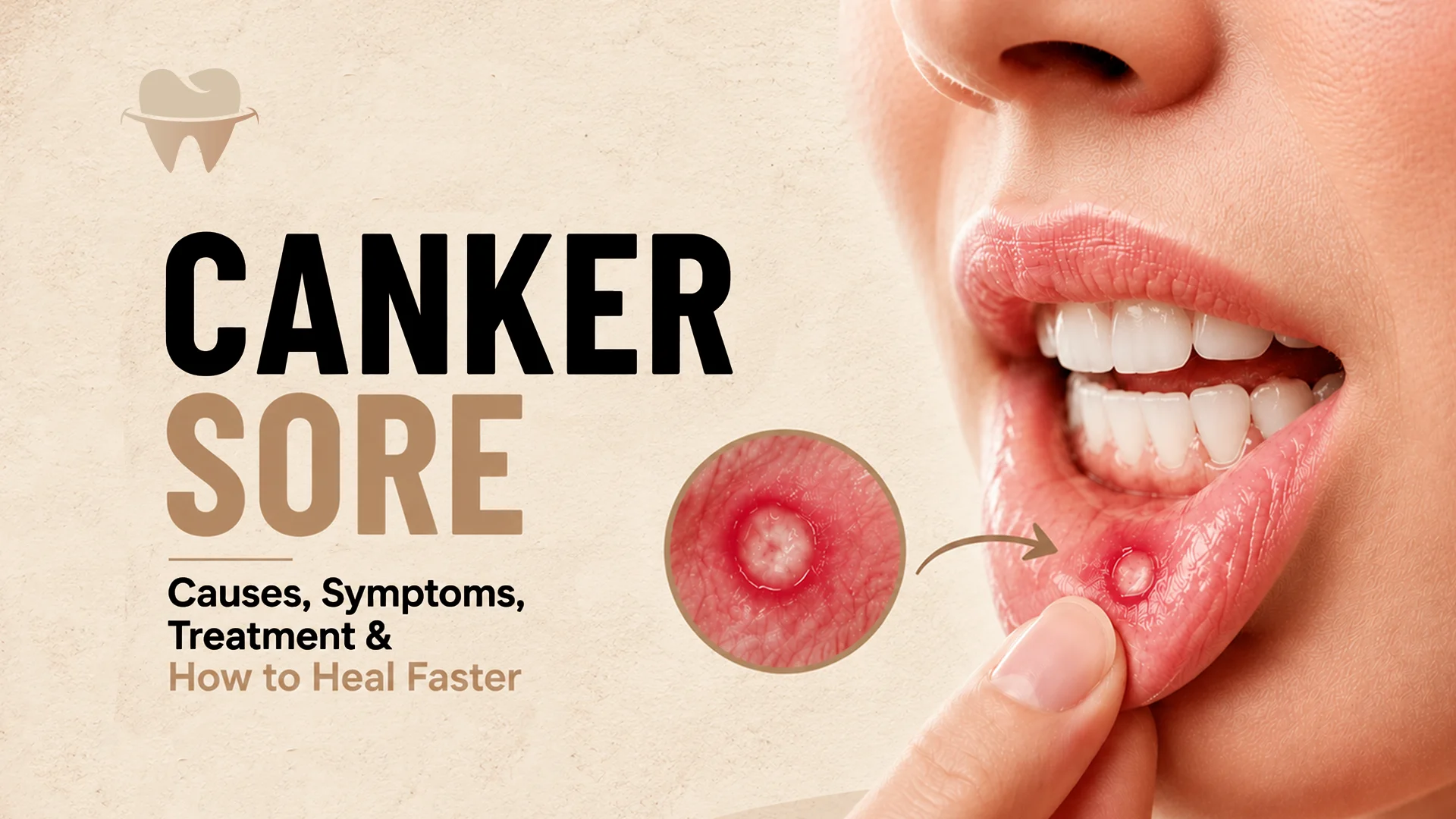
A canker sore, medically known as an aphthous ulcer, is a small, shallow open sore that develops inside the mouth. These sores are not contagious and typically appear on the inner surface of the cheeks, lips, tongue, soft palate, or at the base of the gums.
Key characteristics of canker sores include a round or oval shape, a white or yellow centre with a red border, a small size (usually under 1 cm across), and pain, especially when eating, drinking, or speaking. Some people notice a tingling or burning sensation shortly before the sore appears, which can help you start treatment early.
Why Do I Get Canker Sores So Often?
For some people, recurrent canker sores, clinically known as recurrent aphthous stomatitis (RAS), are a chronic condition. Most people who get recurrent canker sores experience two to three outbreaks a year, typically starting by the time they are 30 years old.
Types of Canker Sores
Not all canker sores are the same. They are classified into three types based on size and severity.
| Type | Size | Healing time | Scarring |
|---|---|---|---|
| Minor canker sores | Less than 1 cm | 7 to 10 days | None |
| Major canker sores | Larger than 1 cm | Up to 6 weeks | Possible |
| Herpetiform canker sores | Tiny, multiple clusters | 7 to 10 days | None |
Minor canker sores are the most common type: small, shallow, and usually heal without scarring. Major canker sores are larger, deeper, and more painful, and can take significantly longer to heal and may leave a scar. Herpetiform canker sores, despite the name, are not caused by the herpes virus. They appear as clusters of tiny sores that can merge into a larger, irregular ulcer, and are much less common.
Canker Sore Causes
The exact cause of canker sores remains unknown, but several triggers are known to contribute to their development.
| Trigger category | Specific causes |
|---|---|
| Mouth injuries | Accidental cheek biting, poorly fitting dentures or braces, vigorous brushing |
| Food sensitivities | Acidic foods (citrus fruits, tomatoes), spicy foods, chocolate, coffee |
| Nutritional deficiencies | Low levels of vitamin B12, iron, folic acid, or zinc |
| Stress | Emotional or physical stress can trigger outbreaks |
| Hormonal changes | Menstrual cycles can increase susceptibility |
| Certain medications | NSAIDs (ibuprofen), beta-blockers |
| Genetics | Family history of recurrent canker sores |
What Causes Canker Sores? A Closer Look
Research points to a combination of factors. The immune system may overreact to a minor mouth injury, triggering inflammation and ulcer formation.
Nutritional deficiencies in vitamin B12, iron, folic acid, or zinc can increase susceptibility, which is why a balanced diet matters for prevention. Food sensitivities to acidic and spicy foods, such as citrus fruits, tomatoes, coffee, chocolate, and nuts, are frequently reported triggers.
Stress weakens the immune system, making outbreaks more likely, and mouth injury from accidentally biting your cheek or lip, poorly fitting braces, or aggressive brushing can also cause sores.
Many women notice more canker sores during their menstrual cycle due to hormonal changes, and a family history of recurrent canker sores, genetics, increases the likelihood of developing them.
Canker Sore Symptoms
Canker sores typically follow a predictable pattern, so recognising the symptoms early can help you start treatment sooner.
Early signs: a tingling or burning sensation in the affected area, followed by a small red bump or spot.
Active stage: the sore develops into a shallow ulcer with a white, yellow, or grey centre and a bright red, inflamed border. Pain is at its peak, especially when eating or drinking.
Less common symptoms: in some cases, especially with major canker sores, you may also experience fever, swollen lymph nodes, or general discomfort.
Are Canker Sores Genetic?
Yes, canker sores tend to run in families. If your parents or siblings frequently get recurring canker sores, you are more likely to experience them too.
How Long Does a Canker Sore Last?
The duration depends on the type. Minor canker sores typically heal within 7 to 14 days, while major canker sores can take several weeks, up to six weeks, to heal. The pain often eases within 7 to 10 days, even if the sore takes longer to fully close.
The healing process generally follows this pattern: on days 1 to 2 a small sore appears and grows into an ulcer; by days 3 to 4 it reaches full size and pain peaks; and across days 5 to 14 the body heals the sore and pain subsides.
Canker Sore Treatment
There is no cure for canker sores, but several treatments can help them heal faster and reduce pain.
Oral Ulcer Gel and Over-the-Counter Medications
Oral ulcer gel products are available at most pharmacies. These typically contain benzocaine to numb the area, hydrogen peroxide to clean the sore, or corticosteroid ointments to reduce inflammation. Medicated patches that protect the sore from irritation are another option.
Saltwater Rinse for Mouth Ulcers
A simple treatment you can do at home is a saltwater rinse. Mix one teaspoon of salt into a cup of warm water, swish the solution in your mouth for about 30 seconds, then spit it out. Never swallow it. Repeat several times a day. Saltwater helps reduce pain and inflammation while lowering the chance of infection.
Canker Sore Treatment in Lahore
For residents of Lahore, canker sore treatment is available at most dental clinics. Treatment typically involves professional diagnosis and assessment, prescription-strength oral ulcer gel or ointments, corticosteroid applications for severe cases, laser therapy at selected clinics, and prescription mouthwashes or rinses.
Treatment Cost
Canker sore treatment cost in Lahore varies depending on the treatment type.
| Treatment type | Approximate cost (PKR) |
|---|---|
| Over-the-counter oral ulcer gel | 200 to 600 |
| Prescription medication | 500 to 1,500 |
| Consultation with dentist | 1,000 to 3,000 |
| Laser treatment | 3,000 to 5,000 |
Prices are estimates and may vary by clinic.
Home Remedies for Canker Sores
Several natural remedies can help soothe canker sores.
Honey: applying raw, unprocessed honey directly to the sore may reduce pain and swelling thanks to its antibacterial properties.
Ice: holding ice or a cold pack against the sore can provide temporary relief.
Yogurt: live probiotics may help balance mouth bacteria and reduce recurrence.
Sage rinse: sage tea has antioxidant and antibacterial properties that some people find soothing.
Treatment in Children
Children can use the same treatments, but with extra caution: use age-appropriate over-the-counter products, make sure they do not swallow oral gels, encourage soft foods and avoid spicy or acidic foods, and consult a pediatric dentist if the sore is very painful or persistent.
Prescription Medications for Recurring Canker Sores
For those with recurring canker sores, a doctor or dentist may prescribe chlorhexidine mouthwash to reduce frequency, topical steroids such as fluocinonide or clobetasol applied directly to the sore, or oral steroids like prednisone for severe, widespread cases. Steroids must be prescribed carefully, as they can worsen oral herpes infections, so proper diagnosis is essential.
Canker Sore vs Cold Sore: What Is the Difference?
Understanding the difference between a canker sore and a cold sore matters, as they need different treatments.
| Feature | Canker sore | Cold sore |
|---|---|---|
| Location | Inside the mouth (cheeks, lips, tongue, gums) | Usually outside the mouth (lips, chin, nose) |
| Cause | Unknown; triggered by stress, food, injury, or vitamin deficiency | Herpes simplex virus type 1 (HSV-1) |
| Appearance | White or yellow centre with a red border; shallow ulcer | Fluid-filled blisters that crust over |
| Contagious? | No | Yes |
| Treatment | Saltwater rinse, oral ulcer gel, topical steroids | Antiviral creams or medications |
Canker sores are not contagious. You cannot catch them from someone or spread them to others, which is one of the key differences from cold sores, which are highly contagious.
How to Prevent Canker Sores
Prevention is the best strategy, especially for those with recurring canker sores.
Dietary prevention: keep a food diary to identify and avoid trigger foods, limit acidic foods like citrus fruits and tomatoes, and avoid spicy foods that can irritate your mouth.
Oral hygiene: use a soft-bristled toothbrush to avoid irritating your gums, avoid mouthwashes containing alcohol, brush and floss regularly after meals, and use orthodontic wax to cover sharp edges on braces.
Lifestyle changes: practise stress-management techniques such as meditation or exercise, ensure adequate intake of vitamin B12, iron, folic acid, and zinc, and consider a daily multivitamin if your diet is lacking.
Avoiding triggers: avoid foods and drinks that have triggered sores for you before, be cautious with hard or crunchy foods that can cause injury, and if you wear braces or dentures, make sure they fit properly.
When Should You See a Dentist for a Canker Sore?
Most canker sores do not need medical attention. However, you should consult a healthcare professional if the sore lasts more than two weeks, is larger than 1 cm in diameter, is extremely painful or interferes with eating or drinking, extends to the lips, comes with a fever or other symptoms, if you are over 30 and getting a canker sore for the first time, or if you have recurring canker sores more than three times a year.
Persistent or recurrent canker sores may indicate an underlying condition such as celiac disease, Crohn’s disease, or a vitamin deficiency that needs proper diagnosis.
Conclusion
Canker sores are a common and painful condition that most people experience at some point in their lives. While they are not dangerous and typically heal on their own, the discomfort can be significant. Understanding the causes, recognising early symptoms, and using effective treatment can help you manage the pain and speed up healing.
For those who experience recurring canker sores, identifying triggers and making lifestyle changes can reduce how often they happen. Remember that canker sores are not contagious, and simple treatments like saltwater rinses and oral ulcer gel are often enough for relief.
If a canker sore lasts more than two weeks, consult a healthcare professional to rule out more serious conditions. This article is for general education and is not a substitute for a dental examination.
Suffering from a painful canker sore?
At Teeth & Gums, we provide expert diagnosis and effective canker sore treatment to help you heal faster.
Frequently Asked Questions
What is a canker sore?
A canker sore (aphthous ulcer) is a small, painful, shallow open sore that appears inside the mouth. It has a white or yellow centre with a red border and is not contagious.
What causes canker sores?
Canker sores are caused by a combination of factors including stress, mouth injuries, acidic foods, nutritional deficiencies (especially B12, iron, and folic acid), hormonal changes, and genetics. The exact cause remains unknown.
Why do I get canker sores so often?
Frequent canker sores may be due to genetics, chronic stress, nutritional deficiencies, or an underlying condition like celiac disease or Crohn’s disease. Consult a doctor if they occur more than three times a year.
Are canker sores contagious?
No. Canker sores are not contagious. You cannot catch them from someone or spread them to others.
How do you treat a canker sore in a child?
Children can use saltwater rinses and age-appropriate over-the-counter oral ulcer gels. Soft foods and avoiding acidic or spicy foods help. Consult a pediatric dentist for persistent or severe cases.
How long does a canker sore last?
Minor canker sores typically last 7 to 14 days, with pain subsiding after 7 to 10 days. Major canker sores can take several weeks to heal.
What is the difference between a canker sore and a cold sore?
Canker sores are non-contagious ulcers inside the mouth. Cold sores are contagious, fluid-filled blisters caused by HSV-1, usually appearing outside the mouth.
Can certain foods trigger canker sores?
Yes. Acidic foods such as citrus and tomatoes, spicy foods, chocolate, coffee, and nuts are common triggers.
When should you see a dentist for a canker sore?
See a dentist if the sore lasts more than two weeks, is larger than 1 cm, is extremely painful, comes with a fever, or if you are over 30 and getting a canker sore for the first time.
TL;DR
- Canker sores are painful, non-contagious ulcers inside the mouth that typically heal within 1-2 weeks.
- Canker sore treatment includes saltwater rinses, over-the-counter oral ulcer gel, and prescription medications for severe cases.
- Canker sore vs cold sore—canker sores are non-contagious and inside the mouth; cold sores are contagious, caused by HSV-1, and appear outside the mouth.
- Common triggers include stress, acidic foods, vitamin deficiencies, mouth injuries, hormonal changes, and genetics.
- Canker sore treatment in Lahore is available at dental clinics, with costs ranging from PKR 200 for oral gels to PKR 5,000 for laser therapy.
- Recurring canker sores may indicate an underlying condition and should be evaluated by a dentist if they occur more than three times a year or last longer than two weeks.