
Clearer skin isn’t about hiding scars—it’s about understanding what truly works to fade them.
Acne scars can feel like a lasting reminder of past breakouts, often affecting confidence long after acne has healed. According to the American Academy of Dermatology, acne is the most common skin condition globally, affecting up to 50 million people annually — and many are left dealing with scars.
The good news is that modern skincare has evolved, offering effective solutions like chemical peels that can significantly improve skin texture and tone. But not all chemical peels are the same, and choosing the right one can make a big difference in your results.
From gentle surface treatments to deeper, more intensive options, each type works differently. This guide breaks down the types of chemical peels for acne scars, helping you make informed decisions about your skincare journey.
What Is a Chemical Peel for Acne Scars?
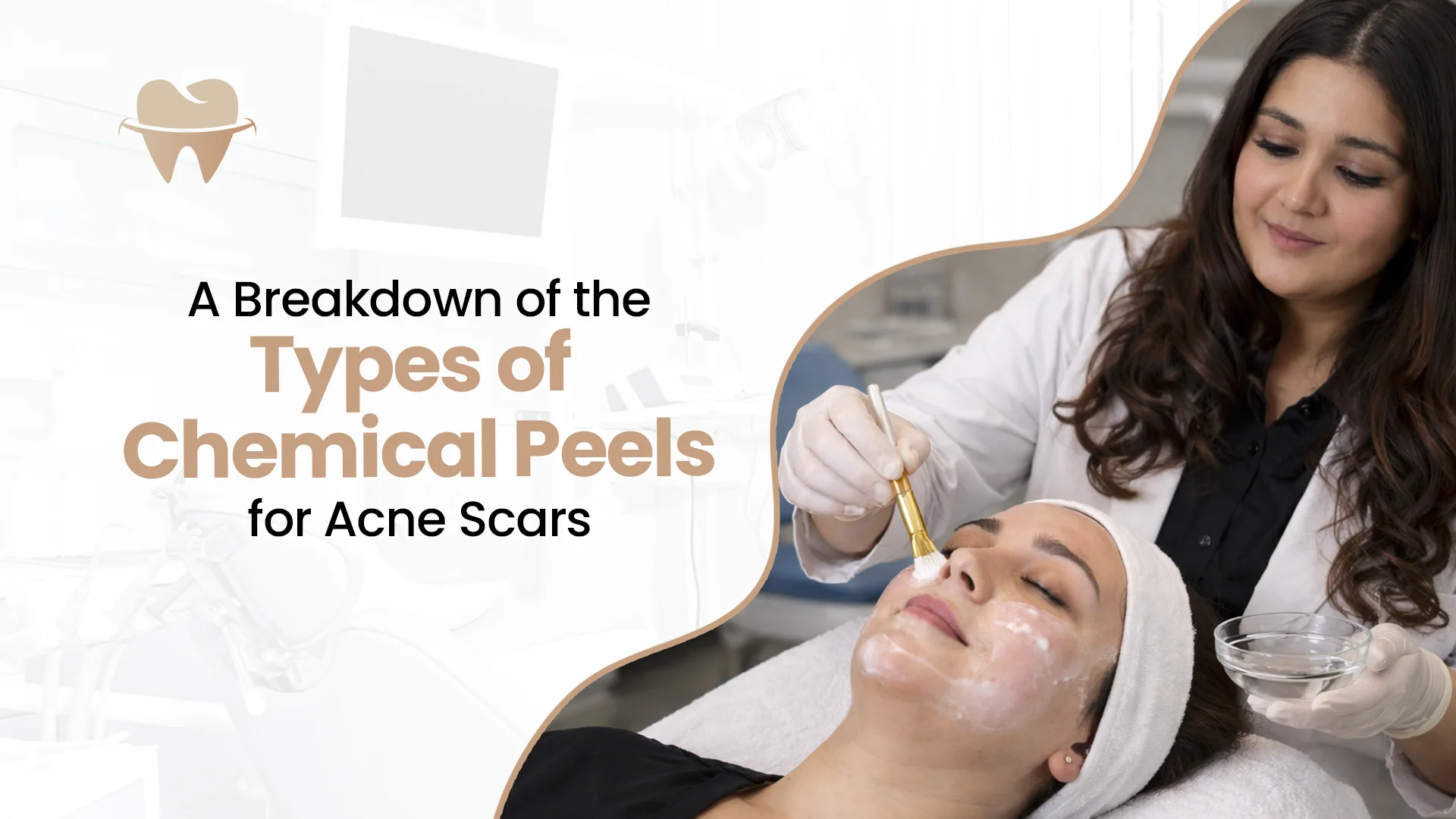
A chemical peel is a skin treatment that removes the skin’s top layer using a safe chemical solution. This process helps the skin renew itself. As old, damaged skin sheds, fresh, smoother skin appears underneath.
This is why chemical peel treatment is commonly used to treat acne scars, uneven skin tone, and dull skin.
Chemical peels are also popular because they are non-surgical and can be tailored to different skin types. Whether you want a mild refresh or a deeper repair, there is an option available.
How Chemical Peels Help Reduce Acne Scars
Chemical peels work by accelerating the skin’s natural renewal process, helping reduce the appearance of acne scars over time.
1. Skin Renewal Process
Chemical peels remove the damaged outer layer of skin, helping speed up natural skin regeneration and reduce the appearance of acne scars.
2. Collagen Production
The treatment stimulates collagen growth, which improves skin texture and gradually softens the depth of scars.
3. Improved Skin Tone
Chemical peels help fade dark spots and uneven pigmentation, resulting in a brighter and more even complexion.
4. Gradual Results
Improvements depend on the type of peel used, and visible results are typically achieved through multiple sessions.
Types of Chemical Peels for Acne Scars
After having a brief introduction of chemical peels and how they work, let’s now explore the different types of this facial procedure.
| Type of Chemical Peel | Key Benefits for Acne Scars | Best For | Price Range in Pakistan (PKR) |
| Superficial (Light) Peel | Improves mild acne marks, brightens skin, and smooths texture | Mild scars, beginners, sensitive skin | 3,000 – 11,000 per session |
| Medium Peel (TCA-based) | Reduces moderate acne scars, uneven skin tone, and pigmentation | Moderate scars, visible texture issues | 8,000 – 25,000 per session |
| Deep Chemical Peel (Phenol/TCA strong) | Treats deep acne scars, long-term skin damage, and rough texture | Severe scars, long-standing acne damage | 15,000 – 35,000+ per session |
1. Superficial Peels (1–7 days recovery)
Superficial peels are the mildest type and are ideal for beginners or people with sensitive skin.
What They Do
These peels only work on the outermost layer of the skin. They gently exfoliate without causing deep peeling or downtime.
Best For
They are often considered the best chemical peel for acne scars at home because they are safer and easier to use.
Results You Can Expect
The results are gradual. You may need multiple sessions, but they can improve skin brightness and reduce minor marks over time.
2. Medium Peels (7–14 days recovery)
Medium peels go deeper than superficial peels and offer more visible improvements.
How They Work
These peels reach the middle layer of the skin, targeting more stubborn acne scars and uneven texture.
Ideal Candidates
They are suitable for people with moderate acne scars who want better results without going for very intense treatment.
Recovery Time
You may experience redness and peeling for a few days. However, the results are usually more noticeable than those from mild peels.
3. Deep Peels (14–21+ days recovery)
Deep peels are the strongest type and provide the most dramatic results.
What Makes Them Different
A deep chemical peel for acne scars works on the deeper layers of the skin, helping reduce severe scars and deep marks.
Who Should Consider It
This option is best for people with long-standing acne scars that have not improved with other treatments.
Important Considerations
Recovery takes longer, and it must always be done under professional supervision. This is why many people choose a chemical peel or PRP for acne treatment for safety and better outcomes.
Choosing the Best Chemical Peel for Acne Scars
Not every peel works the same for everyone. Choosing the best chemical peel for acne scars depends on several factors.
1. Skin Type Matters
Different skin types respond differently: sensitive skin usually does better with mild peels, while more resilient skin may tolerate deeper treatments.
2. Severity of Scars
Light acne scars can improve with superficial peels, while deeper scars often require medium-to-deep chemical peels and microneedling treatments.
3. Professional Guidance
A dermatologist can assess your skin and recommend the safest and most effective chemical peel for your specific acne scar concerns.
Chemical Peel for Acne Dermatologist vs At-Home Options
Many people wonder whether to choose professional treatments or at-home peels.
Professional Treatments
A chemical peel for acne performed by a dermatologist uses stronger, medical-grade solutions under controlled conditions.
This leads to faster, more noticeable results and is better suited for moderate-to-severe acne scars. It also ensures proper skin assessment and reduces the risk of complications.
At-Home Peels
At-home chemical peels are more affordable and convenient, making them suitable for beginners or mild skin concerns. However, they are milder in strength, require consistent use, and yield results more gradually than professional treatments.
Safety and Risk Factor
For any facial treatment, safety and risk factors are important to consider.
- Professional peels are performed under expert supervision, which minimizes risks such as burns, irritation, or uneven results.
- At-home peels carry a higher chance of misuse if instructions are not followed carefully.
Cost Consideration
At-home options are budget-friendly, while dermatologist treatments are more expensive but often deliver quicker and longer-lasting improvements.
What to Choose
If you are new to chemical peels or have sensitive skin, starting with mild at-home options may be safer. For deeper acne scars or faster results, professional dermatologist treatments are generally more effective.
Chemical Peel for Acne Scars Before and After: What to Expect
Understanding the results helps set realistic expectations before starting the treatment.
Immediate Effects
After a peel, your skin may look red or slightly swollen. This is a normal part of the healing process.
Gradual Improvement
Over time, your skin becomes smoother and clearer. Acne scars start to fade, and your overall skin tone improves.
Long-Term Results
With multiple sessions, results become more noticeable. Many people report significant
Summing Up
Chemical peels offer a practical and effective way to reduce acne scars and improve overall skin quality. From mild options to deeper treatments, there is something for every skin type and concern.
The key is choosing the right peel based on your needs and understanding what to expect from the process. With proper care and consistency, chemical peel for hyperpigmentation and acne scars treatment can lead to smoother, clearer, and more confident skin over time.
Frequently Asked Questions
Which is the best chemical peel for acne scars?
The best chemical peel depends on your skin type and the severity of your scars. Mild scars respond to superficial peels, while deeper scars often need medium or deep peels.
Can I do a chemical peel for acne scars at home?
Yes, at-home peels are available and safe for mild scars. However, they are less powerful and require regular use for visible improvements over time.
How long does it take to see results from chemical peels?
Results can start appearing within a few weeks. However, multiple sessions are usually needed to achieve noticeable and long-lasting improvements in acne scars.
Is chemical peel treatment painful?
Most peels cause mild tingling or burning sensations during application. Deeper peels may feel more intense, but professionals ensure comfort and safety throughout the procedure.
Are chemical peels good for aging skin as well?
Yes, chemical peels help reduce fine lines, improve skin texture, and boost collagen production, making them a popular option for both acne scars and aging skin concerns.