KEY TAKEAWAYS
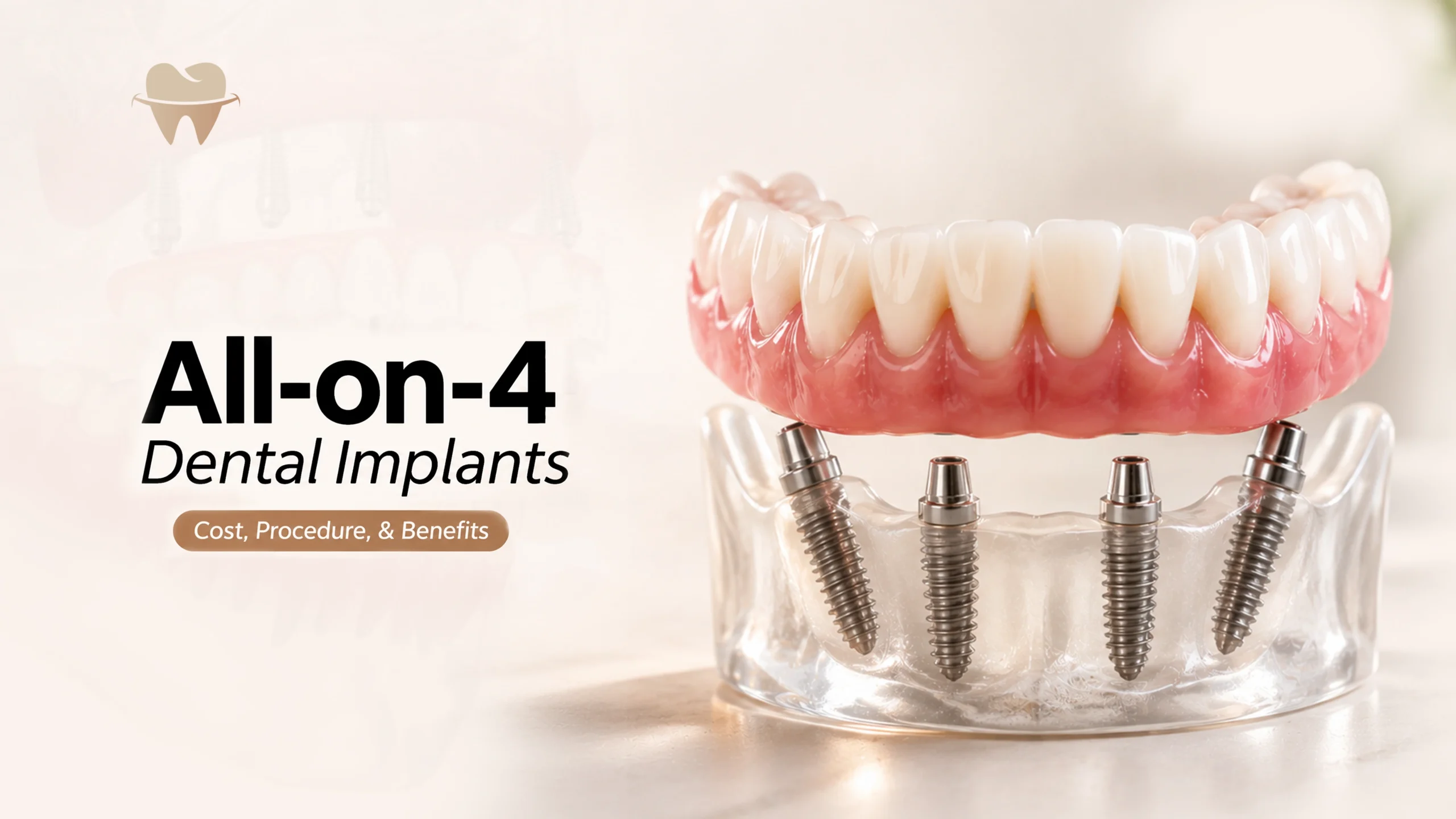
- All-on-4 dental implants (AO4) use four implants to hold a fixed bridge of 10 to 14 teeth on one jaw.
- Public listings in Lahore show AO4 prices of about Rs. 500,000 to Rs. 1,200,000 per jaw. Specialist clinics sit toward the upper end.
- A 2026 systematic review found AO4 prosthesis survival of 85.0% to 100% for up to 20 years. That was comparable to treatments using more than four implants.
- AO4 is not risk free. Implant failure, gum disease around implants and prosthesis wear all occur.
- Many patients leave with fixed temporary teeth on the day of surgery. The final bridge follows after healing.
- Lifelong cleaning and regular reviews decide how long AO4 lasts.
Imagine waking up after surgery with a full set of fixed teeth. For many AO4 patients, that is how it starts.
Losing all the teeth in one jaw changes daily life. Eating becomes hard. Speech changes. Smiles disappear. Removable dentures help, but they slip, rub and shrink the jawbone over time.
AO4 offers another route. It replaces a full arch with a fixed bridge held by four implants. It is one of the most studied full arch options in dentistry.
But it is not right for everyone. This guide explains how AO4 works, who it suits, what it costs in Lahore, what the evidence says about success and risk, and what recovery and aftercare involve.
What Are All-on-4 Dental Implants?
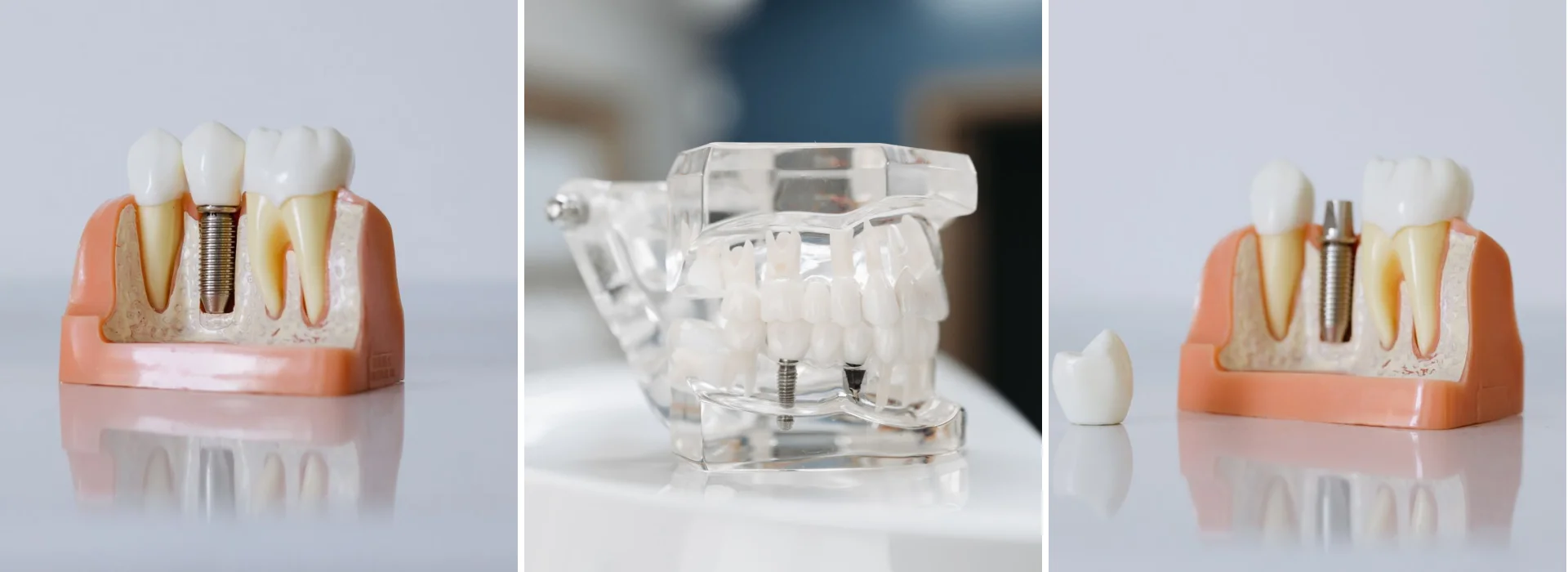
All-on-4 dental implants are a treatment concept for replacing all the teeth in one jaw. Four titanium implants are placed in the bone. A fixed bridge of 10 to 14 teeth is attached to them.
The name describes the idea. A full arch of teeth sits “on” four implants.
Here is what makes AO4 distinct.
- Four implants per jaw. Two go at the front. Two go at the back, often tilted.
- Immediate loading. A temporary bridge is fitted soon after surgery, often the same day.
- Fixed teeth. You do not take them out at night.
- Often no bone graft. Tilted back implants can use the bone that is available.
The concept was developed by Dr. Paulo Maló in Portugal and first reported in the early 2000s. A 2003 study followed 44 patients who had lower jaw AO4 treatment with 176 implants. It reported implant survival above 96% at three years. Later work followed patients for 10 to 18 years.
What Do the Different Terms Mean?
You will see many names for the same family of treatments.
| Term | Meaning |
|---|---|
| Full arch dental implants | Fixed teeth for one whole jaw on implants |
| Fixed full arch teeth replacement | Same idea, described by the result |
| Full mouth dental implants | Both jaws replaced, so two arches |
| Full mouth teeth replacement | General term for replacing all teeth, with implants or dentures |
| Full mouth implant restoration | Complete rebuild of both jaws with implants |
| All-on-4 full mouth dental implants | AO4 on the upper and lower jaw, usually 8 implants in total |
Most prices are quoted per arch. A full mouth case doubles the figure.
How Do All-on-4 Implants Work?
AO4 relies on three ideas.
1. Smart Implant Positioning
The front of the jaw usually has the best bone. The back often has less bone because of the sinus in the upper jaw and the nerve canal in the lower jaw.
In AO4, the two back implants are tilted. A tilted implant can be longer. It also lands further back in the jaw. This gives more bone contact and avoids the sinus and nerve.
2. A Short Bridge Span
By angling the back implants, the surgeon can support the bridge further back without extending it into the air. This reduces the cantilever, the part of the bridge that hangs past the last implant. Less overhang means less strain on the implants and the bridge.
3. Immediate Loading
Implants normally need three to six months to fuse with bone. This process is called osseointegration. In AO4, the implants are connected to a temporary bridge soon after surgery. The bridge is designed to share the load across all four implants.
It is not a hard-chewing bridge. It is a gentle, splinted prosthesis that holds everything stable while healing continues.
A 2026 review in the Dentistry Journal describes the usual protocol. Teeth that cannot be saved are removed. Four implants are placed straight away, two at the front and two at the back. A temporary prosthesis of 10 to 14 teeth, made of acrylic (PMMA), is fitted.
All-on-4 Implant Treatment: Step-by-Step Procedure
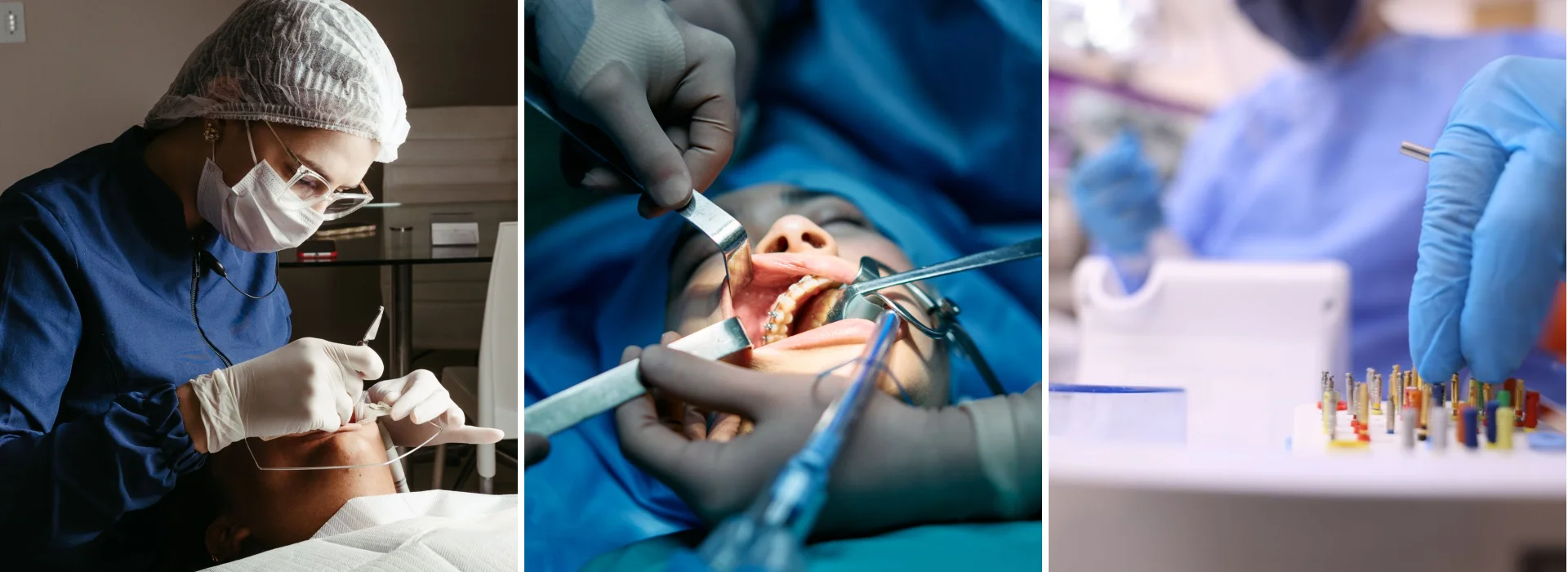
Here is the usual path from first visit to final teeth.
| Stage | What Happens | Typical Timing |
|---|---|---|
| 1. Consultation | Exam, medical history, X-rays and a 3D CBCT scan | Visit 1 |
| 2. Planning | Digital plan of implant positions and bridge design | Days to 2 weeks |
| 3. Treatment of other problems | Gum disease, decay or infection treated first | As needed |
| 4. Surgery day | Remaining teeth removed if needed. Four implants placed | 1 day |
| 5. Temporary bridge | Fixed temporary teeth fitted | Same day or within days |
| 6. Healing | Soft diet. Implants fuse with bone | About 3 to 6 months |
| 7. Review visits | Bite, gums and hygiene checked | During healing |
| 8. Final bridge | Impressions or scan. Permanent bridge made and fitted | After healing |
Step 1: Consultation and 3D Scan
The dentist checks your mouth, gums and bite. A CBCT scan shows bone height, bone width and the position of the sinus and nerves. Without a scan, safe planning is not possible.
Step 2: Digital Planning
The surgeon plans implant position on a computer. Many clinics use a surgical guide made from the plan. It helps place implants where they were planned.
Step 3: Preparing the Mouth
Active gum disease and infection must be controlled first. Smokers are advised to stop before surgery and during healing. Diabetes should be well controlled.
Step 4: Surgery
The procedure is done under local anaesthetic. Many patients also have sedation. Remaining teeth that cannot be saved are removed. Bone is shaped. Four implants are placed at the planned angles.
Step 5: Temporary Teeth
A temporary acrylic bridge is attached. It lets you eat soft food and smile while healing starts.
Step 6: Healing
The implants fuse with bone over several months. You follow a soft food plan and take care with cleaning.
Step 7: Final Prosthesis
When the implants are stable, the final bridge is made. Options include an acrylic bridge on a metal frame, a zirconia bridge or a bridge of ceramic crowns on a frame. Your dentist will discuss the pros and cons of each.
How Many Teeth Can AO4 Replace?
These bridges usually carry 10 to 14 teeth per arch. Most carry about 12.
The back molars are often left out. Teeth that extend too far behind the last implant can overload the bridge and risk fracture. A bridge of 12 teeth is enough for normal chewing and a full smile.
| Jaw | Typical Teeth Replaced | Notes |
|---|---|---|
| Upper | 10 to 14 | Sinus position can limit implant length |
| Lower | 10 to 14 | Nerve position matters |
| Both jaws | 20 to 28 | Eight implants in total |
Candidate for All-on-4 Dental Implant
The implant suits adults who have lost most or all teeth, or whose remaining teeth cannot be saved.
| Good Candidate | May Not Be Suitable |
|---|---|
| Missing most teeth in a jaw | Active, uncontrolled gum disease |
| Failing teeth that need removal | Uncontrolled diabetes |
| Unhappy with loose dentures | Heavy smoking and unwilling to stop |
| Enough bone, or tilted implants can use available bone | Very little bone and unable to have grafting |
| Good general health | Certain medical conditions or medicines that affect healing |
| Willing to keep up hygiene and visits | Unable to clean or attend reviews |
| Realistic expectations | Severe untreated grinding, unless a guard is used |
A CBCT scan and medical review decide suitability. Some patients with low bone need a different plan, such as more implants, grafting or zygomatic implants.
All-on-4 Dental Implants Benefits

All-on-4 dental implants benefits go beyond looks. Here is what patients and studies report.
- Fixed teeth that feel like your own. There is no plate on the palate. You do not remove the bridge. Chewing power is usually far better than with dentures.
- A shorter treatment path. With immediate loading, many patients leave with teeth the same day. The final bridge follows after healing. Traditional full arch plans can take longer, especially if bone grafting is needed.
- Often no bone grafting. Tilted implants can use existing bone. This avoids grafting in many cases and reduces surgery.
- Fewer implants. Four implants cost less than six or eight. A German S3 guideline cited in the 2026 review does not recommend routine use of more than four implants when stable support can be achieved.
- Better speech and confidence. Many patients report improved satisfaction and quality of life compared with removable dentures.
- Bone is stimulated. Implants carry chewing force into the jawbone. Dentures sit on gum and let bone shrink over time. Some bone loss still occurs around implants, so this benefit has limits.
- Improved facial support. A fixed bridge supports lips and cheeks. Long-term denture wear can leave the face looking sunken.
- Easier daily routine. No adhesives. No removing teeth at night.
- Strong long-term outcomes in studies. More on this below.
What the Evidence Says About Success
The newest large review is a systematic review published in the Dentistry Journal in August 2026. It compared AO4 with fixed prostheses on more than four implants.
Here are its main findings.
| Outcome | AO4 | More Than Four Implants |
|---|---|---|
| Prosthesis survival (up to 20 years) | 85.0% to 100% | 88.2% to 100% |
| Implant survival | 89.7% to 97.9% | 98.9% to 99.0% |
| Marginal bone loss after 5 years | Up to 1.9 mm | Up to 2.9 mm |
The authors concluded that AO4 is a predictable option with prosthesis survival comparable to treatments with more implants. They also noted that biological and technical complications remain clinically relevant.
Other sources agree. A 2025 clinical review reported full arch implant prosthesis survival of 90% to 98% over 10 to 15 years. It also reported that complications increase with time.
What do these numbers mean for you? Most AO4 prostheses last. But the range is wide, and some implants fail. Surgeon skill, case selection and your hygiene all influence where you fall in that range.
All-on-4 Dental Implants Risks
All-on-4 dental implants risks are real. Knowing them helps you prepare.
Surgical Risks
These are similar to other implant surgery.
- Bleeding and swelling
- Infection at the surgical site
- Pain and bruising
- Nerve irritation, leading to numbness in the lip, chin or tongue (rare)
- Sinus problems when upper implants reach the sinus
- Anaesthetic or sedation reactions
Implant Failure
Some implants do not fuse with bone. They may loosen early or later. The 2026 review found implant survival of 89.7% to 97.9% for AO4. So, a small share of implants fails.
With only four implants, losing one affects support more than with six. Your surgeon may convert to a plan with more implants if needed.
Gum and Bone Disease Around Implants
This is the main long-term risk.
- Peri-implant mucositis is inflammation of the gum around an implant. Clinical reviews report it in 30% to 50% of cases.
- Peri-implantitis involves bone loss around an implant. Reviews report it in 10% to 20% of cases at 10 years.
Risk factors include poor hygiene, a history of gum disease, smoking and diabetes.
Prosthesis Problems
- Wear or chipping of acrylic teeth
- Fracture of the bridge
- Loosening of screws
- Staining or a rough surface that collects plaque
Prostheses may need repair or replacement. Many patients later upgrade from acrylic to zirconia.
Other Risks
- Speech changes. Air or saliva can escape at first. Most patients adjust.
- Bite problems. An uneven bite can overload the bridge. Adjustments fix this.
- Night grinding. Grinding can damage the bridge. A night guard helps.
Risk Summary Table
| Risk | How Common | How to Reduce It |
|---|---|---|
| Early implant failure | A small percentage | Careful planning, no smoking, good bone assessment |
| Infection | Uncommon | Sterile surgery, antibiotics if advised, good aftercare |
| Mucositis | Common | Daily cleaning, regular reviews |
| Peri-implantitis | Reported in about 10% to 20% at 10 years | Hygiene, no smoking, early treatment |
| Acrylic wear or fracture | Common over time | Night guard, regular checks |
| Nerve or sinus problems | Rare | CBCT planning, experienced surgeon |
All-on-4 Dental Implants Disadvantages
Every treatment has trade-offs. These are the main All-on-4 dental implants disadvantages.
- Cost. AO4 costs far more than dentures.
- It is irreversible. Remaining teeth may need removal. You cannot go back.
- Surgery and healing. You need time off and a soft diet for weeks.
- Four implants only. If one fails, the load on the others rises.
- A bulky prosthesis at first. Some patients feel the bridge is large.
- Less natural gum contour. Some bridges include pink acrylic that replaces gum. This can be visible with a high smile line.
- Hygiene effort. You must clean under the bridge every day.
- Lifelong maintenance. Reviews, professional cleaning and repairs are ongoing.
- Not for every jaw. Low bone may need a different plan.
- Prosthesis replacement. The bridge may need renewal after years.
Being honest about these helps you choose well. For many patients, the benefits outweigh them. For others, a different option fits better.
All-on-4 Dental Implants Recovery
Recovery is a process, not one day. Here is a typical timeline. Your surgeon will give you a personal plan.
| Time | What to Expect |
|---|---|
| Day of surgery | Numbness wears off. Mild pain and oozing. Rest with your head raised |
| Days 1 to 3 | Swelling and bruising often peak. Cold packs help. Soft, cool foods |
| Days 4 to 7 | Swelling starts to fall. Pain eases. Many return to desk work |
| Weeks 2 to 3 | Stitches are removed or dissolve. Gums begin to settle |
| Weeks 4 to 12 | Soft diet continues. Review visits check healing |
| Months 3 to 6 | Implants fuse with bone. Final bridge planning starts |
| After final bridge | Normal eating with care. Regular reviews continue |
What Helps Recovery
- Take medicines exactly as prescribed
- Rest for the first 48 hours
- Use cold packs on the cheeks for short sessions
- Keep your head raised when sleeping
- Eat soft, cool foods at first
- Keep the mouth clean as advised
Warning Signs After Surgery
Call your dentist if you notice:
- Heavy bleeding that does not stop
- Swelling that grows after day three
- Fever
- Pus or a bad taste
- A loose implant or bridge
- Numbness that does not improve
All-on-4 Dental Implants Aftercare
All-on-4 dental implants aftercare decides long-term success. Good habits protect the implants for decades.
Daily Cleaning
- Brush the bridge twice a day with a soft brush.
- Clean under the bridge with a water flosser, interdental brushes or superfloss.
- Rinse with an alcohol-free mouthwash if advised.
- Clean the gum line and the area where the bridge meets the gum.
Professional Care
- Return for reviews as scheduled. One clinician’s protocol is every 3 to 4 months in the first year, then adjusted to your needs.
- Have professional cleaning with tools designed for implants.
- Have X-rays when advised to check bone levels.
- Ask for the bridge to be removed and checked from time to time, if your dentist recommends it.
Habits to Protect Your Implants
- Do not smoke. Smoking raises the risk of failure and gum disease.
- Control diabetes if you have it.
- Wear a night guard if you grind your teeth.
- Avoid chewing ice, hard sweets or bones.
- Report any loose screw, chip or bad taste early.
Eating After Implant
| Phase | Diet |
|---|---|
| First days | Cold and lukewarm liquids, then very soft foods |
| Weeks 1 to 6 | Soft foods such as rice, eggs, yoghurt, mashed vegetables |
| Healing period | Avoid hard, crunchy or sticky foods |
| After the final bridge | Most foods are fine. Cut hard foods and avoid very hard items |
Your surgeon will tell you when you can move to each stage.
AO4 vs Dentures and Other Full Arch Options
How does AO4 compare with the alternatives?
| Option | Fixed or Removable | Implants Used | Bone Preservation | Approx. Cost in Lahore (PKR) |
|---|---|---|---|---|
| Conventional full denture | Removable | None | Poor | 30,000 to 80,000 |
| Implant overdenture | Removable | 2 to 4 | Moderate | Quote from clinic |
| AO4 | Fixed | 4 | Good | 500,000 to 1,200,000 per jaw (public listings) |
| All-on-6 | Fixed | 6 | Good | Higher than AO4 |
| Individual implants for each tooth | Fixed | 8 to 14 | Good | Much higher |
AO4 vs Traditional Dentures
Dentures cost less. They also move, rub and can make eating hard. The jawbone shrinks under them, so they need relining and replacement.
AO4 costs more but stays fixed. It supports the jaw and gives stronger chewing.
AO4 vs All-on-6
All-on-6 adds two implants. This gives extra support and a backup if one implant fails. It can suit patients with strong bite forces or good bone. It costs more. The 2026 review found AO4 to be comparable on prosthesis survival, though implant survival was higher in the alternative group.
Your surgeon will recommend four, five or six implants based on your bone and bite.
All-on-4 Dental Implants Cost
All-on-4 dental implants cost in Lahore Pakistan depends on the implant brand, the type of bridge, any grafting and the clinic.
Public Price Data (2026)
| Source | What It Shows |
|---|---|
| Marham (Lahore area page, 2026) | AO4 per jaw: Rs. 500,000 to Rs. 1,200,000. Both jaws: Rs. 900,000 to Rs. 2,500,000 |
| WhatClinic Pakistan | AO4 prices listed from about Rs. 320,000 |
| Marham (Pakistan, 2026) | Single implant with crown: Rs. 90,000 to Rs. 250,000 |
| Marham (Lahore) | Bone graft: Rs. 20,000 to Rs. 120,000 |
Our market estimate for AO4 at specialist Lahore clinics is PKR 600,000 to PKR 1,400,000 per arch. This matches the range in our dental implant cost guide.
What Affects the Price
| Factor | Effect on Cost |
|---|---|
| Implant brand | Premium brands cost more than mid-range and local brands |
| Bridge material | Acrylic costs less than zirconia |
| Bone grafting or sinus lift | Adds cost when needed |
| Extractions | Extra charge for each tooth removed |
| CBCT scan and digital planning | Usually separate or included, so ask |
| Surgeon training | Specialists charge more |
| Temporary bridge | Often included, so confirm |
| Final bridge | Check whether it is in the quote |
| Aftercare and reviews | Ask which visits are included |
| Clinic location | DHA clinics price higher |
What Should the Quote Include?
Ask for a written quote that lists:
- The implant brand and number of implants
- The temporary bridge
- The final bridge and its material
- Extractions and CBCT scan
- Bone grafting, if needed
- Follow-up visits
- What happens if an implant fails
A low quote that leaves out the final bridge is not a real price.
Lahore vs International Prices
| Location | AO4 per Jaw (approximate) |
|---|---|
| Lahore, Pakistan | Rs. 500,000 to 1,200,000 (about £1,100 to £2,700) |
| United Kingdom | £10,000 to £18,000 |
| United States | $14,000 to $36,000 |
UK and US figures come from published price guides. Exchange rates change, so check before you plan a trip.
For overseas Pakistanis, the gap is large. But cost should not be your only factor. Check the surgeon’s training, the planning process and the follow-up arrangements. AO4 needs reviews after you go home.
Choosing an AO4 Surgeon in Lahore
AO4 is surgery plus prosthetic work. The team matters more than the brand name.
- Ask about training. Look for postgraduate implant training and experience with full arch cases.
- Ask to see cases. Request before and after photos and X-rays of AO4 patients. Ask how many cases the clinician has done.
- Check the scan and planning. CBCT and digital planning should come before any quote.
- Ask about the implant brand. The clinic should name the system and explain why.
- Check the lab. The bridge quality depends on the laboratory.
- Ask about complications. A good clinician will talk about risks without being asked twice.
- Ask about follow-up. Who will see you at three months, six months and each year? What if you live overseas?
- Get it in writing. Costs, timeline and warranty should be on paper.
Questions to ask your surgeon
- How many AO4 cases have you completed?
- Would four implants suit my bone, or would you advise more?
- What is the plan if an implant fails?
- What material will the final bridge be?
- How often will I need reviews?
- What does the quote include and exclude?
Final Word
All-on-4 dental implants can change how a person eats, speaks and smiles. For the right patient, it is a proven way to replace a full arch with fixed teeth. The research is encouraging, with survival rates that compare well with other full arch options.
But success is not automatic. It depends on a thorough scan, sound planning, a skilled surgeon and your own care afterwards. Peri-implant disease, prosthesis wear and implant failure are real risks that need honest discussion.
If you are considering AO4, start with a consultation. Ask questions. Compare plans, not only prices. Then decide what is right for your mouth, your health and your budget.
Book a Consultation at Teeth & Gums, DHA Phase 6, Lahore
Talk to our implant team about whether All-on-4 is the right fit for your jaw, bone and budget.
Frequently Asked Questions
What are All-on-4 dental implants?
All-on-4 dental implants are a full arch treatment that uses four implants to support a fixed bridge of 10 to 14 teeth on one jaw. Two implants go at the front and two at the back, often tilted. A temporary bridge is usually fitted soon after surgery.
How do All-on-4 dental implants work?
Four titanium implants fuse with the jawbone and act as artificial roots. A bridge is screwed onto them. Tilting the back implants lets them use available bone and support the bridge further back. A temporary bridge is fitted early, and the final bridge follows after healing.
How many teeth can All-on-4 dental implants replace?
AO4 usually replaces 10 to 14 teeth per jaw, most often about 12. The back molars are often left out because teeth cantilevered too far behind the last implant can overload the bridge. Treating both jaws replaces up to 28 teeth.
Are All-on-4 dental implants permanent?
The implants are intended to be long term, but the bridge is not guaranteed forever. Acrylic teeth can wear or fracture and may need repair or replacement. Implants can also fail if gum disease develops. Good cleaning and reviews give the best chance of lasting results.
How long do All-on-4 dental implants last?
Studies report full arch implant prosthesis survival of 90% to 98% over 10 to 15 years, and a 2026 review reported 85.0% to 100% for AO4 up to 20 years. Results vary. Hygiene, smoking, grinding, surgeon skill and regular reviews strongly affect longevity.
How long does it take to recover from All-on-4 dental implants?
Swelling and bruising often peak in the first three days, and many patients feel much better within a week. Gums settle over two to three weeks. The implants take about three to six months to fuse with bone before the final bridge is fitted.
Can you eat normally after All-on-4 dental implants?
Not at first. You follow a soft food diet during healing, which can last weeks to months. After the final bridge is fitted, most patients eat a wide range of foods. Avoid very hard items such as ice and bones to protect the bridge.
Are All-on-4 dental implants better than traditional dentures?
For most patients, yes in function. AO4 is fixed, gives stronger chewing and does not slip. It costs far more, needs surgery and demands careful cleaning. Dentures are cheaper and need no surgery but can move and let the jawbone shrink.
What are the disadvantages or risks of All-on-4 dental implants?
Risks include surgical complications, early implant failure, gum disease around implants, nerve or sinus problems and prosthesis wear or fracture. Disadvantages include high cost, irreversibility, a healing period and lifelong cleaning and reviews. Careful planning, good hygiene and not smoking reduce risk.