SUMMARY
- Receding gums are caused by gum disease, aggressive brushing, tobacco use, teeth grinding, genetics, and crooked teeth.
- Gum tissue cannot grow back naturally once lost. However, professional treatment can stop the recession from worsening and surgically restore lost tissue.
- Treatments include scaling and root planing, antibiotic therapy, traditional gum grafting, donor allografts, and the minimally invasive pinhole technique.
- Treatment cost in Lahore ranges from PKR 8,000 for deep cleaning to PKR 25,000-80,000 for gum grafting, depending on the procedure and number of teeth.
In Lahore, most patients present with moderate gum recession due to delayed dental visits.
Receding gums are one of those problems that seem minor until they are not. The gum line drops slowly, so slowly that most people only notice it when their teeth feel sensitive to hot or cold, or when someone else points it out. By that stage, a fair amount of tissue may already be gone.
This blog covers what causes recession, what the early signs look like, what receding gums treatment involves, and what you can realistically expect to pay for gum grafting in Lahore, Pakistan.
What Are Receding Gums?
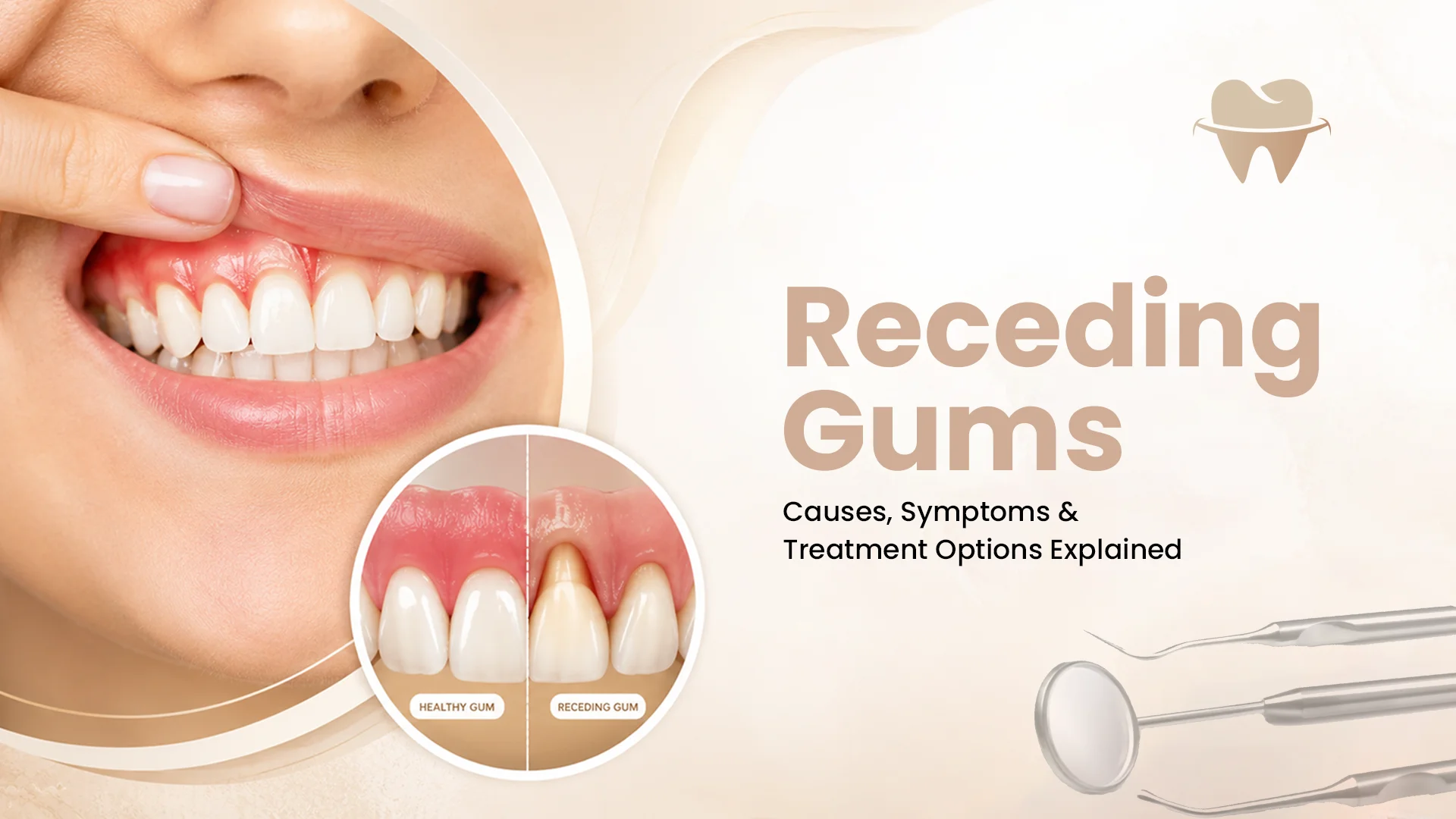
Gum recession is when the gum tissue surrounding a tooth pulls back and exposes more of the tooth, or its root. It does not happen overnight. It is a gradual process that affects one or several teeth, and it is far more common than most people realise.
According to a study published in the Journal of Periodontology, gum recession affects approximately 50% of adults over the age of 18, with prevalence increasing sharply after 40. In Pakistan, periodontal disease, the leading cause of recession, is widespread, partly due to delayed diagnosis and low rates of routine dental check-ups.
When the root is exposed, the tooth loses its protective gum covering. Roots have no enamel. That is why receding gums are so closely linked to sensitivity and, over time, increased risk of decay and tooth loss.
Receding Gums Causes: Why Does It Happen?
Understanding receding gums causes is the first step toward stopping the damage from getting worse. Recession is rarely the result of a single factor — it usually involves a combination of the following:
1. Gum Disease (Periodontitis)
This is the most common cause. Bacterial plaque buildup triggers inflammation in the gums. Over time, the infection destroys the bone and soft tissue that hold teeth in place. The gums recede as the supporting structure collapses underneath them.
2. Aggressive Brushing
Brushing hard or using a stiff-bristle brush is one of the most preventable causes of receding gums. The mechanical friction wears away both enamel and gum tissue, particularly on the outer surfaces of the front teeth. A soft-bristled brush with gentle circular strokes is the standard recommendation.
3. Poor Oral Hygiene
Inadequate brushing and skipping flossing allow plaque to accumulate at the gum line. Tartar (calcified plaque) irritates the gums and begins the inflammatory cycle that leads to recession.
4. Tobacco Use
Smoking and smokeless tobacco (naswar) are strongly linked to gum disease and recession. Tobacco reduces blood flow to gum tissue, impairs healing, and masks early warning signs — making users less likely to seek help until the problem is advanced.
5. Teeth Grinding (Bruxism)
Grinding puts excessive lateral force on teeth. This can loosen gums at their attachment and accelerate recession, particularly in people who grind at night.
6. Crooked Teeth or Misaligned Bite
When teeth are crowded or misaligned, some teeth bear disproportionate pressure during biting and chewing. This mechanical stress can cause localised recession on specific teeth.
7. Genetics and Thin Gum Tissue
Some people inherit thinner gum tissue or a gum anatomy that is more prone to recession regardless of how well they maintain their oral hygiene. Thin tissue has less structural resilience and recedes more easily under stress or inflammation.
8. Tongue or Lip Piercings
Jewellery that repeatedly rubs against the gum tissue causes localised abrasion and recession. This is a less common but well-documented cause, particularly among younger patients.
Symptoms of Receding Gums: What to Look For
Gum recession progresses quietly. These are the signs worth paying attention to:
- Tooth sensitivity — especially to cold water, cold air, or sweet foods. This is often the first symptom people notice.
- Teeth that look longer than before — the classic “long in the tooth” appearance that occurs as the gum line drops.
- A visible notch or indent near the gum line on the tooth surface.
- Exposed tooth roots — yellowish or darker in colour compared to the enamel above.
- Gum bleeding during brushing or flossing.
- Gaps forming between teeth at the gum level.
- Loose teeth in more advanced cases — a sign that bone support has been significantly reduced.
If you notice any of these, the right move is a professional assessment. Recession does not reverse on its own, and catching it early keeps your treatment options much simpler.
Receding Gums Treatment Options
There is no single receding gums treatment that applies to everyone. The right approach depends on how much recession has occurred, what is causing it, and whether active disease is still present.
Non-Surgical Treatments
For mild to moderate recession without active infection, non-surgical options are often the starting point:
- Scaling and Root Planing
Also called a deep clean, this procedure removes plaque and tartar from below the gum line and smooths the root surfaces so bacteria cannot reattach easily. It does not restore lost gum tissue, but it stops active disease and creates a healthy baseline for further treatment.
- Desensitising Agents
Fluoride varnishes or bonding agents can be applied to exposed roots to reduce sensitivity. This is a supportive measure, not a cure for the recession itself.
- Antibiotic Therapy
Where bacterial infection is a factor, antibiotics, either oral or applied locally within the gum pockets, may be used alongside deep cleaning.
- Bite Guards for Bruxism
If grinding is contributing to recession, a custom night guard reduces the mechanical forces on teeth and gums while you sleep.
Gum Grafting (Surgical Treatment)
When a recession is moderate to severe, gum grafting is the definitive receding gums treatment. It is the only way to physically restore lost gum tissue and cover exposed roots.
Types of Gum Grafts
Discussed here are some of the types of gum grafts:
Connective Tissue Graft (CTG)
This is the most performed graft. Tissue is taken from underneath a small flap cut in the roof of the mouth (palate). The harvested connective tissue is then stitched to the receding area. It produces excellent results and is considered the gold standard for root coverage.
Free Gingival Graft
Tissue is taken directly from the surface of the palate rather than from underneath a flap. This type is used when more gum tissue bulk is needed, particularly in areas with very thin existing gums.
Pedicle Graft (Laterally Repositioned Flap)
Used when there is sufficient gum tissue adjacent to the receding tooth. The gum tissue next to the site is partially cut and slid across to cover the recession. It avoids a palatal donor site, but is only suitable in specific situations.
Allograft (Donor Tissue)
Processed donor tissue, typically from a tissue bank, is used instead of harvesting from the patient’s own palate. It is a good option for patients who prefer to avoid a donor site or need large areas treated in one procedure.
Pinhole Surgical Technique (PST)
A newer, minimally invasive approach where a small hole is made in the gum, and the existing tissue is loosened and repositioned over the exposed root, without grafting or sutures. It involves less post-operative discomfort and faster recovery than traditional grafts, though it is not suitable for all types of recession.
| Treatment | Best For | Cost (PKR) |
| Scaling | Mild | 8k–15k |
| Gum graft | Severe | 25k–80k |
Effective Homeopathic Remedy for Receding Gums (Do They Work?)
Patients frequently ask about homeopathic remedies for receding gums. It is a reasonable question, and it deserves an honest answer.
Several homeopathic remedies, including Mercurius solubilis, Phosphorus, Kreosotum, and Silicea, are commonly cited online and in homeopathic literature for gum-related symptoms such as bleeding, sensitivity, and inflammation. Some people also use oil pulling (typically with coconut oil), aloe vera gel, or green tea extracts as supportive home measures.
The honest clinical position: none of these have been validated in robust, peer-reviewed clinical trials for reversing gum recession. They do not regrow lost tissue. However, some natural anti-inflammatory approaches may reduce gum irritation and support overall periodontal health when used alongside — not instead of — professional treatment.
If someone is using a homeopathic remedy for receding gums and their condition is continuing to progress, they need a dental assessment. Delaying treatment while recession advances make the eventual intervention more complex and more expensive.
Receding Gums Treatment Cost
One of the most searched questions from patients in Pakistan is the cost of receding gums treatment. The honest answer is that it varies considerably depending on the severity of recession, how many teeth are affected, and which procedure is required.
General Cost Ranges
| Treatment | Approximate Cost Range (PKR) |
| Scaling & Root Planing (full mouth) | PKR 8,000 – 15,000 |
| Periodontal Consultation | PKR 1,500 – 3,000 |
| Night Guard (custom) | PKR 10,000 – 18,000 |
| Gum Graft (per tooth/area) | PKR 25,000 – 60,000+ |
| Allograft (donor tissue) | PKR 35,000 – 80,000+ |
| Pinhole Surgical Technique | PKR 30,000 – 75,000+ |
These figures reflect prevailing market rates at established dental clinics in Lahore and are provided for guidance only. Actual costs depend on the clinic, the treating specialist’s experience, and the complexity of your specific case.
Gum Grafting Cost in Pakistan: What Affects the Price
Several factors influence what you pay for gum grafting in Pakistan:
- Number of teeth treated — most clinics charge per tooth or per sextant (group of teeth). Treating multiple teeth in one session usually reduces the per-unit cost.
- Type of graft — allografts (donor tissue) typically cost more than autografts using your own palatal tissue.
- Specialist vs. general dentist — procedures performed by a trained periodontist generally cost more but come with a higher level of expertise.
- Clinic location and equipment — clinics in DHA and Gulberg tend to price higher than those in other areas of Lahore, reflecting operating costs and the patient demographic they serve.
- Pre-surgical treatment requirements — if active gum disease needs to be treated first, that adds to the overall cost before the graft can even be placed.
The gum grafting cost in Pakistan is substantially lower than equivalent procedures in the UK or UAE, which typically run from £800–£1,500 per tooth and AED 3,000–5,000 per tooth, respectively. For patients in the Pakistani diaspora, this makes travelling for dental care a practical option.
At Teeth & Gums, we provide a detailed treatment plan and cost breakdown at your initial periodontal assessment so there are no surprises.
Can Receding Gums Grow Back?
No. Once gum tissue has receded, it does not regenerate on its own. This is one of the most important things to understand about this condition.
What is possible:
- Stopping further recession — by treating its cause (gum disease, brushing trauma, grinding)
- Restoring lost tissue surgically — through gum grafting, which physically replaces what was lost
- Improving the appearance and reducing sensitivity — both surgical and some non-surgical approaches achieve this
Waiting does not help. Gum recession is progressive. The earlier it is assessed, the simpler the treatment.
When to See a Dentist
Do not wait for significant sensitivity or visible root exposure before booking an appointment. The following are reasons to get checked promptly:
- You have noticed your teeth looking longer
- You have persistent tooth sensitivity
- Your gums bleed regularly when you brush
- You have been told before that you have gum disease
- You smoke or use tobacco products
- You have a family history of gum disease
A periodontal assessment at Teeth & Gums typically involves charting the gum pockets around each tooth, reviewing your medical history, and producing a clear diagnosis with treatment options and costs. From there, you decide how to proceed.
How to Prevent Receding Gums
- Brush with soft bristles
- Avoid overbrushing
- Use fluoride toothpaste
- Quit smoking
- Regular dental checkups
Conclusion
Receding gums are a clinical problem, not just a cosmetic one. Exposed roots are vulnerable to decay. Reduced gum coverage can compromise long-term tooth stability. And unlike most tissues in the body, gum tissue does not regenerate without intervention.
The good news is that modern periodontal treatment is highly effective. Whether you need a deep clean, a surgical graft, or a minimally invasive procedure, there are well-established solutions available in Lahore at a fraction of what they cost elsewhere.
If your gums are pulling back, book an assessment. The sooner the recession is diagnosed, the more straightforward the receding gums treatment and the better the long-term outcome.
Book Your Gum Health Consultation in Lahore Today — Early Treatment Saves Your Teeth and Money
Frequently Asked Questions
Can receding gums grow back naturally?
No, gum tissue does not grow back naturally, but treatments like grafting can restore lost tissue effectively.
Can receding gums be fixed?
Yes, depending on severity, they can be treated with cleaning, medication, or surgical procedures like gum grafting.
How to reverse receding gums?
You cannot fully reverse them naturally, but proper oral care and professional treatment can stop progression and improve gum health.
How to stop receding gums from getting worse?
Use gentle brushing, maintain oral hygiene, avoid smoking, and visit your dentist regularly for check-ups.
Is gum recession reversible?
Not naturally, but modern dental treatments can successfully manage and restore gum tissue in many cases.
How do I know if my gums are receding?
Look for longer-looking teeth, sensitivity, visible roots, bleeding gums, and gum inflammation near the tooth line.
Does gum grafting hurt?
The procedure is done under anesthesia, so it’s not painful during surgery. Mild discomfort afterward is manageable with medication.
What is scaling and root planning?
It’s a deep cleaning procedure that removes plaque and tartar below the gum line and helps gums reattach to teeth.
Why are my gums receding?
Common causes include gum disease, aggressive brushing, poor oral hygiene, smoking, and genetic factors.