
That dull ache at the back of your mouth might not be “just another tooth problem” — it could be your wisdom tooth silently causing damage.
You maintain a good oral hygiene practice – you brush and floss daily — but still, you experience slight discomfort at the back of your mouth. This is how many people first experience a wisdom tooth cavity.
Your dentist or dental practitioner then tells you that you have a cavity in your wisdom tooth. That leaves you wondering how that is possible, despite your good oral hygiene practices. According to the American Dental Association, cavities remain one of the most common dental issues worldwide, affecting a large portion of adults at some point in their lives.
Wisdom teeth, hanging at the back in the darkness of the corners, are more vulnerable to this cavity development. Understanding the causes, symptoms, and best treatment options for a wisdom tooth cavity can help you act early and avoid serious problems. This guide will walk you through everything that you need to know about wisdom tooth cavities.
What Is a Wisdom Tooth Cavity?
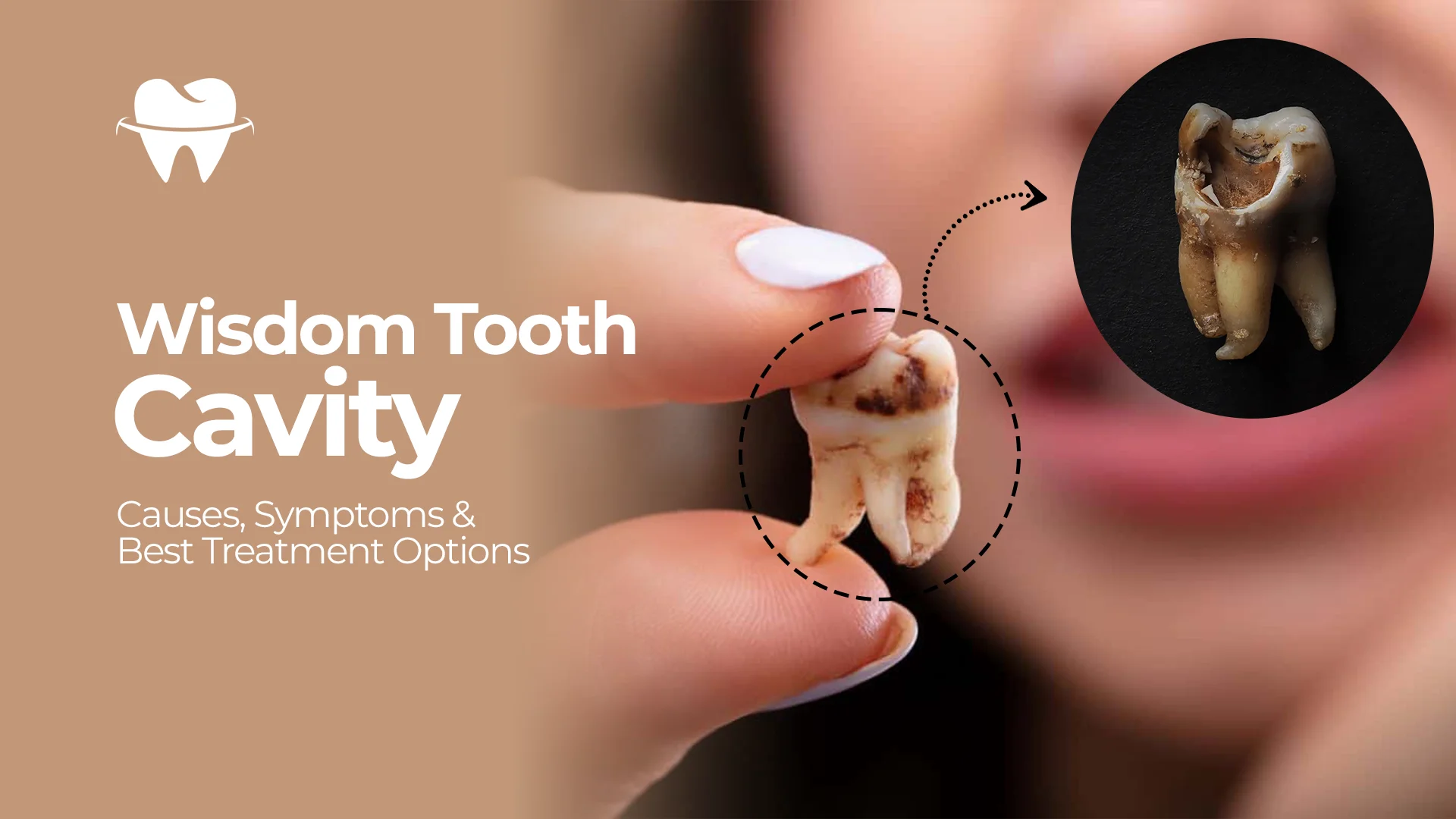
A wisdom tooth cavity is simply tooth decay that develops in one of your back molars, the third molar or “the wisdom tooth.” These are called wisdom teeth, and they usually appear in your late teens or early twenties.
How Cavity Develops? The wisdom teeth are located so far back that they are harder to clean properly. Food particles and bacteria can easily get trapped around them. Over time, this leads to decay, which creates a cavity.
Unlike cavities in front teeth, cavities in these molars can go unnoticed for longer. By the time you feel pain, the damage may already be significant.
Causes of Wisdom Tooth Cavity
Understanding the causes of wisdom tooth cavities can help you prevent problems before they begin.
1. Poor Cleaning in Hard-to-Reach Areas
Wisdom teeth are located at the very back of your mouth, making brushing and flossing more difficult. When these areas are not cleaned properly, bacteria and plaque build up, leading to tooth decay over time.
2. Impacted or Partially Erupted Teeth
In many cases, wisdom teeth do not fully emerge from the gums. These partially erupted teeth create pockets where food particles and bacteria get trapped, significantly increasing the risk of cavities and infection.
3. Food Trapping Between Teeth
Tight or awkward spacing around wisdom teeth can easily trap food debris. If not removed, this buildup turns into plaque, which gradually damages the enamel and causes cavities.
4. Gum Inflammation Around Wisdom Teeth
Swollen or infected gums (often due to pericoronitis) make it harder to maintain proper oral hygiene. This creates an ideal environment for bacteria to grow and worsen tooth decay.
5. Crowding and Misalignment
Wisdom teeth often grow at odd angles, pushing against neighboring teeth. This misalignment creates tight spaces that are difficult to clean and more prone to plaque accumulation.
6. Lack of Regular Dental Checkups
Without routine offline and online dental consultations, early signs of cavities in wisdom teeth can go unnoticed. Since these teeth are harder to examine, decay may progress before it is detected.
7. High Sugar and Acidic Diet
Frequent consumption of sugary or acidic foods increases the risk of cavities, especially in areas that are already difficult to clean, like wisdom teeth.
Common Symptoms of a Wisdom Tooth Cavity
Recognizing symptoms early can save you from severe pain and expensive treatments. Many people ignore early signs, thinking they will go away on their own.
- Persistent Pain at the Back of the Mouth: One of the most common symptoms is a dull or sharp pain in the back of your jaw. It may come and go at first, but it usually gets worse over time.
- Sensitivity to Hot and Cold Foods: If you feel discomfort while eating hot tea or cold drinks, it could be a sign of a cavity forming in your wisdom tooth.
- Swelling or Redness in Gums: Inflamed gums around the wisdom tooth area are a clear warning sign. This may also make it painful to chew.
- Bad Breath or Unpleasant Taste: Bacteria buildup often causes bad breath that does not go away even after brushing.
- Difficulty Opening Your Mouth: In advanced cases, pain and swelling can make it hard to open your mouth fully.
Wisdom Tooth in Sinus Cavity Symptoms
In some cases, upper wisdom teeth are located close to the sinus cavity. This can create unusual symptoms that many people do not connect with dental issues.
- Sinus Pressure or Pain: You may feel pressure around your cheeks or eyes. This can feel similar to a sinus infection.
- Headaches and Facial Pain: Pain may spread from the tooth to other parts of your face, making it harder to identify the exact cause.
- Nasal Congestion: Some people experience a blocked nose due to irritation near the sinus area.
- Tooth Pain While Bending Down: If pain increases when you bend forward, it may be linked to sinus involvement.
Best Wisdom Tooth Cavity Treatment Options
The right wisdom tooth cavity treatment depends on the severity of decay, tooth position, and overall oral health. Early diagnosis allows for simpler, less invasive, and more effective treatment.
1. Dental Fillings
For small cavities, the dentist removes the decayed portion and restores the tooth with a filling. This stops further decay and brings back normal function. Tooth-colored composite tooth fillings are commonly used for a natural look.
2. Deep Cleaning and Medication
If cavities are associated with gum infection or inflammation, deep teeth cleaning (scaling and polishing) may be recommended. Toothache tablets, antibiotics, or antibacterial rinses can also be prescribed to control bacteria, reduce swelling, and support healing.
3. Root Canal Treatment
When decay reaches the inner pulp, a root canal may be required. The infected tissue is removed, the tooth is cleaned and sealed, and a crown may be placed to strengthen and protect the tooth while preserving it.
4. Wisdom Tooth Extraction
If the wisdom tooth is severely decayed, impacted, or hard to treat, extraction is often the best option. Removing the tooth helps prevent ongoing pain, infection, and damage to surrounding teeth.
5. Dental Crown
In cases where the tooth is saved after treatment, a dental crown may be recommended to restore strength and durability, especially if the tooth structure is weakened.
6. Regular Monitoring and Follow-Ups
For early or mild cases, dentists may suggest regular monitoring with routine checkups to track the condition and intervene before it worsens.
How to Prevent Wisdom Tooth Cavities
Prevention is always better than treatment. With a few simple habits, you can reduce the risk of cavities in your wisdom teeth.
- Brush Carefully and Thoroughly: Make sure to reach the back of your mouth while brushing. Use a soft-bristled toothbrush for better control.
- Floss Regularly: Flossing helps remove food particles stuck between teeth that brushing cannot reach.
- Visit Your Dentist Regularly: Routine checkups can catch problems early before they turn serious.
- Consider Early Evaluation: Dentists can assess whether your wisdom teeth need removal before problems begin.
Summing Up
A wisdom tooth cavity may start as a small problem, but it can quickly turn into something much more serious if ignored. The good news is that it is preventable and treatable with the right care. By understanding the causes, recognizing symptoms early, and choosing the best treatment option, you can protect your oral health and avoid unnecessary pain.
Simple habits that help maintain oral hygiene can make a big difference. If you notice any discomfort at the back of your mouth, do not ignore it. Taking timely steps will help you stay comfortable, confident, and cavity-free.
Frequently Asked Questions
What are the early signs of a wisdom tooth cavity?
Early signs include mild pain, sensitivity to hot or cold, bad breath, and slight gum swelling. These symptoms may seem small, but they can worsen quickly.
Can a wisdom tooth cavity heal on its own?
No, a cavity cannot heal naturally. Once decay starts, it needs proper dental treatment like fillings or removal, to stop it from getting worse.
What is the best wisdom tooth cavity pain relief at home?
Warm saltwater rinses, cold compresses, and over-the-counter pain relievers can help manage discomfort temporarily, but visiting a dentist is still necessary for proper treatment.
When should a wisdom tooth be removed due to a cavity?
A wisdom tooth should be removed if the cavity is severe, the tooth is impacted, or cleaning and treatment are not effective in preventing further decay.
Can a wisdom tooth in the sinus cavity cause serious issues?
Yes, it can cause sinus pressure, headaches, and facial pain. If untreated, it may lead to infection, making early diagnosis and treatment very important.

0 Comments