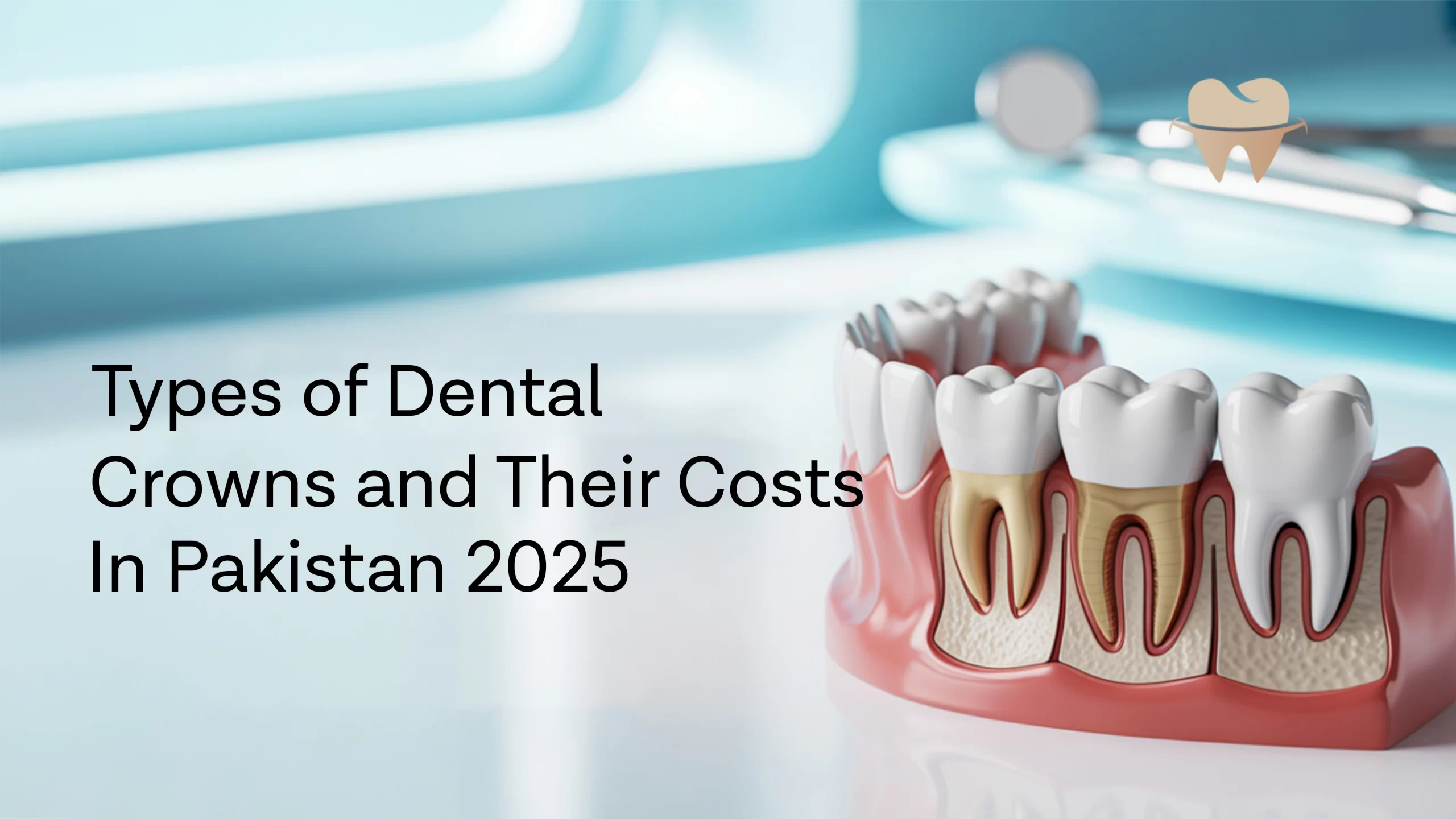
A cracked molar, a tooth worn thin by years of grinding, or one left fragile after a root canal does not have to mean losing it. With modern restorative and cosmetic dentistry, a crown can cap the damaged tooth, restore its shape and strength, and let you bite and smile normally again.
More people in Pakistan are choosing dental crowns for exactly that reason. A well-made crown looks like a natural tooth, protects what is left of the original structure, and can last many years with proper care.
The catch is that crowns are not one product. Metal, porcelain-fused-to-metal, all-ceramic, zirconia, E-max, gold, and temporary crowns each behave differently in the mouth and sit at very different price points. Choosing on price alone often means paying twice.
This guide walks through seven common crown types, what each is genuinely best suited for, and the price ranges you can expect across major cities in Pakistan. You will also find guidance on how long crowns last, what the procedure involves, and how to care for one so it lasts.
The Different Types of Dental Crowns in Pakistan
Here are some of the different dental crown types that you can find in the country:
1. Metal Crowns
Metal crowns are made of metals like gold or alloys (nickel, palladium). These become distinctly apparent among the neighboring white teeth. That’s why dentists usually place them on the back teeth. Their strength and durability make them a good fit for the molars at the back.
The big advantage? They cost reasonably and are long-lasting. In Pakistan in 2026, the price of metal crowns is about PKR 10,000 to 15,000 per tooth. This falls quite near to the cost of teeth filling in Pakistan.
2. Porcelain-Fused-to-Metal (PFM) Crowns
This type of dental crown fuses a metal core with a porcelain outer layer. This gives you dual benefits: strength inside and a natural outer look. This type of dental crown is usable for both the front and the back teeth.
In Pakistan, the PFM crowns typically range in cost from PKR 12,000 to 20,000. Some clinics may charge as high as PKR 25,000, depending on their location and crown quality.
3. All-Ceramic (Full Porcelain) Crown
All-ceramic crowns are made entirely from porcelain or lithium disilicate. These bear the most resemblance to real teeth and do not cause any type of metal allergies. It’s why they are the best choice of dentists in Pakistan for use on front teeth.
Their costs in Pakistan in 2026 range from PKR 15,000 to 30,000 per tooth. Sometimes, it’s even more than this price range, depending on the clinic and shading choice.
4. Zirconia Crowns
Zirconia is also a ceramic, but a strong one. This crown material combines durability with a very natural teeth shade. So, besides strength, the zirconia crowns impart aesthetics to your smile arc.
In Pakistan’s major cities like Lahore and Karachi, the cost of zirconia crowns varies. Generally, they fall between PKR 25,000 and 40,000 to 50,000 per crown, depending on the dental clinic, lab technology, and crown style (solid vs layered). For high-end layered zirconia crowns, the price may go as high as PKR 60,000.
5. E-max Crowns
E-max crowns use lithium disilicate ceramic, known for excellent aesthetics and moderate strength. E-max is the best choice for top-quality smiles, but only if your budget allows you to have them.
Due to the material quality and strength, the e-max crowns are often priced higher than basic porcelain crowns. In Pakistan, their average price ranges between PKR 30,000 to 50,000 per crown. However, these crown types are not available at every dental clinic in the country.
6. Temporary Crowns
Acrylic or prefabricated tooth caps make up the temporary crowns for your teeth. These are a good option to consider during the time your permanent crowns are prepared. Despite their use for a limited time, the temporary crowns well-protect your teeth and let you eat normally between visits.
Temporary crowns are perhaps the cheapest of all. In most clinics in Pakistan, their cost range between PKR 5,000 to 8,000 per tooth.
7. Gold Crowns
A type of metal, gold crowns are traditional and long-lasting. While they are slightly less popular in the present time, some dentists still use them.
The price for these gold crowns varies by market value. In Pakistan, dentists may charge around PKR 20,000 to 30,000 for this crown type. It’s similar in cost to the Invisalign price in Pakistan.
Dental Crowns Cost Comparison Table (Pakistan 2026)
The following is a quick price comparison of all the dental crown types in Pakistan:
| Crown Type | Typical Price (PKR) | Strength | Natural Look |
| Metal Crown | 10,000-15,000 | Very Strong | Poor |
| PFM Crown | 12,000-20,000 (up to 25k) | Good | Fair |
| All-Ceramic (Porcelain) | 15,000-30,000 | Moderate | Excellent |
| Zirconia Crown | 25,000-50,000 (up to 60k) | Very Strong | Excellent |
| E-max Crown | 30,000-50,000 | Strong | Excellent |
| Gold Crown | 20,000-30,000 | Very Strong | Poor |
| Temporary Crown | 5,000-8,000 | Low | Fair |
How to Choose the Right Dental Crown
The best crown is the one that matches the tooth and the job it has to do. A few practical rules help:
- Front teeth: appearance matters most, so all-ceramic, E-max, or layered zirconia give the most natural translucency with no dark metal line at the gum.
- Back teeth and molars: these absorb the heaviest chewing forces, so strength wins. Zirconia, metal, or gold crowns hold up best.
- Tight budgets: PFM crowns remain the most common compromise, offering a tooth-coloured surface at a lower cost than full ceramic.
- Metal sensitivity: all-ceramic and zirconia are metal-free options worth discussing with your dentist.
- Grinding or clenching: tell your dentist, because ceramic can chip under heavy bruxism and you may need a stronger material or a night guard.
For a closer look at the two most commonly compared options, see our breakdown of zirconia crowns versus porcelain crowns.
What Affects the Cost of a Dental Crown?
Two patients can be quoted very different prices for what sounds like the same crown. The main reasons are:
- Material: the single biggest factor, as ceramic and zirconia cost more than metal or PFM.
- Laboratory quality: crowns milled in a high-quality lab fit better and last longer, and that shows in the price.
- City and clinic: premium clinics in larger cities generally charge more than smaller local practices.
- Dentist experience: a more experienced dentist may charge a higher fee, but a well-fitted crown avoids costly remakes.
- Extra treatment needed first: a root canal, a post and core, or a build-up all add to the total.
- Number of crowns: several crowns done together often work out cheaper per tooth than one at a time.
Always ask for a written, itemised quote that states whether the price includes the consultation, any preparatory treatment, the fitting, and follow-up visits.
The Dental Crown Procedure: What to Expect
Getting a crown usually takes two visits. At the first, the dentist examines the tooth, takes X-rays, and numbs the area before reshaping the tooth so the crown can fit over it. An impression or digital scan is taken and sent to the laboratory, and a temporary crown protects the tooth in the meantime.
At the second visit, the temporary crown is removed and the permanent one is checked for fit, bite, and colour before it is cemented in place. Some clinics with same-day technology can complete the whole process in a single appointment. Mild sensitivity for a few days afterwards is normal, but a crown that feels high when you bite should be adjusted rather than tolerated.
How Long Do Dental Crowns Last and How to Care for Them
Most crowns last many years, and the material matters less than how well you look after it. Metal and gold crowns tend to be the longest lasting, zirconia and E-max are highly durable, and PFM crowns can eventually show a dark line at the gum if the gum recedes.
Crowns do not decay, but the natural tooth underneath still can, and that is the most common reason a crown fails. Brush twice daily, floss carefully around the crown margin, avoid chewing ice or opening packets with your teeth, wear a night guard if you grind, and keep up with regular cleaning appointments so problems are caught early.
Final Thoughts
A dental crown is one of the most reliable ways to save a damaged tooth, and Pakistan now offers every major material at a range of price points. The differences in cost come down to the material, the laboratory, and the expertise behind the work, not marketing.
As a general rule, choose aesthetics for front teeth and strength for back teeth, and treat the cheapest quote with caution. A poorly fitted crown can lead to decay underneath, gum irritation, and a remake that costs more than doing it properly the first time.
The most useful next step is an examination. Your dentist can tell you how much healthy tooth structure remains, whether any preparatory treatment is needed, and which crown material genuinely suits your bite and budget. This article is for general education and is not a substitute for a dental examination.
Frequently Asked Questions
Which crown is best for front teeth in Pakistan?
All-ceramic or zirconia crowns are best for front teeth. They look most natural and blend well with your smile, though the costs are higher.
How long do crowns last?
Most crowns last 10 to 20 years or longer with good care. Metal or zirconia crowns tend to last longer. Porcelain may wear or chip over time. Your dentist can help you choose one based on how long you want it to last.
Which type of dental crown is the strongest?
Zirconia, metal, and gold crowns are the strongest options and handle heavy chewing forces well, which makes them a common choice for back teeth. All-ceramic and E-max crowns look more natural but are better suited to front teeth.
Is a dental crown painful?
The procedure itself is not painful, as the tooth and surrounding area are numbed with local anaesthetic. Some sensitivity to hot and cold for a few days afterwards is normal. If the crown feels high when you bite, ask your dentist to adjust it.
How many visits does a dental crown take?
Most crowns take two visits, one to prepare the tooth and take an impression, and another to fit the permanent crown. Clinics with same-day crown technology can sometimes complete it in a single appointment.
Can a crowned tooth still get a cavity?
Yes. The crown itself does not decay, but the natural tooth underneath can, usually where the crown meets the gum. Careful brushing, flossing around the crown margin, and regular checkups prevent this.
What is the difference between a crown and a veneer?
A crown covers the whole tooth and restores strength to a damaged or weakened tooth. A veneer is a thin shell bonded only to the front surface and is used mainly for appearance on otherwise healthy teeth.