TL;DR
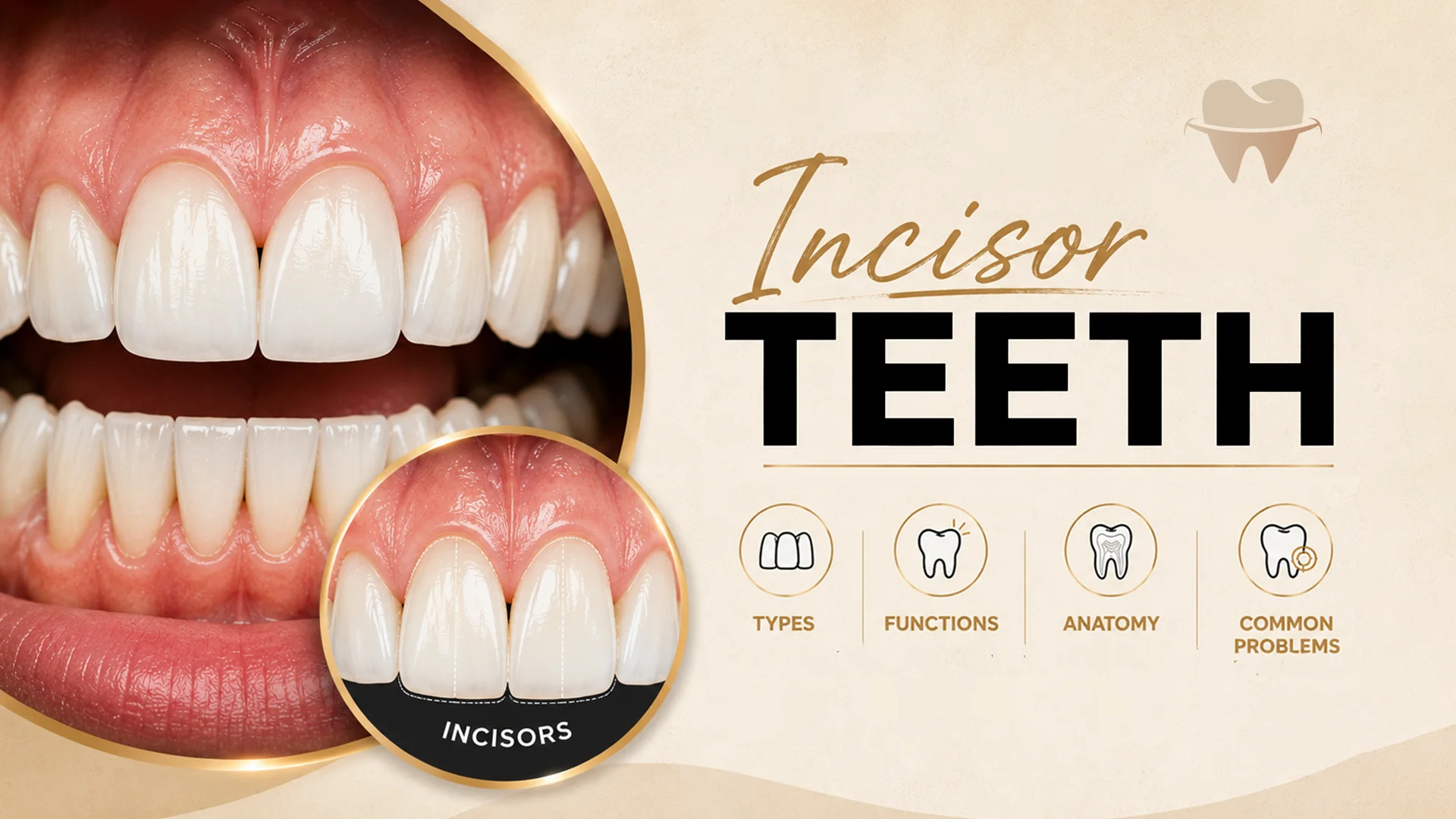
- Incisor teeth are the eight front teeth, four on the upper jaw and four on the lower jaw.
- Types of incisors include central incisors (the two on either side of the midline) and lateral incisors (adjacent to the central incisors).
- Incisor teeth function includes cutting food, aiding speech, supporting facial structure, and guiding the bite.
- Teeth anatomy of incisors includes enamel, dentin, cementum, and pulp, each serving a vital role.
- Common incisor problems include impaction, misalignment, chips, decay, and sensitivity.
- Incisor teeth treatments range from composite bonding and veneers to orthodontic treatment and surgery.
When you smile, the first teeth people notice are your incisors. These eight front teeth are among the most visible and functionally important teeth in your mouth: they help you bite into food, speak clearly, and support your facial structure. Yet many people are unaware of their specific roles, anatomy, and the common problems that can affect them.
This guide explains what incisor teeth are, the different types, their anatomy, the problems that affect them, and the treatments available. Whether you are dealing with a chipped or broken front tooth or simply want to learn more about teeth anatomy, here is what you need to know.
Quick answer: Incisor teeth are the eight front teeth (four upper, four lower) that cut and bite food, help you speak clearly, and support your smile and facial structure. They come in two types: central incisors (larger and most visible) and lateral incisors (smaller, beside them). Common problems such as chips, decay, and misalignment can be treated with bonding, veneers, crowns, or orthodontics.
What Are Incisor Teeth?
Incisor teeth are the eight front teeth in your mouth: four on the upper jaw (maxillary) and four on the lower jaw (mandibular). They are the most visible teeth and the first to contact food when you bite. Their main job is cutting and shearing food into smaller pieces, and each incisor has a single narrow edge that slices through food efficiently, making them the first step in the digestive process.
Human incisors are among the first permanent teeth to erupt in childhood, usually around age 6 or 7, and among the first baby teeth to be lost to make way for the permanent ones.
Types of Incisor Teeth
There are two main types within the incisor category: central incisors and lateral incisors, each with distinct features.
| Feature | Central incisors | Lateral incisors |
|---|---|---|
| Position | Directly beside the midline | Adjacent to the central incisors |
| Size | Larger and more prominent | Smaller and thinner |
| Upper jaw | Largest of all incisors | Varies in shape; may be peg-shaped |
| Lower jaw | Smallest of all teeth | Slightly wider and longer than lower central incisors |
| Function | Primary biting and cutting | Assist in cutting and dividing food |
| Root anatomy | Single root | Single root |
Central Incisors
Central front teeth are the two teeth on either side of the midline in both jaws. They are the most prominent teeth in your mouth and play a key role in your smile. In the upper jaw they are larger and more visible than their lower counterparts, have sharper incisal angles than lateral incisors, and are the longest of all incisor teeth.
Lateral Incisors
Lateral incisors sit next to the central incisors in each jaw and are smaller and thinner. They have a single root and a thin, narrow edge, and they help divide food into smaller pieces during chewing. Maxillary lateral incisors vary the most in shape and can sometimes be peg-shaped (known as peg laterals) or congenitally missing.
How Many Incisors Do Adults Have?
Most adults have eight incisor teeth: four in the upper jaw and four in the lower jaw. Adults typically have 32 permanent teeth in total, including these eight incisors, four canines, eight premolars, and 12 molars.
Anatomy of Incisor Teeth
Understanding the structure of incisor teeth helps explain why they are vulnerable to certain conditions. Each tooth is made up of several layers and components.
| Component | Description | Location |
|---|---|---|
| Crown | The visible part above the gumline | Outer visible portion |
| Root | The part embedded in the jawbone | Anchored in the alveolus |
| Enamel | Hardest substance in the body; the protective outer layer | Outermost covering |
| Dentin | Layer beneath enamel; less hard than enamel | Under enamel, surrounding the pulp |
| Cementum | Layer covering the root | Root surface |
| Pulp | Innermost layer with nerves and blood vessels | Central chamber |
| Incisal edge | Sharp edge used for cutting food | Cutting surface of the crown |
Unique Features of Incisor Anatomy
Incisor teeth have a single root, unlike molars that often have multiple roots. Newly erupted permanent incisors often show three small bumps on the incisal edge, called mamelons, which usually wear away with normal chewing. The upper central incisors are the largest and most conspicuous incisors, while the lower central incisor is the smallest tooth of all.
Root and Canal Anatomy
Mandibular incisors typically have a single root. The mean length of a mandibular central incisor is about 20.71 mm, and a mandibular lateral incisor about 21.56 mm. Studies of Vertucci’s canal configurations show that 50 to 62% of mandibular incisors have a single canal to a single apical foramen (type I), while about 28% have two canals joining into one (type III). Accessory canals are relatively uncommon.
Functions of Incisor Teeth
The role of incisor teeth goes well beyond biting. These versatile front teeth serve several vital functions:
- Cutting and biting food: their sharp, narrow edges act like scissors, slicing through food on the first bite and preparing it for the premolars and molars.
- Speech production: they help form sounds such as f, v, th, and s. Missing or misaligned incisors can alter speech.
- Facial support and aesthetics: they support your lips and help maintain the contour of your face, preventing a sunken appearance after tooth loss.
- Guiding the bite: they guide your jaw into position when you close your mouth, protecting the back teeth from excessive force.
- Protecting the tongue and cheeks: these teeth help keep your tongue and cheeks safely positioned during chewing and speaking, and move food toward the back teeth.
Baby Incisor Teeth
Baby incisor teeth (deciduous incisors) are the first teeth to erupt in infants, usually around 8 or 9 months of age. Children have 20 primary teeth in total, including incisors, canines, and molars. Baby incisors are usually the first to fall out, around age 6 or 7, and they guide the eruption of the permanent incisors while holding space in the jaw, so caring for them well supports healthy adult teeth.
Common Problems Affecting Incisor Teeth
Because of their position and role, incisor teeth are prone to several issues.
1. Impacted Incisors
An impacted incisor fails to erupt properly and stays trapped in the gums or jawbone. A common cause is supernumerary (extra) teeth, responsible for delayed eruption or impaction in 28 to 60% of cases.
2. Crooked or Misaligned Incisors
Misaligned incisors can affect both function and appearance. Common patterns include:
| Type of misalignment | Description |
|---|---|
| V-shaped incisors | Central incisors deviate from alignment, forming a sharp V-shape |
| Tilted incisors | Incisors grow at an angle rather than upright |
| Irregularly misaligned | One incisor protrudes while the other tilts inward |
Causes include genetics, crowding, early tooth loss, and habits like thumb sucking or tongue thrusting.
3. Chipped or Broken Incisors
Due to their position, incisors are vulnerable to trauma from accidents, sports injuries, or biting hard objects.
4. Tooth Decay
Cavities can develop on incisors, especially near the gumline or between teeth. Early detection and filling treatment prevent the need for more extensive procedures.
5. Tooth Sensitivity
Sensitivity to hot, cold, or sweet stimuli often points to worn enamel or exposed roots.
6. Gemination and Supernumerary Teeth
A geminated tooth forms when two teeth develop from the same tooth bud, creating an unusually large or broad crown, most often in the upper incisors. Extra (supernumerary) teeth can also cause crowding or impaction.
7. Enamel Opacities and Discoloration
Developmental defects such as Molar Incisor Hypomineralisation (MIH) can affect the enamel and may need microabrasion, bleaching, resin infiltration, or composite restorations.
Treatment Options for Damaged Incisors
Incisor teeth treatments vary depending on the specific issue:
1. Composite Bonding
For chipped or slightly misaligned teeth, composite bonding offers a quick, affordable solution. Tooth-colored resin is applied and sculpted to restore the tooth’s appearance.
| Treatment option | Best for | Duration | Longevity |
|---|---|---|---|
| Composite bonding | Small chips, minor misalignment | About 1 hour | 5 to 10 years |
| Porcelain veneers | Moderate chips, discoloration, gaps | 2 to 3 visits | 15 to 20 years |
| Orthodontic treatment | Crooked or misaligned incisors | 12 to 24 months | Permanent (with retention) |
| Dental crowns | Severe damage or large fractures | 2 visits | 10 to 15 years |
2. Porcelain Veneers
For significant cosmetic issues, veneers provide durable, stain-resistant coverage that can correct shape, color, and minor alignment issues.
3. Orthodontic Treatment
For misaligned or crooked incisors, braces or clear aligners offer natural, long-lasting results. Treatment typically takes 12-24 months, depending on the complexity of the case.
4. Surgical Treatment for Impacted Incisors
Treatment of impacted incisors requires a joint effort between an orthodontist and an oral surgeon.
Treatment steps include:
- Removal of physical obstruction (supernumerary teeth, odontomes)
- Creation of space for eruption
- Surgical exposure of the impacted tooth
- Orthodontic traction (bonding an attachment to guide eruption)
Success rates: When surgical exposure is combined with orthodontic traction, the chances of eruption increase to 90%. Spontaneous eruption following removal of a supernumerary tooth occurs in 49-91% of cases, though eruption may take up to 18 months.
5. Management of Geminated or Supernumerary Teeth
The esthetic management of geminated or supernumerary maxillary incisors requires a conservative interdisciplinary approach involving precise analysis, minimally invasive procedures, and collaboration among dental specialties to achieve optimal outcomes.
How to Care for Your Incisor Teeth
| Care area | Recommendation |
|---|---|
| Daily brushing | Brush twice daily for two minutes with a soft-bristled brush |
| Flossing | Floss daily to remove plaque from between teeth |
| Toothpaste | Use fluoride toothpaste to strengthen enamel |
| Mouthguards | Wear a mouthguard during contact sports |
| Regular check-ups | Visit your dentist every six months for cleanings and exams |
| Avoid hard objects | Do not chew ice, pens, or other hard objects |
Professional care: Regular check-ups and professional cleanings are essential for early detection of problems affecting your incisors. Discuss any concerns with your dentist promptly.
Conclusion
Incisor teeth are among the most visible and important teeth in your mouth. They help you bite into food, speak clearly, and smile confidently. Understanding incisor teeth, their anatomy, and their functions helps you to take better care of them.
Whether you are dealing with a chipped front tooth, crooked incisors, or simply want to maintain your smile, modern dentistry offers effective solutions. Protect your incisors with good oral hygiene, regular dental visits, and prompt treatment of any issues.
Looking for expert care for your front teeth?
At Teeth and Gums, our experienced dental team provides comprehensive treatment for all incisor teeth issues, from bonding and veneers to orthodontic solutions.
Book your consultation today and keep your smile healthy and confident.
Looking for expert care for your front teeth?
At Teeth & Gums, our experienced team treats all incisor concerns, from bonding and veneers to orthodontic solutions.
Frequently Asked Questions
What are incisor teeth?
Incisor teeth are the eight front teeth in your mouth, four on the upper jaw and four on the lower jaw. They have sharp edges designed for cutting and biting food.
How many incisor teeth do adults have?
Adults have eight incisor teeth, four on the upper jaw and four on the lower jaw.
What is the function of incisor teeth?
Their primary function is to cut and bite food. They also aid speech, support facial structure, and guide the bite into proper position.
What is the difference between central and lateral incisors?
Central incisors sit on either side of the midline and are larger and more prominent. Lateral incisors are next to them and are smaller and thinner.
Can an incisor tooth be repaired if it chips or breaks?
Yes. Chipped or broken incisors can be repaired with composite bonding, porcelain veneers, or dental crowns, depending on the severity of the damage.
What causes pain in an incisor tooth?
Pain can be caused by tooth decay, trauma, infection, sensitivity from worn enamel, or gum disease.
When do children’s incisor teeth erupt?
Baby incisors usually erupt around 8 or 9 months of age, and permanent incisors typically start erupting around age 6 or 7.