SUMMARY
- A calculus bridge is a hardened, solid mass of tartar spanning multiple teeth that cannot be removed at home.
- Calculus bridge signs include yellow or brown staining along the gumline, bleeding gums, bad breath, and gum inflammation.
- Calculus bridge causes include poor oral hygiene, smoking, sugary diets, dry mouth, genetics, and certain medical conditions.
- Calculus bridge treatment requires professional scaling and root planing. In severe cases, multiple sessions or surgery may be needed.
- Prevention through daily brushing, flossing, regular dental visits, and a healthy diet is the best strategy to avoid a calculus bridge.
- Untreated calculus bridges can lead to gum disease, cavities, receding gums, and tooth loss.
You brush your teeth every morning. You floss when you remember. You might even use mouthwash. But despite your best efforts, something feels wrong. Your gums bleed when you brush. Your breath doesn’t seem fresh no matter how often you clean.
And when you look in the mirror, you notice a brownish or yellowish buildup along your gumline that spans across several teeth. This buildup isn’t just a cosmetic problem, it’s a warning sign. A calculus bridge may have formed in your mouth, and it needs professional attention.
This comprehensive guide will explain what a calculus bridge is, what causes it, how to recognize the signs, and what calculus bridge treatment options are available. Understanding this condition is the first step toward protecting your smile and overall oral health.
Quick Definitions
| Term | Definition |
| Calculus Bridge | A hardened, solid mass of tartar (calculus) connecting multiple adjacent teeth |
| Tartar (Calculus) | Hardened plaque that has mineralized and cannot be removed by brushing alone |
| Plaque | A sticky, colorless film of bacteria, saliva, and food particles that forms on teeth daily |
| Scaling | Professional procedure where a dentist or hygienist scrapes tartar from teeth |
| Root Planing | Smoothing of tooth roots below the gumline to prevent bacteria reattachment |
What Is a Calculus Bridge?
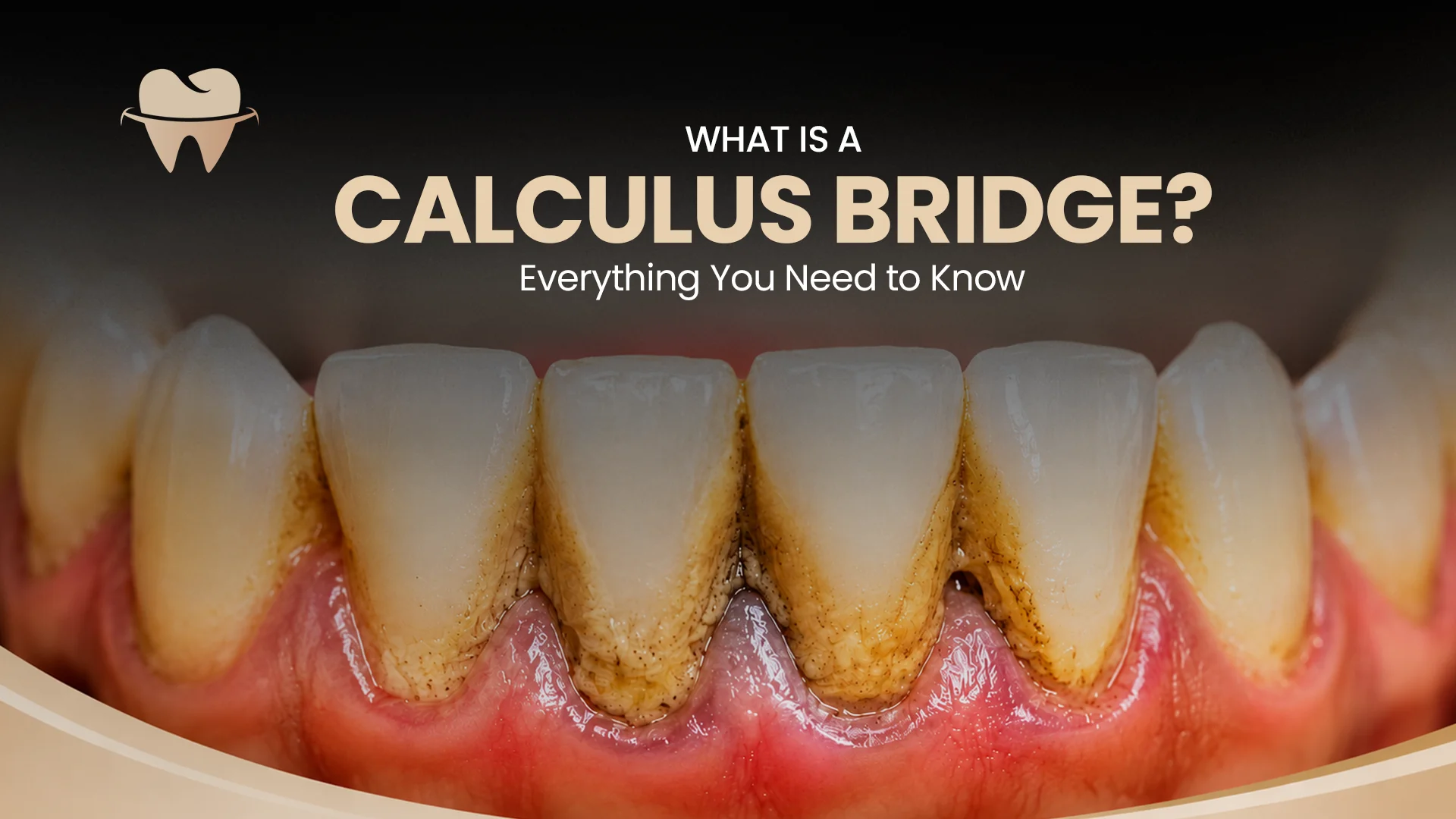
A calculus bridge is exactly what it sounds like; a “bridge” of hardened dental calculus that spans across two or more adjacent teeth. It develops when tartar buildup on individual teeth grows so extensively that it merges with tartar on neighboring teeth, forming a continuous, solid mass.
To understand how this forms, let’s first understand the difference between plaque and tartar:
- Plaque is a soft, sticky film of bacteria, saliva, and food particles that forms on teeth throughout the day. It is colorless and can be removed with regular brushing and flossing.
- Tartar (calculus) is plaque that has remained on teeth long enough to harden, a process that can begin within 24 to 72 hours. Once plaque calcifies into tartar, it cannot be removed with a toothbrush or floss. Professional dental scaling is required.
A calculus bridge occurs when tartar deposits expand to cover multiple teeth, filling spaces between teeth and often extending below the gumline. The bridge acts like a breeding ground for bacteria, making it harder to clean your teeth and increasing the risk of serious oral health problems.
What Does a Calculus Bridge Look Like?
A calculus bridge typically appears as a yellow, brown, tan, or even black or green band of discoloration along the gumline. The color can darken over time, becoming more noticeable the longer it remains untreated. In more severe cases, it may extend upward along the tooth surface or downward below the gums.
The appearance varies from person to person. Some people may have a thin line of hardened buildup, while others may have a thick, crusty layer that covers large portions of their teeth. Regardless of appearance, the presence of this element is a serious dental concern requiring professional intervention.
How to Recognize the Warning Signals
Calculus often develops gradually. Many people don’t realize they have one until they experience noticeable symptoms. Here are the most common signs to watch for:
Visual Signs
| Sign | What It Looks Like |
| Yellow or Brown Staining | Discolored band along the gumline spanning multiple teeth |
| Solid Buildup Between Teeth | Visible hardened material filling spaces between adjacent teeth |
| Gumline Deposits | Crusty, cement-like layer covering the tooth surface near the gums |
| Dark Spots or Black Deposits | In severe cases, calculus may appear dark or black |
Physical Symptoms
- Bleeding gums when brushing or flossing, often the first noticeable sign
- Red, swollen, or tender gums (gingivitis)
- Receding gums, gums pulling away from teeth, exposing roots
- Persistent bad breath (halitosis) that doesn’t improve with brushing
- Tooth sensitivity to hot, cold, or sweet foods
- Loose teeth in advanced cases
- Pain when chewing or biting
When to See a Dentist
If you notice any of these signs, do not wait. A calculus bridge will not resolve on its own, and delaying calculus bridge treatment can lead to complications. The longer the bridge remains in place, the greater the chance of developing more severe dental problems such as gum disease or tooth decay.
Calculus Bridge Causes: Why Does It Develop?
Several factors contribute to the formation of calculus. Understanding these causes can help you prevent the condition and protect your oral health.
Primary Causes and Risk Factors
| Cause | Explanation |
| Poor Oral Hygiene | Inadequate brushing and flossing allow plaque to accumulate and harden into tartar |
| Inconsistent Dental Visits | Skipping professional cleanings allows tartar to build up unchecked |
| Smoking and Tobacco Use | Tobacco increases tartar formation and impairs gum health |
| Sugary and Starchy Diet | Bacteria feed on sugars and starches, producing acids that lead to plaque |
| Dry Mouth | Reduced saliva flow means less natural cleansing of teeth |
| Age | Calculus bridges are more common as people get older |
| Pregnancy | Hormonal changes increase gum sensitivity and tartar risk |
| Diabetes | High blood sugar increases infection risk and tartar formation |
| Genetics | Some people are simply more prone to tartar buildup |
| Crowded or Crooked Teeth | Misaligned teeth are harder to clean effectively |
| Mouth Breathing | Dries out gums and increases bacterial growth |
The Development Process
Understanding how a calculus bridge develops helps you see why prevention is so important:
- Plaque formation: Bacteria, food particles, and saliva combine to form a sticky film on your teeth.
- Mineralization: If plaque is not removed, minerals in your saliva (calcium and phosphate) cause it to harden—a process that can begin within 24-72 hours.
- Tartar growth: Hardened tartar attaches firmly to teeth and cannot be brushed away. It expands and covers more tooth surface.
- Bridge formation: Tartar deposits on adjacent teeth merge, creating a solid mass that spans multiple teeth—a calculus bridge.
- Subgingival Extension: As tartar continues to accumulate, it spreads below the gumline, creating deep pockets where bacteria thrive. This subgingival calculus is particularly destructive because it accelerates bone loss and is more difficult to remove during professional cleaning.
Professional Removal Options
Once a bridge has formed, it cannot be removed at home. No amount of brushing, flossing, or using commercial “tartar removal” tools will work. In fact, attempting to remove it yourself can damage your gums and tooth enamel.
Calculus bridge treatment requires professional intervention from a dentist or dental hygienist.
Professional Cleaning Procedures
Calculus bridge removal typically involves one or more of the following procedures:
1. Scaling
Scaling is the primary method for calculus bridge removal. Your dentist or hygienist uses specialized instruments to scrape the hardened tartar from your teeth .
- Hand scalers: Instruments with small hooks on the end used to manually scrape away tartar
- Ultrasonic scalers: Devices that vibrate at high speed and use water spray to break up and flush away calculus
2. RootPlaning
After scaling, your dentist may perform root planing, smoothing the root surfaces of your teeth below the gumline. This step makes it harder for bacteria to reattach and helps your gums heal and re-adhere to the tooth.
3. Polishing
Following scaling and root planing, your dentist will polish your teeth to smooth the surfaces and discourage fresh plaque buildup.
4. Antibiotics (If Infection Is Present)
If you have developed a gum infection, your dentist may prescribe antibiotics in the form of mouth rinses, gels, or oral medication.
5. Laser Therapy (Adjunctive Treatment)
In some cases, dentists may use dental lasers to remove infected gum tissue and bacteria from deep periodontal pockets. This technology can enhance the effectiveness of scaling and rootplaning, reduce bleeding, and promote faster healing of gum tissue.
Severe Cases: Additional Interventions
For extensive calculus bridges, you may need more than one session to complete the removal. In cases where significant bone loss has occurred, additional treatments may be necessary:
- Flap surgery: Gums are lifted to allow deep cleaning below the gumline
- Tooth splinting: Teeth may be joined together for stability
- Extraction: In severe cases where bone loss is extensive, teeth may need to be removed
What to Expect After Calculus Bridge Removal
After calculus bridge treatment, your gums may feel sore and sensitive for a few days. This is normal and should resolve with proper care. Some patients notice that their teeth feel slightly loose after removal because calculus was providing structural support. This sensation is usually temporary as the gums heal and reattach.
Complications of Untreated Calculus Bridges
A calculus bridge is not just a cosmetic concern. It is a serious dental condition that can lead to significant health problems if left untreated.
| Complication | Description |
| Halitosis (Bad Breath) | Bacteria in trapped under calculus produce foul-smelling compounds |
| Gingivitis | Gum inflammation causing redness, swelling, and bleeding |
| Periodontitis | Advanced gum disease that destroys bone supporting teeth |
| Receding Gums | Gums pull away from teeth, exposing roots and increasing decay risk |
| Cavities (Tooth Decay) | Bacteria and acids eat away at tooth enamel |
| Tooth Loss | Advanced gum disease and bone destruction can lead to tooth loss |
Can a Calculus Bridge Cause Tooth Loss?
Yes. If a calculus bridge goes untreated, the bacteria trapped under the hardened deposits can cause gum disease that eventually destroys the bone supporting your teeth. Once enough bone is lost, teeth become loose and may fall out or require extraction.
Prevention
Prevention is always better than treatment. The most effective way to avoid calculus is to prevent plaque from hardening into tartar in the first place.
Daily Prevention Habits
- Brush twice daily for a full 2 minutes using a soft-bristled brush and fluoride toothpaste
- Floss daily to remove plaque from between teeth where brushing cannot reach
- Use a fluoride mouthwash if recommended by your dentist
- Replace your toothbrush every 3 months or when bristles become worn
- Use an electric toothbrush with a pressure sensor
Lifestyle Changes
- Limit sugary and starchy foods and drinks
- Avoid tobacco—smoking and smokeless tobacco increase tartar risk
- Stay hydrated—drinking water helps flush bacteria from your mouth
- Chew sugar-free gum to stimulate saliva flow
- Manage underlying health conditions
Professional Prevention
- Visit your dentist every 6 months for professional cleanings and check-ups
- Consider tartar-control toothpaste if you are prone to buildup
- Discuss your risk factors with your dentist; they can recommend personalized strategies
Conclusion
A calculus bridge is more than a cosmetic problem. It is a serious dental condition that can lead to gum disease, tooth decay, and tooth loss if left untreated. The good news is that it is entirely preventable with daily brushing, flossing, and regular professional cleanings.
Even if a bridge has already formed, professional scaling and root planing can effectively remove it and restore your gum health.
Do not wait for warning signs like bleeding gums or bad breath. Protect your smile by scheduling a professional cleaning today.
At Teeth and Gums, we provide expert calculus bridge removal and comprehensive gum care. Schedule your professional cleaning today and keep your smile healthy and bright.
Frequently Asked Questions
Can a calculus bridge be removed at home?
No. A calculus bridge cannot be removed at home. Brushing, flossing, and at-home tartar removal tools will not work and can damage your gums. Professional calculus bridge removal by a dentist is required.
How does a calculus bridge form?
A calculus bridge forms when plaque is not removed from teeth and hardens into tartar (calculus) within 24-72 hours. Tartar deposits then expand and merge across adjacent teeth, forming a solid “bridge”.
What does a calculus bridge look like?
A calculus bridge typically appears as a yellow, brown, tan, or even black band of discoloration along the gumline that spans multiple teeth. It may also extend below the gums.
Is a calculus bridge harmful?
Yes. A calculus bridge is harmful and can cause bad breath, gum disease, tooth decay, receding gums, and eventual tooth loss if left untreated.
What are the early signs of a calculus bridge?
Early calculus bridge signs include bleeding gums when brushing, red or swollen gums, persistent bad breath, and visible yellow or brown buildup along the gumline spanning multiple teeth.
How long does calculus bridge removal take?
Removal time depends on the extent of the bridge. A simple case may take one 30-60 minute session. Extensive bridges may require multiple appointments to complete the calculus bridge treatment.
Can I prevent a calculus bridge from forming?
Yes. Prevention involves brushing twice daily for 2 minutes, flossing daily, using fluoride toothpaste, limiting sugary foods and drinks, avoiding tobacco, and visiting your dentist every 6 months for professional cleanings.