SUMMARY
- Gums bleeding during brushing is never normal. It indicates active gum inflammation caused by plaque bacteria, not aggressive brushing.
- Healthy gums are firm, pink, and do not bleed at all.
- Gingivitis causes include poor oral hygiene, tobacco use (paan, gutka, naswar), hormonal changes, diabetes, and vitamin C deficiency.
- Early signs are red, swollen, or shiny gums before bleeding starts.
- Treatment involves professional dental scaling (PKR 3,000-6,000) to remove tartar, followed by improved home care.
- Gingivitis is completely reversible; periodontitis causes permanent bone loss but can be stopped.
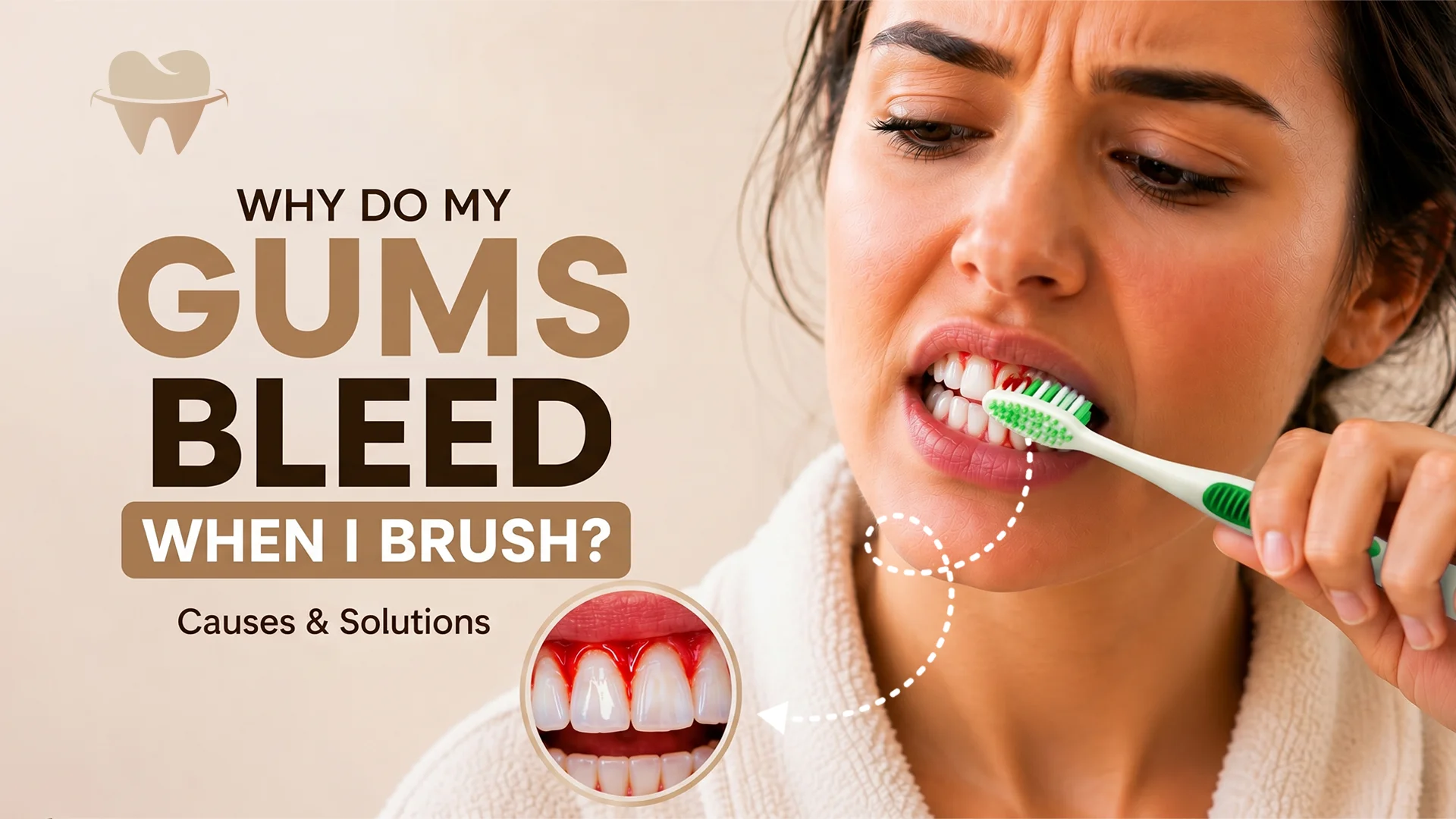
You finish brushing your teeth, rinse your mouth, and notice something troubling, pink or red tinged water swirling down the sink. Perhaps you see a small spot of blood on your toothbrush bristles. Your first thought might be that you brushed too hard. Your second thought might be to ignore it.
Gums bleeding during brushing is not normal. Healthy gums do not bleed. They are firm, pale pink, and fit tightly around each tooth without any sign of inflammation or blood. If your gums bleed when you brush, even occasionally, it is your body’s earliest warning signal that something is wrong beneath the surface.
In Pakistan, gum disease is alarmingly common. According to the Pakistan Oral Health Survey, over 80% of adults have some form of gum disease, yet most cases go undiagnosed until significant damage has already occurred.
The good news? Gingivitis treatment is simple, effective, and highly successful when caught early. Understanding why bleeding happens and what to do about it can save your teeth and your overall health.
Quick Definition: What Is Gum Disease?
Term | Definition |
Gingivitis | Early, reversible stage of gum disease affecting only the gum tissue |
Periodontitis | Advanced gum disease that has spread to the bone supporting the teeth |
Gums Bleeding | The most common early sign of active gum inflammation |
Dental Scaling | Professional removal of plaque and tartar from tooth surfaces |
Root Planning | Smoothing of tooth roots below the gum line to promote healing |
Gums Bleeding: What Is Actually Happening?
When you ask “why do my gums bleed” during brushing, the answer is hidden in biology. Your gums contain thousands of tiny blood vessels. In a healthy state, these vessels are protected by intact, firm tissue. When plaque, a sticky film of bacteria, accumulates along and below the gum line, your immune system responds with inflammation.
This inflammation causes your gum tissue to become swollen, red, and tender. The blood vessels dilate and become fragile. When your toothbrush bristles contact this inflamed tissue, the weakened vessel walls rupture easily, causing bleeding in the gums. The blood is a sign of injury at a microscopic level, not from brushing too hard.
The critical point: gums bleeding is caused by the bacteria in plaque, not by the toothbrush itself. The brush simply reveals a problem that was already present.
Gingivitis Causes: Why Does Inflammation Start?
Understanding gingivitis causes helps you prevent the condition before bleeding begins. Several factors contribute to the development of gum inflammation.
Primary Gingivitis Causes
Cause | Explanation | Prevalence in Pakistan |
Poor Oral Hygiene | Inadequate brushing and flossing allows plaque to accumulate | Very high |
Plaque and Tartar Buildup | Calcified plaque (tartar) cannot be removed by brushing alone | Universal in untreated cases |
Smoking and Tobacco Use | Paan, gutka, and naswar use directly damages gum tissue | Extremely common |
Hormonal Changes | Pregnancy, puberty, and menopause increase gum sensitivity | Affects millions of women |
Poor Nutrition | Vitamin C deficiency directly impairs gum health | Widespread in lower-income populations |
Diabetes | Uncontrolled blood sugar increases infection risk | Rising rapidly in Pakistan |
Certain Medications | Some drugs reduce saliva flow or cause gum overgrowth | Less common |
Genetic Predisposition | Some individuals are simply more prone to gum disease | Unknown percentage |
Secondary Gingivitis Causes
- Crooked teeth that are difficult to clean properly
- Poorly fitted dental restorations (crowns, bridges) that trap food
- Mouth breathing which dries out gum tissue
- Stress which weakens immune response
- Dry mouth from medications or medical conditions
Red Gums and Swollen Gums: Recognizing the Signs
Before gums bleeding becomes noticeable, other signs of swollen gums and red gums usually appear. Learning to recognize these early changes allows you to seek treatment before the condition progresses.
Visual Signs
Sign | What It Looks Like | What It Means |
Red Gums | Healthy pink color changes to bright red or purplish-red | Active inflammation; increased blood flow to the area |
Swollen Gums | Gum tissue appears puffy, enlarged, or rounded instead of flat and tight | Fluid accumulation in inflamed tissue |
Shiny Gums | Loss of normal stippled (orange-peel) texture | Swelling has stretched the tissue surface |
Gum Recession | Gums pulling away from teeth, exposing roots | Advanced inflammation damaging attachment |
Pus Between Teeth | White or yellow discharge when pressure applied | Active infection requiring immediate treatment |
Sensory Signs
- Tenderness when touching the gum tissue
- Bad breath that persists despite brushing
- Bad taste in the mouth (metallic or sour)
- Itching sensation in the gums
- Loose teeth in advanced cases
Swollen Gums Treatment: Where to Start
Swollen gums treatment depends on the severity of inflammation. The earlier you address the problem, the simpler and less expensive the solution.
At-Home Management for Mild Cases
If your red gums or swollen gums are mild and you have no other symptoms, you can begin with improved home care:
- Brush twice daily for full two minutes using a soft-bristled toothbrush
- Floss daily to remove plaque from between teeth where brushing cannot reach
- Use an antibacterial mouthwash containing chlorhexidine (short term only, as directed)
- Salt water rinses (1 teaspoon salt in warm water, twice daily) reduce inflammation
- Replace your toothbrush every 3 months—worn bristles are less effective
When to See a Dentist
If your swollen gums persist beyond one week of improved home care, or if you notice any of the following, professional gum disease treatment is necessary:
- Gums bleeding continues despite gentler brushing
- Red gums are accompanied by bad breath or bad taste
- Swollen gums are painful to touch
- You have noticed gums bleeding for several months
- You smoke or use tobacco products
- You have diabetes or another systemic condition
Gum Disease Treatment: Professional Solutions
Gum disease treatment follows a stepwise approach. The most appropriate treatment depends on whether you have reversible gingivitis or advanced periodontitis.
Gingivitis Treatment (Early Stage)
Gingivitis treatment is straightforward and highly successful. Because gingivitis affects only the gum tissue and not the underlying bone, eliminating the bacterial cause allows the gums to heal completely.
Professional dental scaling is the cornerstone of gingivitis treatment. The dentist or hygienist uses specialized instruments to remove plaque and tartar from all tooth surfaces—above and slightly below the gum line. This procedure is painless, typically takes 30-60 minutes, and costs between PKR 3,000-6,000 per session in Lahore.
After scaling, most patients notice improvement within 48-72 hours. Red gums begin returning to their normal pink color. Swollen gums reduce in size. Gum bleeding stops completely within one to two weeks of consistent home care.
Periodontitis Treatment (Advanced Stage)
If gingivitis progresses to periodontitis, meaning the inflammation has spread to the bone supporting the teeth, more intensive treatment is required.
Scaling and Root Planning (Deep Cleaning): This is the standard non-surgical treatment for early to moderate periodontitis. Unlike routine dental scaling that cleans above the gum line, scaling and root planning cleans deep below the gum line. Root planning specifically refers to smoothing the tooth root surfaces so that bacteria cannot easily reattach and gum tissue can re-adhere.
The procedure is typically performed under local anesthesia in quadrants (one quarter of the mouth at a time). Each quadrant takes approximately 45-60 minutes. Four appointments are usually needed to complete the full mouth.
Antibiotic Therapy: Your dentist may place antibiotic fibers or gels directly into the gum pockets after scaling and root planning. Oral antibiotics may also be prescribed for more aggressive infections.
Surgical Treatment: For advanced periodontitis with significant bone loss, surgical interventions may be necessary:
- Flap surgery (lifting the gum to clean deep below)
- Bone grafting (replacing lost bone)
- Gum grafting (covering exposed roots)
Dental Scaling and Root Planning: What to Expect
Many patients in Pakistan are unfamiliar with dental scaling and root planning, leading to anxiety about the procedures. Understanding what happens reduces fear.
Dental Scaling Procedure
Step | What Happens | Sensation |
1. Examination | Dentist probes gum pockets to measure depth | Mild pressure |
2. Scaling | Ultrasonic scaler vibrates and sprays water to remove tartar | Vibration; water spray |
3. Hand Scaling | Fine hand instruments remove remaining deposits | Scraping sensation; no pain |
4. Polishing | Gritty paste smooths tooth surfaces | Gentle grinding |
5. Fluoride | Optional fluoride application to strengthen enamel | None |
Root Planning Procedure (Deep Cleaning)
Step | What Happens | Sensation |
1. Anesthesia | Local anesthetic numbs the area completely | Needle pinch; then numbness |
2. Access | Dentist cleans deep below gum line | No sensation due to anesthesia |
3. Root Planning | Special curettes smooth root surfaces | Pressure only; no pain |
4. Irrigation | Antibacterial solution flushes the pocket | Warm liquid |
5. Follow-up | Re-evaluation at 4-6 weeks | Minimal |
Does Scaling Cure Gingivitis? (Clinical Answer)
Yes, dental scaling is curative for true gingivitis when followed by improved home care. Because gingivitis is an infection of the gum tissue only, removing the bacterial cause allows the tissue to heal completely. The red gums return to normal color. The swollen gums reduce to normal size. Gums bleeding stops entirely.
However, if the condition has already progressed to periodontitis (bone loss), scaling alone is not curative. It can stop further progression, but lost bone and tissue will not grow back without additional surgical procedures.
Can Gingivitis Cause Tooth Loss? (Clinical Answer)
Yes, but only if left untreated for an extended period. Gingivitis itself does not cause tooth loss because it only affects soft tissue. However, untreated gingivitis progresses to periodontitis in susceptible individuals. Periodontitis destroys the bone that anchors teeth. Once enough bone is lost, teeth become loose and eventually fall out or require extraction.
Gingivitis is reversible. Periodontitis is manageable but not reversible. This is why early gingivitis treatment is so critical.
How Long Does Gingivitis Treatment Take? (Clinical Answer)
Gingivitis treatment through dental scaling typically takes one appointment of 30-60 minutes. However, complete healing takes approximately 1-2 weeks. During this time:
- Gums bleeding stops within 3-7 days
- Red gums return to normal color within 5-10 days
- Swollen gums reduce to normal size within 7-14 days
You will need a follow-up appointment at 4-6 weeks to confirm that healing is complete and that your home care is adequate.
Gum Disease in Pakistan: Why Is It So Common?
Several factors make gum disease particularly widespread in Pakistan:
- Low awareness: Many Pakistanis do not know that bleeding gums are a disease, not a normal occurrence
- Delayed care: Dental visits are often avoided until pain is severe
- Tobacco use: Paan, gutka, naswar, and smoking rates are high
- Limited access: Rural areas lack dental services entirely
- Cost concerns: Fear of treatment costs prevents early consultation
- Dietary factors: High sugar and refined carbohydrate consumption
- Diabetes prevalence: Rising rates of uncontrolled diabetes increase gum disease risk
Prevention: Keeping Your Gums Healthy
Preventing gums bleeding and gum disease is far easier than treating advanced disease.
Daily Prevention
- Brush twice daily for two minutes with a soft-bristled brush
- Floss daily—this is as important as brushing
- Use fluoride toothpaste
- Avoid tobacco completely
- Limit sugary foods and drinks
Professional Prevention
- Visit your dentist every six months for a check-up and dental scaling
- Get professional cleanings even if you have no symptoms
- Discuss any red or swollen gums immediately
Medical Prevention
- Control diabetes if you have it
- Maintain adequate vitamin C intake (citrus fruits, fresh vegetables)
- Stay hydrated to maintain saliva flow
- Manage stress levels
Conclusion
Gums bleeding when you brush is never normal. It is the earliest, most treatable sign of gum disease. In Pakistan, where gum disease affects most adults, understanding this simple truth could save millions of teeth.
The solution is straightforward: professional dental scaling to remove the bacterial cause, followed by improved daily home care. Gingivitis treatment is affordable, painless, and highly effective. Gum disease treatment for more advanced cases requires more intervention but remains highly successful.
Do not ignore pink in the sink. Do not assume you brushed too hard. Book a professional cleaning. Your gums will thank you.
Bleeding gums are not normal. At Teeth and Gums, we provide gentle, effective gum disease treatment, including professional dental scaling and root planning. Schedule your gum health assessment today—before bleeding becomes something more serious.
Frequently Asked Questions
Does scaling cure gingivitis?
Yes, dental scaling combined with improved home oral hygiene cures true gingivitis completely because it removes the bacterial plaque causing the inflammation.
Can gingivitis cause tooth loss?
Gingivitis itself does not cause tooth loss, but untreated gingivitis progresses to periodontitis, which destroys bone and eventually leads to loose teeth and tooth loss.
Why do my gums bleed even though I brush regularly?
Gums bleed because plaque bacteria have accumulated along the gum line, causing inflammation. The toothbrush reveals the bleeding; it does not cause it. You may need professional scaling.
How long does gingivitis treatment take?
The scaling procedure takes 30-60 minutes. Complete healing with resolution of redness, swelling, and bleeding typically takes 1-2 weeks with consistent home care.