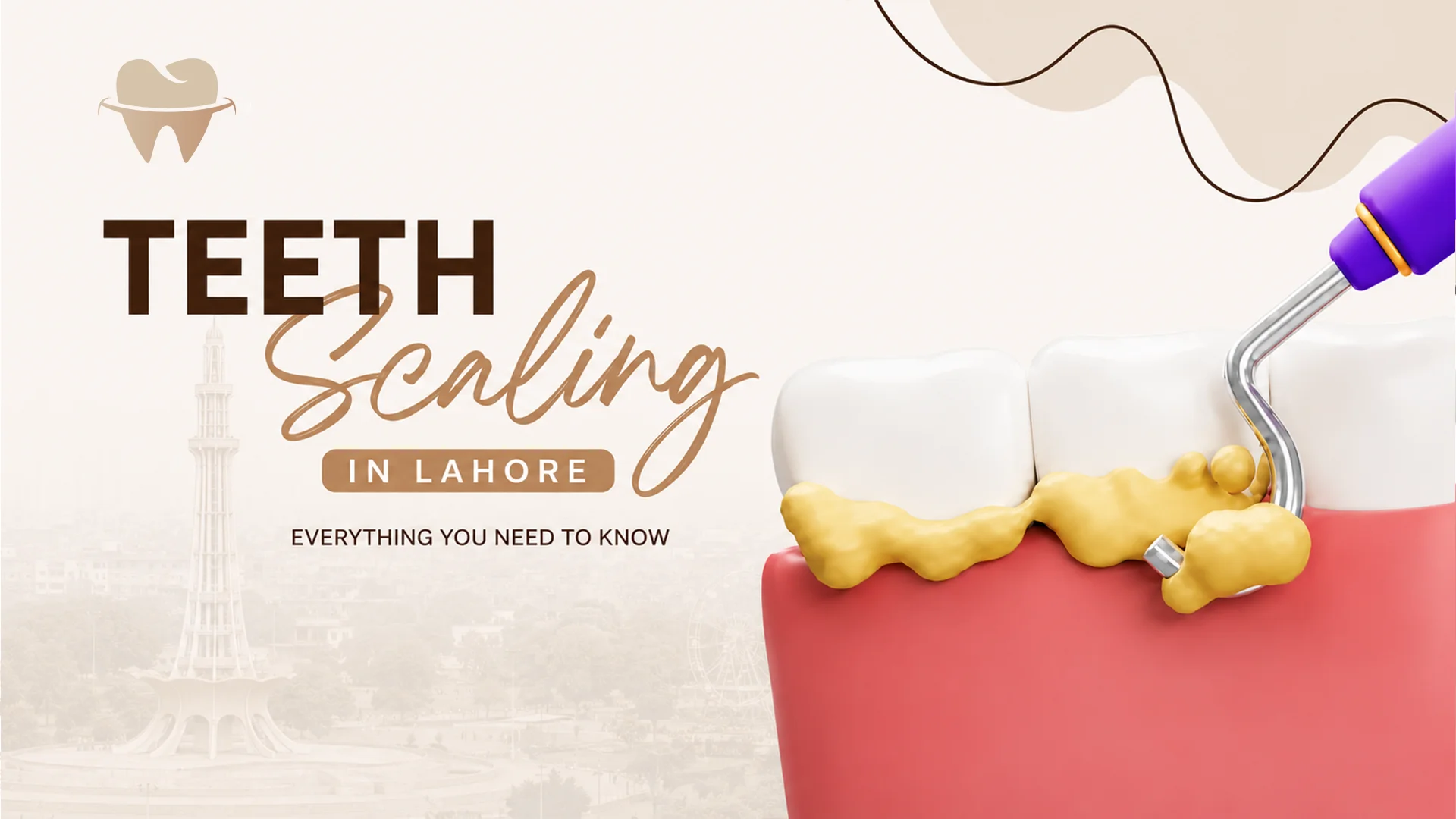
SUMMARY
- Teeth scaling is a professional cleaning procedure that removes plaque, tartar, and surface stains.
- Benefits of scaling teeth include preventing gum problems, freshening breath, and improving the appearance of your smile.
- Teeth scaling side effects are typically mild and temporary, including sensitivity and gum tenderness.
- Teeth scaling at home is dangerous and should never be attempted; leave it to the professionals.
- Scaling of teeth cost in Lahore ranges from PKR 2,000 to 10,000, depending on the clinic and case complexity.
- Most dentists recommend scaling every six months as part of routine dental care.
Quick answer: Teeth scaling is a professional cleaning that removes hardened tartar and plaque above and below the gumline to prevent gum disease. In Lahore, it costs roughly PKR 2,000–10,000, takes about 20–60 minutes, and is safe and nearly painless. Most people need it every six months.
You brush twice a day and floss regularly, yet you still notice a yellowish buildup near your gumline that won’t go away, your gums bleed when you brush, and your breath isn’t as fresh as it should be. These are signs that a professional cleaning is overdue — and teeth scaling is the solution.
Scaling removes the hardened plaque and tartar that regular brushing simply cannot reach, protecting your gums and teeth from serious disease. In Lahore, where diet and environmental factors can speed up tartar buildup, regular scaling is especially important. This guide covers everything you need to know: what the procedure involves, who needs it, costs, side effects, and aftercare.
What Is Teeth Scaling?
Teeth scaling is a professional dental cleaning that removes plaque, tartar (calculus), and surface stains that build up over time. Unlike brushing, scaling targets areas both above and below the gumline, where harmful bacteria thrive. It is performed with two types of instruments:
- Manual scalers: hand instruments with shaped hooks that scrape tartar from tooth surfaces.
- Ultrasonic scalers: devices that use high-frequency vibrations and a water spray to break up and flush away calculus.
Where deeper cleaning is needed, scaling may be combined with root planing — a procedure that smooths the tooth roots to help the gums reattach.
Scaling vs Polishing: What’s the Difference?
Scaling removes hardened deposits and plaque, while polishing smooths the tooth surface to lift surface stains and discourage new plaque. Both are usually done together during a routine scaling and polishing appointment.
Why Is Teeth Scaling Important?
Scaling offers benefits well beyond a brighter smile.
| Benefit | Why it matters |
|---|---|
| Prevents gum disease | Removes the bacteria that cause gingivitis and periodontitis |
| Prevents tooth decay | Reduces the plaque that leads to cavities |
| Freshens breath | Eliminates bacteria trapped in tartar that cause bad breath |
| Brightens your smile | Removes surface stains for a cleaner appearance |
| Protects long-term health | Lowers the risk of periodontal disease and related complications |
Regular scaling can reduce the risk of tooth loss and helps catch gum disease early, before it becomes costly to treat.
The Teeth Scaling Procedure, Step by Step
Knowing what happens can ease any anxiety. The procedure is straightforward and usually takes 20–60 minutes depending on the amount of buildup.
Step 1: Examination
Your dentist uses a small mirror and a periodontal probe to check for gum disease, measure the pocket depths around each tooth, and assess how much plaque and tartar has built up. X-rays may be taken to check bone health if gum disease is suspected. This determines whether routine scaling is enough or deeper cleaning is needed.
Step 2: Scaling (Tartar Removal)
An ultrasonic scaler emits high-frequency vibrations that break up larger tartar deposits while a fine water spray washes debris away — especially effective for heavy buildup above the gumline. Hand scalers then manually remove any remaining tartar, with your dentist working carefully around every surface, including spots the ultrasonic scaler may have missed.
Step 3: Root Planing (If Needed)
If you have deeper gum pockets of 4 mm or more, your dentist may recommend root planing — smoothing the root surfaces below the gumline to remove bacteria and toxins and discourage future bacterial attachment. This helps the gums reattach and reduces pocket depth over time. It is usually done under local anaesthesia and may need more than one appointment.
Step 4: Polishing
Once deposits are removed, your teeth are polished with a rotating rubber cup and a mildly abrasive paste. This smooths the surfaces, lifts remaining stains, and makes it harder for plaque to stick in future.
Step 5: Fluoride Treatment (Optional)
To finish, your dentist may apply a fluoride varnish or gel. Fluoride strengthens enamel, reduces post-cleaning sensitivity, and adds cavity protection — particularly helpful if you have a history of decay or sensitivity. It is quick and painless.
| Step | What happens |
|---|---|
| 1. Examination | Dentist checks for plaque, tartar, and signs of gum disease |
| 2. Scaling | Ultrasonic scalers loosen tartar; hand instruments remove the rest |
| 3. Root planing (if needed) | Roots are smoothed to help gums reattach |
| 4. Polishing | Teeth polished to remove stains and smooth enamel |
| 5. Fluoride (optional) | Applied to strengthen enamel and protect against cavities |
What to Expect During and After
Throughout, your dentist rinses your mouth with water and uses suction to clear saliva and debris. Most patients feel little to no pain — just some pressure or vibration during ultrasonic scaling; tell your dentist if anything feels uncomfortable. Afterwards your teeth feel noticeably smoother, and your gums may look slightly red or tender for a day or two, which is normal. Follow your dentist’s aftercare advice, such as using a desensitising toothpaste and avoiding very hot or cold foods briefly.
Who Needs Teeth Scaling?
Everyone benefits from regular scaling, but some people need it more often:
- People with gum disease (bleeding or inflamed gums)
- Smokers, who are more prone to tartar buildup
- Diabetics, who have a higher risk of gum disease
- People with braces or dental implants
- Anyone with persistent bad breath
Teeth Scaling Side Effects
Scaling is safe, though some mild, temporary effects may occur.
| Side effect | Duration | How to manage it |
|---|---|---|
| Tooth sensitivity | 24–48 hours | Use desensitising toothpaste; avoid hot/cold foods |
| Gum tenderness | 1–2 days | Brush gently with a soft-bristled brush |
| Minor bleeding | ~24 hours | Avoid vigorous rinsing; resolves quickly |
These effects usually settle within a few days when you follow your aftercare instructions.
Teeth Scaling: Before and After
The change is often dramatic. Before: yellowish or brownish deposits along the gumline, bleeding gums, bad breath, and visible stains. After: clean, smooth tooth surfaces, refreshed gums, a brighter appearance, and fresher breath. Scaling reveals the natural colour of your teeth and gives your smile a renewed look.

Can You Do Teeth Scaling at Home?
No — at-home scaling is dangerous and strongly discouraged. Dentists agree it should only be done by trained professionals.
| Risk | Why it happens |
|---|---|
| Enamel damage | Over-scaling strips protective enamel, causing sensitivity and decay |
| Gum injuries | Poor technique can cut gum tissue and cause recession |
| Infections | Unsterilised tools introduce bacteria and can cause abscesses |
| Misdiagnosis | Only a dentist can judge whether scaling is appropriate for your condition |
At-home plaque scrapers cannot remove hardened tartar and pose serious risks — leave scaling to licensed professionals.
Teeth Scaling Cost in Lahore (2026)
Cost depends on the clinic’s location and reputation and the complexity of your case.
| Clinic type (Lahore) | Price range (PKR) |
|---|---|
| Budget clinics | 2,000 – 3,000 |
| Mid-range clinics | 3,000 – 6,000 |
| Premium clinics | 6,000 – 10,000 |
| Deep scaling (with root planing) | 6,000 – 10,000 |
| Other cities | Price range (PKR) |
|---|---|
| Karachi | 7,000 – 10,000 |
| Rawalpindi / Islamabad | 8,000+ |
Prices are estimates and may vary; deep scaling or extras like polishing can cost more. The main cost factors are the severity of tartar buildup, the clinic’s reputation and equipment, and whether root planing is needed.
How Often Should You Get Teeth Scaling?
| Patient category | Recommended frequency |
|---|---|
| Healthy gums, low risk | Every 6 months |
| History of gum disease | Every 3–4 months |
| Smokers, diabetics | More frequently, as advised by your dentist |
Myths About Teeth Scaling
| Myth | Fact |
|---|---|
| Scaling weakens teeth | It strengthens gums and prevents disease; it does not damage teeth |
| Only people with gum disease need scaling | Everyone benefits from regular scaling |
| Scaling is painful | Modern techniques make it nearly painless for most patients |
| Scaling causes receding gums | Proper scaling prevents the gum disease that actually causes recession |
Conclusion
Teeth scaling is a vital, preventive procedure that removes the plaque and tartar brushing can’t reach — protecting your gums, freshening your breath, and giving your smile a clean, polished finish. It is safe, quick, and generally painless, with minor side effects that resolve within days. This article is for general education and is not a substitute for a dental examination.
Ready to protect your dental health?
At Teeth & Gums, we offer professional scaling and polishing with the latest technology for your comfort. Our team will assess your oral health and set a personalised cleaning schedule.
Frequently Asked Questions
Is teeth scaling painful?
Generally, no. Most patients feel little to no discomfort during scaling. You may notice some sensitivity afterwards, but it usually resolves within a few days.
How long does teeth scaling take?
A typical session takes about 30 to 60 minutes, depending on how much plaque and tartar has accumulated.
How much does teeth scaling cost in Lahore?
Scaling in Lahore ranges from about PKR 2,000 to 10,000, depending on the clinic and the complexity of your case. Deep scaling with root planing sits at the higher end.
How often should I get teeth scaling?
Most people should have scaling every six months. Those with gum disease or other risk factors, such as smoking or diabetes, may need it more often.
Does scaling whiten teeth?
Scaling removes surface stains and can make teeth look brighter, but it is not a substitute for professional teeth whitening.
Can I do teeth scaling at home?
No. At-home scaling can damage your enamel and gums and lead to infection. Always leave scaling to licensed dental professionals.
What is teeth scaling and polishing?
Scaling removes hardened plaque and tartar from the teeth and below the gumline, while polishing smooths the surfaces and lifts stains. Together they provide a thorough professional clean.