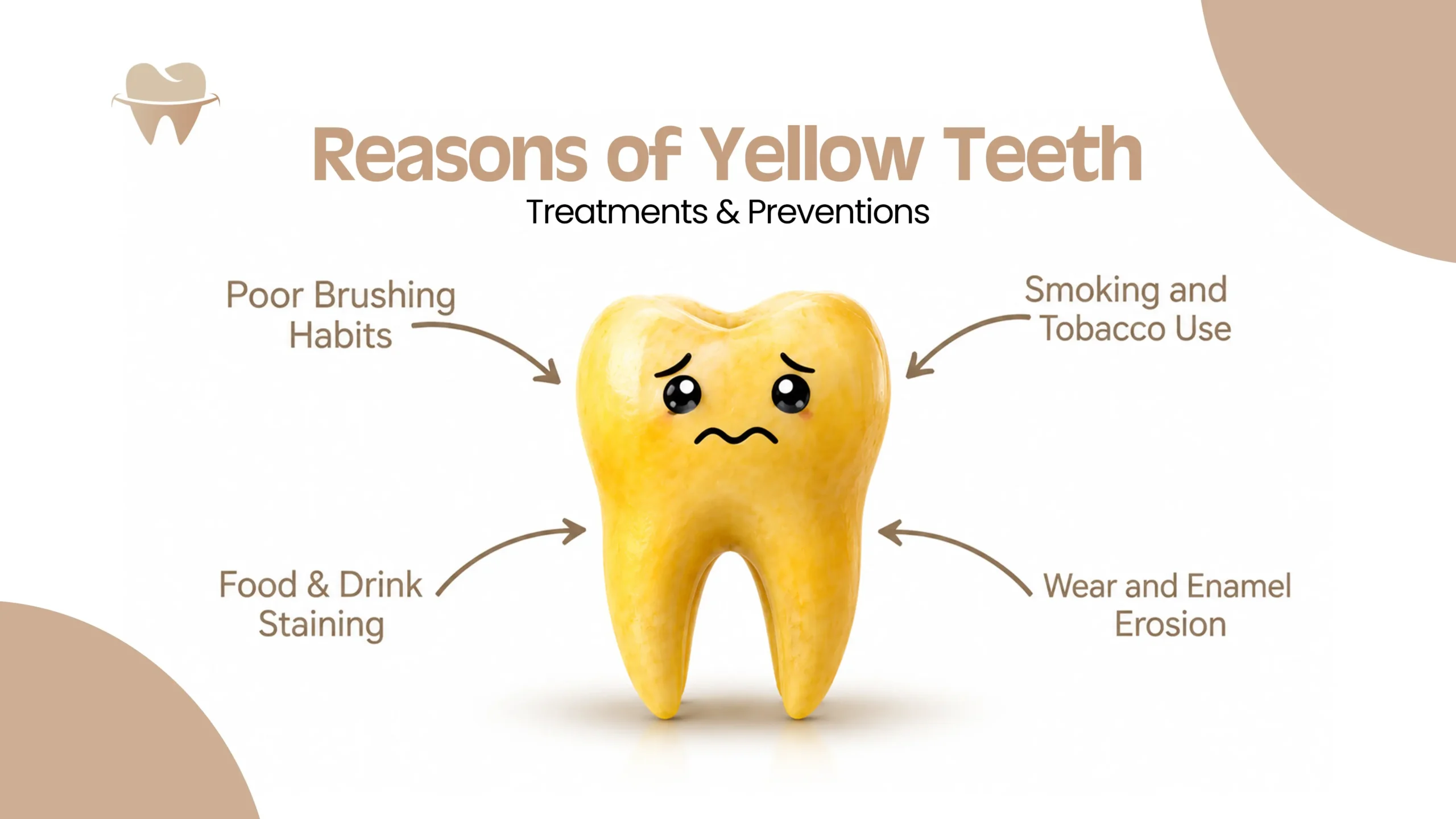
KEY TAKEAWAYS
- Yellow teeth have many causes. The main ones are surface stains, tobacco, ageing, enamel wear, fluorosis, medicines and dead teeth.
- The cause decides the treatment. Surface stains often lift with a professional clean. Stains inside the tooth need bleaching or restorations.
- Your natural teeth colour is not pure white. Some yellow tone is normal, and it varies from person to person.
- In Pakistan, daily chai, betel quid, naswar, gutka and hookah add to staining. Fluorosis from high-fluoride water is also common in some regions.
- Whitening toothpaste only helps with surface stains. It does not change the colour inside the tooth.
- Teeth whitening listings in Lahore range from about Rs. 10,000 to Rs. 40,000, depending on the method and clinic.
- Get a dental check if one tooth darkens, if yellowing comes with pain, or if you use smokeless tobacco and see white or red patches.
Your teeth were never meant to be pure white. But they should not look dull and yellow either.
You brush twice a day. You use whitening toothpaste. Your teeth still look yellow. That is frustrating, and it is very common.
Yellow teeth are not one problem. They are a sign that something is happening on the tooth, inside the tooth or in the way the tooth has changed over time. The right fix starts with finding out which one it is.
This guide explains what causes teeth to become yellow. It covers ten common reasons, what is specific to Pakistan, how treatment works, what whitening costs in Lahore and how to prevent it.
What Causes Teeth to Become Yellow?
A tooth has two main layers you need to know.
- Enamel is the hard, slightly translucent outer layer.
- Dentine is the softer layer underneath. It is naturally yellowish.
The colour you see is a mix of both. Thick, healthy enamel lets less of the yellow dentine show. Thin or stained enamel lets more show through.
Dentists group tooth discolouration into three types.
| Type | Where It Happens | Common Examples | Usual Fix |
|---|---|---|---|
| Extrinsic (surface) | On the enamel surface | Tea, coffee, tobacco, plaque | Professional clean, whitening |
| Intrinsic (internal) | Inside enamel or dentine | Fluorosis, medicines, trauma | Bleaching, bonding, veneers |
| Age-related | Mix of both | Thinner enamel, darker dentine | Whitening, restorations |
The American Dental Association explains that surface stains come from coloured compounds that build up on enamel. Internal stains form within the tooth. With age, enamel becomes thinner and more translucent. This lets the yellower dentine show through.
Many people have more than one type at once.
What Is Natural Teeth Colour?
Natural teeth colour is not white. It ranges from off-white to light yellow, grey or even slightly brown. Most healthy teeth are a warm ivory shade.
Several things shape your natural colour.
- Enamel thickness. Thin enamel looks more yellow.
- Dentine shade. Some people have naturally darker dentine.
- Tooth type. Canines are often a little darker than front teeth.
- Genetics. Family patterns are strong.
- Age. Colour deepens over time.
So, some yellow tone is normal. It becomes a concern when it is new, uneven, patchy, one-sided, or comes with pain or other changes.
10 Common Reasons for Yellow Teeth

Here are the causes of yellow teeth that dentists see most often. These are also the main teeth staining causes and causes of tooth discolouration.
1. Tea, Coffee and Other Staining Drinks
Tea and coffee contain tannins and dark pigments. They cling to the tiny rough spots on enamel. The more often you sip, the more stain builds up.
In Pakistan, chai is a daily habit for many people, often several cups. Strong, sweet tea sipped slowly across the day is especially hard on teeth. Cola, dark juices and red wine also stain.
Clue: Even, brownish staining, often near the gum line and between the teeth.
What helps: Rinsing with water after tea, using a straw for cold drinks, and a professional clean and polish.
2. Staining Foods
Strongly coloured foods can leave a film on teeth. These include curries with turmeric, tomato sauces, berries, soy sauce and dark chocolate. Acidic foods also roughen enamel, which helps stains stick.
Clue: Light staining that comes and goes with your diet.
What helps: Rinse after meals and wait before brushing after acidic foods.
3. Tobacco, Hookah and Smokeless Products
Tobacco is a strong stain-maker. Nicotine and tar turn teeth yellow, then brown. This includes cigarettes, hookah (shisha), naswar, gutka, paan and betel quid.
These products also raise the risk of gum disease and oral cancer. Staining is the least of the problems. We cover the cancer risk in the Pakistan section below.
Clue: Stubborn yellow to dark brown staining, often thick near the gum line and on the inner surfaces.
What helps: Stopping tobacco is the key step. A scale and polish removes stains. Whitening works better once the habit is gone.
4. Poor Oral Hygiene, Plaque and Tartar
Plaque is a soft film of bacteria. It is slightly yellow. If it stays, it hardens into tartar (calculus). Tartar is yellow to brown and very rough, so stains stick to it.
Brushing cannot remove tartar. Only a dentist or hygienist can.
Clue: Yellow or brown crust near the gum line, bleeding gums, bad breath.
What helps: Scaling and polishing, then good daily cleaning.
5. Ageing
As you age, enamel wears down. Dentine also darkens and thickens inside the tooth. The result is a more yellow or orange tone.
A 2024 systematic review in Bioengineering notes that as enamel wears, dentine becomes more visible. This creates a more orange hue with age.
This is why yellow teeth with age are so common, and yellow teeth in adults tend to increase after 40.
Clue: Overall, even yellowing that has crept up slowly.
What helps: Professional whitening often works well for age-related change. Veneers are an option for severe cases.
6. Enamel Wear and Erosion
Tooth enamel discolouration can come from loss of enamel itself. Acid wears it away. Common sources are fizzy drinks, citrus, vinegar, sports drinks and acid reflux. Grinding and hard brushing also wear enamel.
Once enamel thins, dentine shows through. The teeth may look yellow, glassy at the edges or cupped on the biting surfaces. They may also feel sensitive.
Clue: Yellow teeth with sensitivity, rounded or translucent edges, or small dents.
What helps: Treat the cause, such as reflux or grinding. Fluoride, bonding or veneers rebuild lost surface. Whitening may increase sensitivity, so ask your dentist first.
7. Genetics and Natural Tooth Structure
Some people are born with thinner enamel or darker dentine. Some have inherited enamel conditions such as amelogenesis imperfecta, which causes yellow, brown or pitted teeth.
Clue: Yellow teeth in childhood and the same pattern in family members.
What helps: Mild cases respond to whitening. Severe cases need bonding, veneers or crowns.
8. Dental Fluorosis
Fluorosis happens when a child takes in too much fluoride while teeth form. It can cause white flecks, yellow patches or brown stains. These marks are inside the enamel.
Fluorosis is a real issue in parts of Pakistan. Studies report fluorosis in about 63% of 12-year-olds in Quetta, 40% of patients in Peshawar and 53% of schoolchildren in Karachi. Many studies link it to high-fluoride groundwater.
Clue: Lines, spots or patches that were present since the teeth came in, often on several teeth, symmetrical.
What helps: Whitening, microabrasion, resin infiltration, bonding or veneers, depending on severity.
9. Medicines and Mouthwashes
Some medicines stain teeth.
- Tetracycline and doxycycline taken during tooth development can cause grey, brown or yellow bands.
- Chlorhexidine mouthwash can cause brown surface stains with long use.
- Iron supplements and some liquid medicines can darken teeth.
- Higher fluoride in mouthrinses and certain antibiotics given in childhood can also play a part.
Clue: Banded or grey-brown staining across many teeth. A history of antibiotics in childhood or long mouthwash use.
What helps: Surface stains polish off. Deep stains need bleaching or veneers.
10. Trauma, Dead Teeth and Old Fillings
A single dark yellow, grey or brown tooth often points to a different cause. A knock can damage the nerve. The tooth then darkens as it breaks down inside. A tooth that has had a root canal can also change colour over time. Old silver fillings and some materials can tint the tooth around them.
Clue: One tooth is darker than the rest. It may or may not hurt.
What helps: See a dentist. A dark tooth can mean infection. Treatment may include root canal care, internal bleaching, a veneer or a crown.
Yellow Teeth in Pakistan: What Is Different Here?
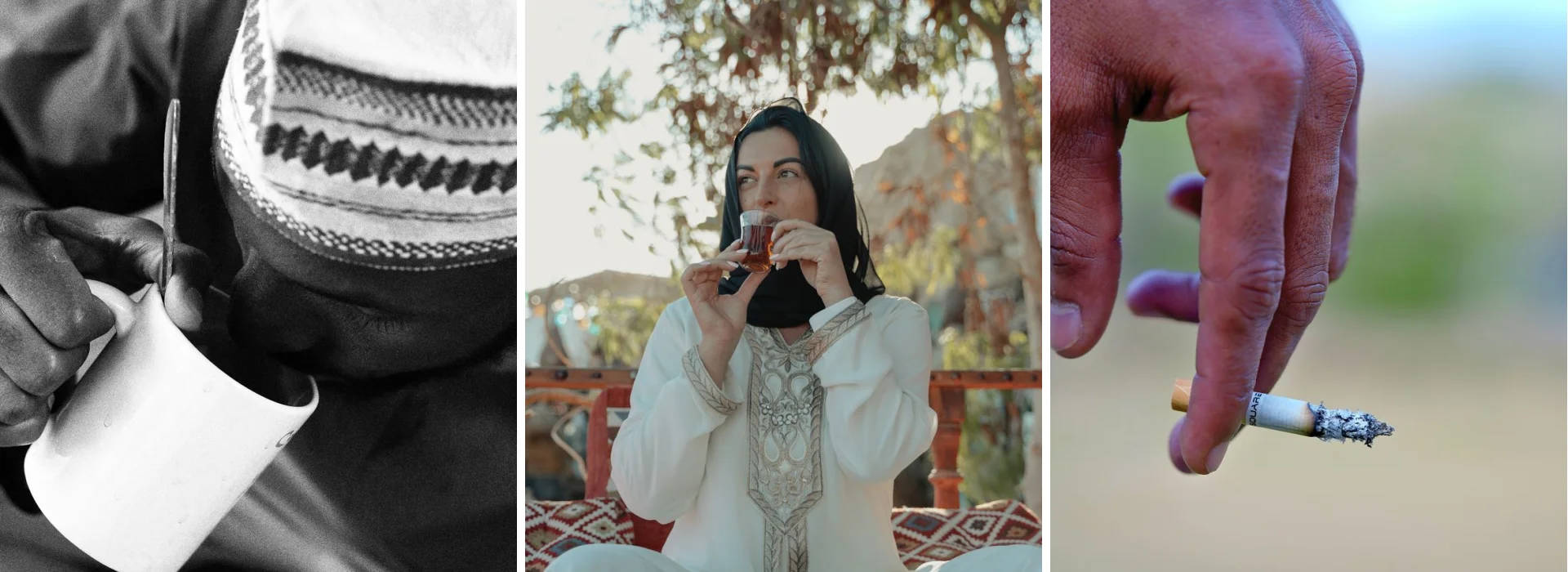
Yellow Teeth in Pakistan often come from a mix of local habits and local conditions. These are the factors that stand out.
- Chai culture. Tea is part of daily life. Frequent cups mean frequent stain exposure.
- Betel quid, paan, chalia and gutka. These leave deep red-brown stains. Betel nut chewing is also linked to tooth wear and gum problems. A Pakistan community report from Thar found marked tooth wear (attrition) linked to betel nut use.
- Naswar. This smokeless tobacco is widely used. A nationally representative survey reported use of about 15% in the general population. A case-control analysis estimated that naswar accounts for about 68% of oral cancer burden in Pakistani men and 38% in women. If you use naswar and notice a white or red patch, a non-healing sore or a lump, see a dentist promptly. Yellow teeth are the least of the concern here.
- Hookah and cigarettes. Both stain teeth and damage gums.
- High-fluoride water in some regions. Studies in Quetta, Peshawar and Karachi report fluorosis in 40% to 63% of the groups studied.
- Late dental visits. Many people see a dentist only when in pain. Tartar and stains build up for years before then.
None of this means yellow teeth are inevitable. It means local habits matter, and a check-up is a sensible first step.
Yellow Teeth Despite Brushing: Why Does It Happen?
This is one of the most common complaints. You brush well, but your teeth still look yellow. These are the usual reasons.
| Reason | Why Brushing Does Not Fix It |
|---|---|
| Intrinsic stain | The colour is inside the tooth |
| Thin enamel | Dentine shows through, and you cannot brush it away |
| Tartar | It is hardened and needs professional removal |
| Fluorosis or medicine stain | Stain is within the enamel |
| Dead tooth | Nerve damage changes colour from within |
| Brushing too hard | Wears enamel and makes teeth more yellow |
| Poor technique | You miss areas near the gum line |
| Staining habits | Tea, tobacco and betel quid outpace brushing |
A 2025 systematic review in BMC Oral Health found that whitening toothpastes help with extrinsic stains. The authors noted that more research is needed on long-term effects. The ADA adds that whitening toothpastes rely mostly on abrasives. They do not change the colour inside the tooth.
If your teeth stay yellow despite good brushing, book a check. A dentist can tell which type of stain you have.
How to Tell Which Type of Yellowing You Have
This table is a guide only. A dentist should confirm.
| What You Notice | Possible Cause | Next Step |
|---|---|---|
| Brown film on inner surfaces and near the gums | Tobacco, tea or tartar | Scale and polish |
| Even yellowing that has grown with age | Age-related change | Whitening consultation |
| Chalky white or brown spots since childhood | Fluorosis or enamel defect | Dental assessment |
| Grey bands across many teeth | Medicine staining | Dental assessment |
| One dark tooth | Nerve damage or old injury | Dental assessment and X-ray |
| Yellow with sensitivity and thin edges | Enamel erosion | Assessment for wear causes |
| Yellow plus bleeding gums | Plaque, tartar or gum disease | Hygiene visit and gum check |
| Stains plus white or red mouth patch | Tobacco-related change | Urgent oral exam |
Yellow Teeth Treatments: What Works
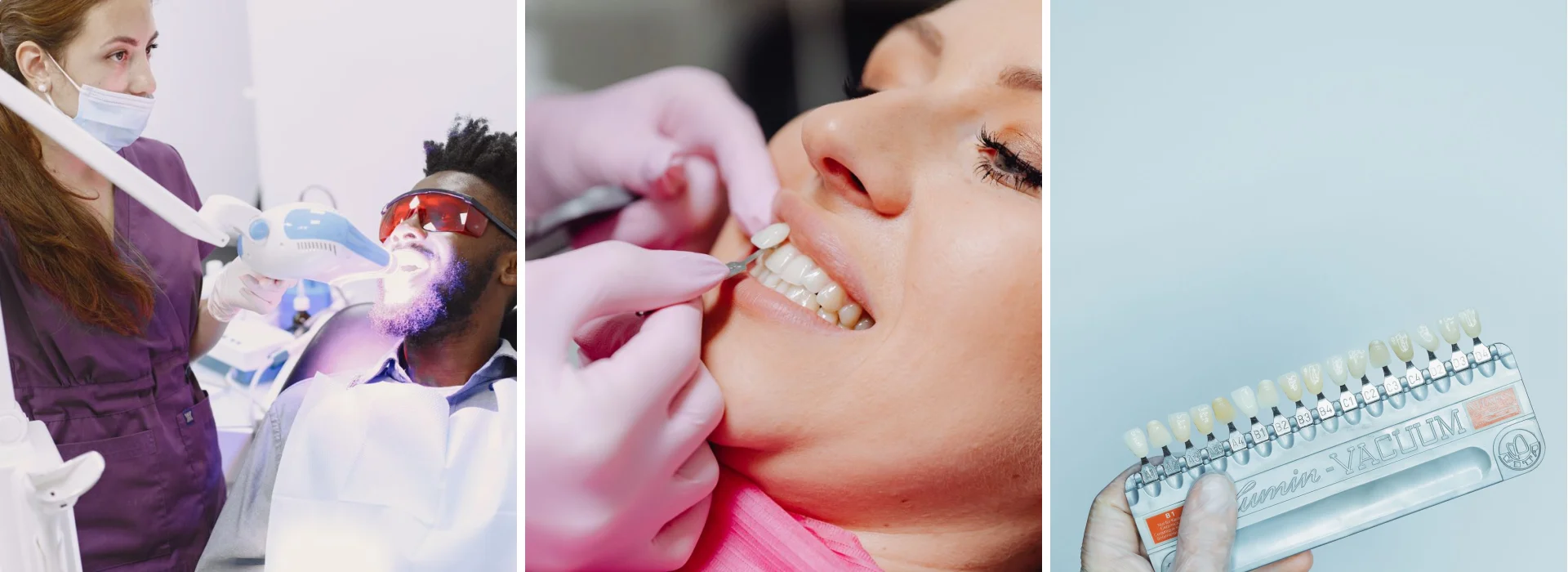
Yellow teeth treatments depend on the cause. These are the main options.
1. Professional Scaling and Polishing
A hygienist removes tartar and surface stains with ultrasonic tools and polish. It is the first step for most patients. It often gives a clear improvement on its own when stains are on the surface.
2. Professional Teeth Whitening
A dentist applies a peroxide gel to the teeth. Some systems use light or heat. The gel breaks down stain molecules. Results are visible after one visit for many patients.
Take-home tray systems use custom-made trays and a lower-strength gel worn for a set time over days. These give gradual, controlled results.
The 2024 Bioengineering review found that both in-office and at-home bleaching work. Choice depends on your teeth, your budget and how sensitive they are.
Whitening can be effective for both surface and some internal stains. The ADA notes that results depend on the type of internal stain. Tetracycline and fluorosis stains often respond less predictably.
Here is a glimpse of one of our satisfied patients at Teeth and Gums.
3. Over-the-Counter Products
Whitening toothpastes, strips and rinses are available at pharmacies. Toothpastes mainly remove surface stains. Strips contain peroxide and generally whiten more than toothpaste. Results are modest compared with a dental treatment. Using products too often can cause sensitivity or gum irritation.
4. Microabrasion and Resin Infiltration
For fluorosis and white spots, a dentist may remove a very thin surface layer or fill the porous enamel with resin. This improves colour with little tooth removal.
5. Dental Bonding
Tooth-coloured resin is bonded to the front of the tooth. It masks stains and reshapes chips. It is quick and conservative, but resin can stain over time.
6. Porcelain Veneers
Thin ceramic shells cover the front of the teeth. They hide deep stains that do not respond to bleaching. They are stain resistant and last many years. Read our guide to porcelain veneers in Lahore.
7. Crowns
A crown covers the whole tooth. It is used when a tooth is weak, broken or heavily stained.
8. Internal Bleaching
For a root-canal tooth that has darkened, a dentist places bleaching gel inside the tooth. This can lighten it from within.
Which Treatment for Which Cause?
| Cause | First-Line Treatment | If That Is Not Enough |
|---|---|---|
| Tea, coffee, food stains | Scale and polish, whitening | Maintenance whitening |
| Tobacco, betel quid | Stop habit, scale and polish | Whitening, veneers |
| Tartar and plaque | Scaling | Gum treatment |
| Ageing | Whitening | Veneers |
| Enamel erosion | Treat cause, fluoride | Bonding, veneers |
| Fluorosis | Whitening, microabrasion | Resin infiltration, veneers |
| Medicine stain | Whitening | Veneers |
| Dead or root-treated tooth | Internal bleaching | Veneer or crown |
Teeth Whitening Treatment in Lahore: Options and Costs
If you are looking for teeth whitening treatment in Lahore, prices vary by method, clinic and the dentist’s experience.
| Option | Public Listing Range in Lahore (PKR) |
|---|---|
| Lower-cost whitening listings | From about 10,000 |
| Take-home whitening | About 22,000 to 28,000 |
| In-office laser or light whitening | About 30,000 to 40,000 |
| Chemical or standard whitening at Teeth & Gums (WhatClinic listing) | 25,000 to 35,000 |
| Premium or specialist DHA clinics | Up to 50,000 or more |
These are figures from public clinic listings and directories (WhatClinic, InstaCare, Marham) and may change. Ask for a written quote.
See the difference at Teeth and Gums:
What Affects the Price?
- The whitening method and gel strength
- The number of sessions
- Whether scaling and polishing are included
- The clinic and the dentist’s training
- Any extra treatment, such as fillings or gum care
Who Should Not Whiten Yet?
Whitening is not right for everyone. Delay or avoid whitening if you have:
- Untreated cavities or gum disease
- Very sensitive teeth or exposed roots
- Pregnancy or breastfeeding, unless your dentist advises
- Crowns, veneers or fillings in the front teeth, as these do not whiten
- Unrealistic expectations of a very white shade
Side Effects
The most common are temporary sensitivity and gum irritation. They usually settle within a few days. Your dentist can adjust the method and protect your gums.
How Long Do Results Last?
Whitening is not permanent. Results often last from several months to a couple of years. Tea, tobacco and betel quid shorten that time. Top-up treatments and good habits help.
How to Get Rid of Yellow Teeth at Home
You cannot reverse every cause at home. But you can remove surface stains and slow new ones.
What helps
- Brush twice a day with a soft brush and fluoride toothpaste
- Clean between your teeth daily with floss or interdental brushes
- Use a whitening toothpaste for surface stains, if you like
- Rinse with water after tea, coffee and meals
- Cut back on tobacco, betel quid and fizzy drinks
- Eat crunchy fruits and vegetables
- Keep up with dental cleanings
What does not help or can harm
- Brushing harder. This wears enamel and makes teeth more yellow.
- Lemon juice or vinegar. Acids erode enamel.
- Baking soda in large amounts or often. It is abrasive.
- Charcoal powders. They are abrasive and have little proof of benefit.
- Hydrogen peroxide mixes from the internet. Strength is uncontrolled and can burn gums.
- Oil pulling. It may freshen breath but has no strong proof for whitening.
If you want the best result safely, see a dentist. Home methods only go so far.
Preventing Yellow Teeth
How to prevent yellow teeth comes down to daily habits and regular care.
- Brush twice a day for two minutes. Use fluoride toothpaste and a soft brush.
- Clean between teeth every day. Plaque between teeth turns yellow.
- Rinse after staining drinks. Water works well.
- Use a straw for cold drinks. It keeps liquid away from the front teeth.
- Do not sip tea or coffee all day. Drink it with a meal instead.
- Avoid tobacco in all forms. This includes cigarettes, hookah, naswar, gutka and paan.
- Limit fizzy and acidic drinks. Wait 30 minutes before brushing after them.
- Visit a dentist every six months. Early scaling stops tartar and stains building up.
- Treat grinding and reflux. Both wear enamel.
- Check fluoride in your water for children. Ask a dentist or health professional for advice in high-fluoride areas.
When to See a Dentist About Yellow Teeth
Book a visit if:
- One tooth is darker than the others
- Yellowing is new, patchy or getting worse fast
- You have pain, sensitivity or bleeding gums
- Teeth look thin, chipped or translucent at the edges
- Your teeth have stains since childhood
- You use naswar, gutka, paan or tobacco and have a white or red patch, a sore that will not heal or a lump
- You want to whiten and have fillings, crowns or gum disease
A dental check finds the cause and rules out serious problems. It also saves money. Treating the wrong problem wastes time and cash.
Final Word
Yellow teeth have many causes. Some are easy to fix. Some need patience. A few are warning signs that deserve a closer look.
Start by finding out why your teeth are yellow. Then choose the simplest treatment that fits. For many people, that is a professional clean and a whitening session. For others, it is bonding or veneers.
Whatever your cause, small habits make a big difference. Rinse after tea. Quit tobacco. Clean between your teeth. Visit your dentist twice a year.
Book a Consultation at Teeth & Gums, DHA Phase 6, Lahore
Find out exactly why your teeth look yellow and which treatment fits your cause.
Frequently Asked Questions
When should I visit a dentist for yellow teeth?
See a dentist if one tooth is darker than the rest, yellowing is sudden or patchy, or you have pain, sensitivity or bleeding gums. Also go if you use tobacco, naswar or betel quid and see white or red patches. Otherwise, book a check before whitening.
What is the difference between surface stains and intrinsic stains?
Surface (extrinsic) stains sit on the outside of enamel. They come from tea, tobacco and plaque, and often polish off. Intrinsic stains form inside enamel or dentine. They come from fluorosis, medicines or injury, and need bleaching or restorations.
Does age affect tooth colour?
Yes. With age, enamel thins and becomes more translucent, so the yellower dentine shows through. Dentine also darkens over time. This is why teeth often look more yellow in adults. Whitening can help, and veneers are an option for severe cases.
Can yellow teeth indicate enamel damage?
Sometimes. Worn enamel lets yellow dentine show through. Signs include sensitivity, thin or translucent edges and small dents. Causes include acid, reflux, grinding and hard brushing. A dentist can confirm and advise on protecting the enamel.
Is yellowing of teeth reversible?
Often partly or fully, depending on the cause. Surface stains usually lift with cleaning and whitening. Age-related yellowing often improves with bleaching. Deep stains from fluorosis or medicines may need bonding or veneers. Results from whitening fade, so maintenance helps.
What foods make your teeth yellow?
Tea, coffee, cola, red wine, dark juices, curries with turmeric, tomato sauces, berries, soy sauce and dark chocolate can stain. Acidic foods weaken enamel and help stains stick. Rinse with water after meals and brush gently.
What is the main cause of yellow teeth?
There is no single cause. The most common are surface stains from food, drink and tobacco, and thinning enamel with age. Others include tartar, fluorosis, medicines and dead teeth. The type of stain decides which treatment will work.