Key Takeaways
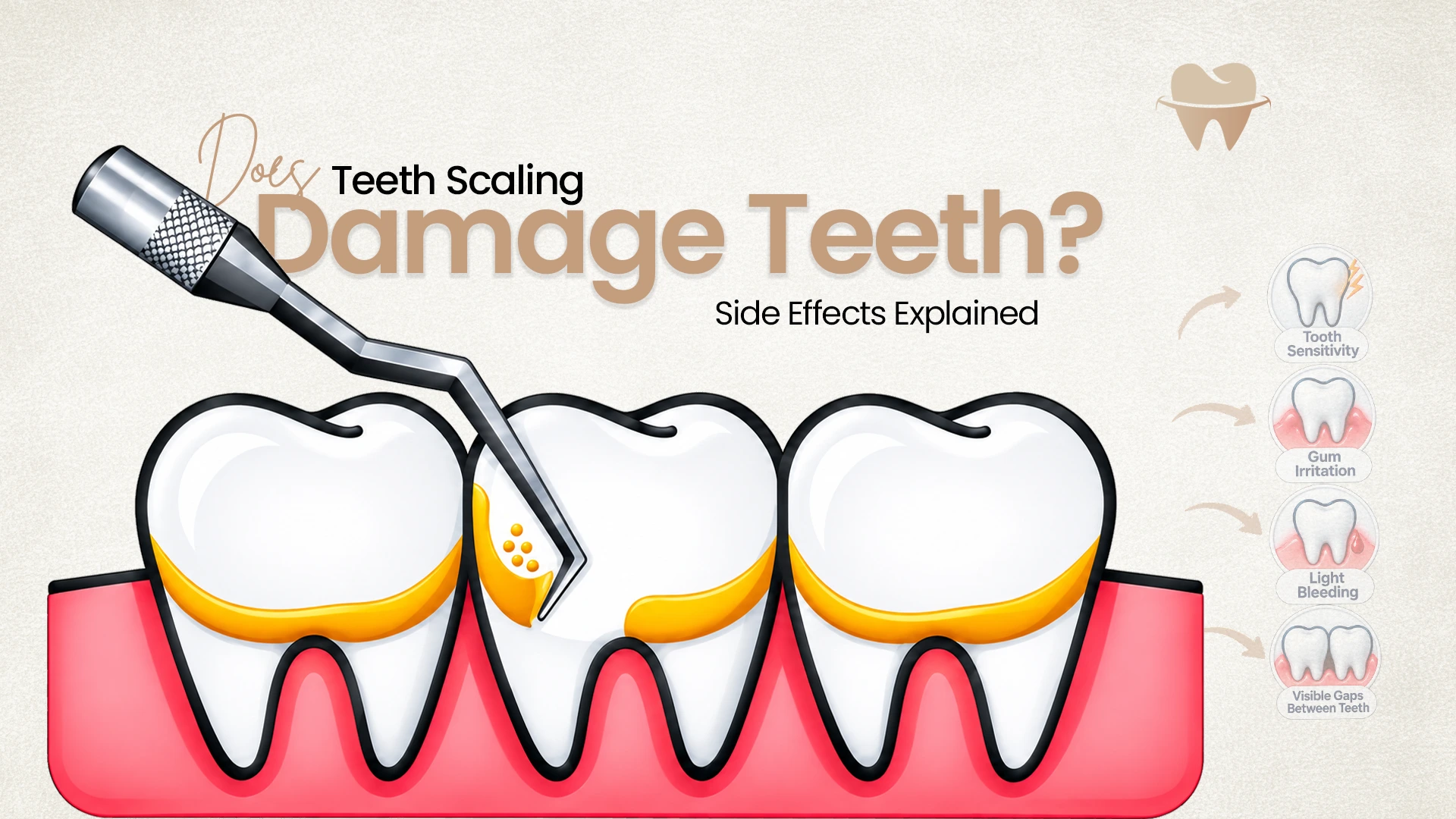
- Scaling removes plaque and tartar. It is not designed to remove healthy enamel, and it does not weaken healthy teeth.
- Short term side effects are common. They include sensitivity, tender gums, mild bleeding and a few gaps that seem to appear.
- A systematic review found that root sensitivity affected 9% to 23% of patients before gum treatment and about 54% to 55% after it. It peaked in the first one to three weeks, then faded.
- Most soreness settles within days. Deep cleaning can take longer.
- Gaps that appear after scaling are usually spaces that tartar and swollen gum were filling. Your teeth have not moved.
- Call your dentist if bleeding does not stop, pain grows after 48 hours, or you see swelling, pus or fever.
Scaling does not damage healthy teeth. But it can feel as if it did.
You leave the dental chair with clean, smooth teeth. An hour later, your gums are sore. Cold water makes you wince. You spot gaps you never noticed. Then a worrying thought arrives. Did scaling damage my teeth?
The honest answer is no, not when it is done properly on a mouth that needed it. But side effects are real. Most are short lived and have clear causes.
This guide explains the side effects of teeth scaling, why each one happens, what the evidence says, which myths are false, how to manage discomfort and when to see a dentist. It also covers costs in Lahore.
What Is Teeth Scaling?
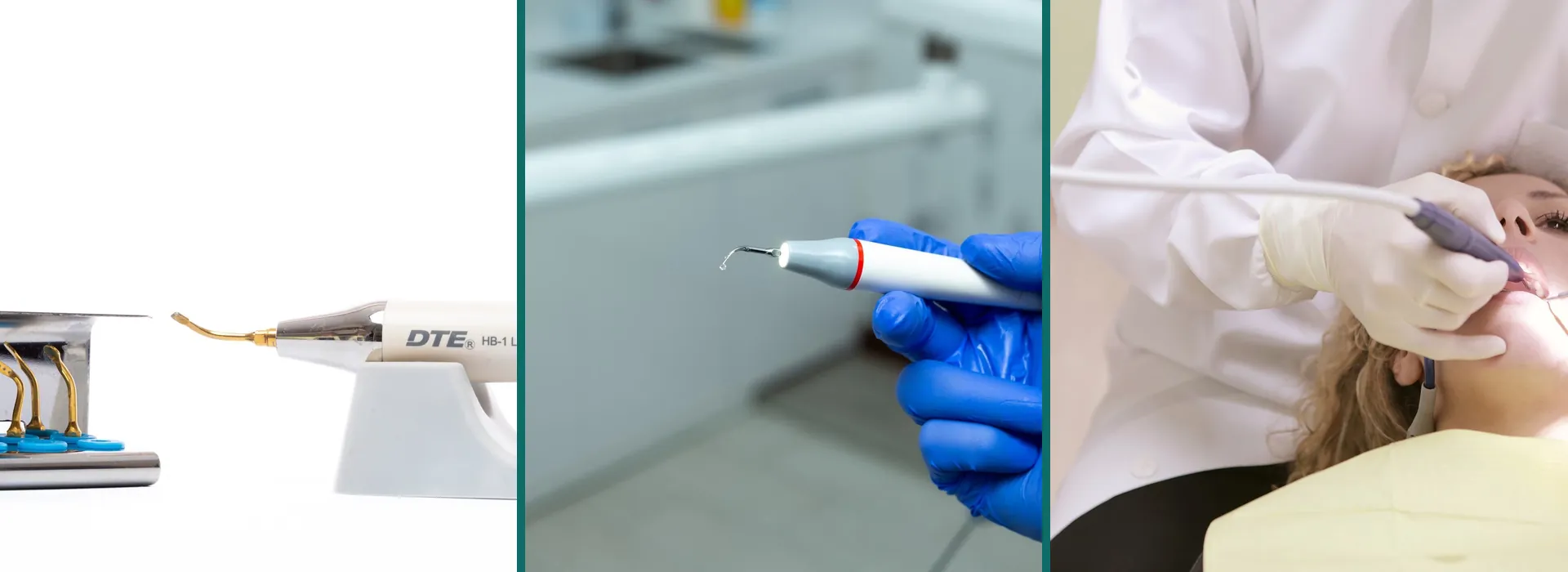
Scaling is a professional cleaning that removes plaque and tartar (calculus) from the tooth surface and from just under the gum line.
Plaque is a soft film of bacteria. If it stays on teeth, it hardens into tartar. Tartar is rough and firmly stuck. Brushing cannot remove it.
Dentists and hygienists use two main tools.
- Ultrasonic scaler. A small tip vibrates and sprays water to break up tartar.
- Hand instruments. Fine scalers and curettes scrape away deposits.
Scaling is usually followed by polishing. A soft rubber cup and paste smooth the surface and lift light stains.
Scaling vs Deep Cleaning
| Feature | Regular Scale and Polish | Deep Cleaning (Scaling and Root Planing) |
|---|---|---|
| Purpose | Remove plaque, tartar and stains | Treat gum disease below the gum line |
| Area cleaned | Mostly above and just below the gum | Deeper pockets and root surfaces |
| Anaesthetic | Usually none | Often local anaesthetic |
| Visits | Usually one | Often two to four |
| Typical time | 30 to 60 minutes | Longer, spread over visits |
| Aftercare | Light | More careful |
Does Teeth Scaling Damage Teeth?
Healthy teeth are not damaged by correct scaling. But the question deserves a careful answer, because patients often mean different things.
Does Scaling Remove Tooth Enamel?
Scaling targets tartar, not enamel. But any instrument touching a tooth can change its surface slightly.
Laboratory studies on extracted teeth have looked at this. A 2021 in vitro study in Oral Health and Preventive Dentistry compared different scaling and polishing methods. It found that any instrumentation of tooth surfaces can cause some substance loss. Air polishing, alone or with a rubber cup, caused no enamel loss. Other methods caused small, measurable changes.
Other lab studies found that ultrasonic scaling can slightly increase enamel surface roughness compared with some other methods. Polishing then smooths the surface.
What does this mean for you?
- The changes in these studies are microscopic.
- They were measured on extracted teeth in a laboratory.
- Polishing reduces surface roughness.
- No study we reviewed showed that routine scaling by a trained clinician damages healthy teeth in a clinically important way.
Poor technique, excess pressure or repeated unnecessary scaling would raise the risk. That is why you should choose a trained clinician.
What About the Root Surface?
Below the gum, the root is covered by a thin layer called cementum. In deep cleaning, a small amount of this layer is removed along with bacterial toxins. Researchers describe a thin zone of surface cementum that holds endotoxins. The aim is to remove that layer and no more.
This is one reason deep cleaning can cause more sensitivity than a routine scale.
Scaling Teeth Side Effects Myths: What Is True & What Is Not
Many fears about scaling are myths. Here is the truth behind the common ones.
| Myth | The Truth |
|---|---|
| “Scaling removes enamel and weakens teeth” | Scaling targets tartar. Lab studies show tiny surface changes at most, and polishing smooths them |
| “Scaling creates gaps between teeth” | Gaps are usually spaces that tartar and swollen gum were filling. Teeth do not move |
| “Scaling loosens teeth” | Teeth that feel loose may have been held by tartar while the supporting bone was already weak. The cause is gum disease |
| “Scaling makes teeth more sensitive forever” | Sensitivity is usually temporary. It peaks within weeks, then fades |
| “Bleeding after scaling means damage” | Bleeding usually means the gums were inflamed. It settles as they heal |
| “Scaling whitens teeth” | It removes stains and tartar, so teeth look brighter. It does not bleach them |
| “Ultrasonic scaling is dangerous” | In a study comparing manual and ultrasonic scaling, post treatment sensitivity did not differ between the two |
| “You only need scaling if teeth look dirty” | Tartar and gum disease can exist without obvious signs |
| “Once you start scaling, you have to keep doing it” | Scaling does not create dependence. Tartar builds again over time, so check ups are advised |
| “Scaling is painful for everyone” | Many patients feel only mild pressure. Sensitive or inflamed gums feel more |
Side Effects of Teeth Scaling: Why Each One Happens
These are the most common teeth cleaning side effects. They are mostly temporary.
1. Tooth Sensitivity After Scaling
This is the most frequent complaint. Teeth feel sharp or zingy with cold air, cold drinks or sweet foods.
Why it happens. Tartar can cover exposed root surface. When it is removed, the root is open to temperature and touch. The surface may also be briefly irritated.
What the evidence shows.
- A systematic review of root sensitivity after periodontal therapy found that 9% to 23% of patients had it before treatment. After treatment, 54% to 55% reported it. Intensity rose in the first one to three weeks and then decreased.
- A study of 34 patients found that 85.3% had some sensitivity after scaling and root planing, compared with 67.6% before. Manual and ultrasonic scaling did not differ. Sensitivity was higher in patients who had gum recession.
How long does it last? After a routine scale and polish, many people feel better within a few days. After deep cleaning, sensitivity can peak at one to three weeks, then fade.
Can scaling cause permanent sensitivity? It rarely does. If the root is exposed because of gum recession, sensitivity may continue until the cause is treated. Your dentist can help with desensitising treatment.
2. Teeth Sensitivity After Professional Cleaning
This is the same issue seen after any routine clean. It tends to be milder after a scale and polish than after deep cleaning. Polishing may also leave the surface clean and more responsive for a day or two.
3. Gum Pain After Teeth Cleaning and Gum Tenderness After Scaling
Why it happens. Tartar sits under inflamed gums. Removing it is like cleaning a wound. The tissue is tender and slightly bruised.
Gum tenderness after scaling often lasts one to three days. Deep cleaning can leave gums sore for longer, especially in the treated areas.
4. Bleeding Gums After Scaling
Why it happens. Inflamed gums contain swollen, fragile blood vessels. They bleed easily when touched. When plaque and tartar are removed, the gums start to heal, and bleeding falls.
Light bleeding while brushing for a few days is common. It should reduce day by day. If bleeding is heavy, long lasting or comes with a medical condition or medicines that affect clotting, tell your dentist.
5. Swollen Gums After Dental Cleaning
Mild swelling may appear in the first day or two. The gum is reacting to the instrument and to the clearing of bacteria. Swelling that grows, spreads, throbs or comes with pus or fever is not routine. See your dentist.
6. Discomfort After Teeth Scaling
Some discomfort comes from long periods with your mouth open. Your jaw, lips and cheeks can feel stiff. The corners of your lips may be dry or sore. A warm compress, lip balm and rest help.
7. Gaps Between Teeth After Scaling
Why it happens. Tartar and swollen gum can fill the spaces between teeth. They hide the real gaps. When these are cleared and the gum settles, the spaces become visible.
Dentists also call these small spaces at the gum line “black triangles”. Your teeth did not move. The gum shrank back to a healthier size.
Is it harmful? The gaps themselves are not damage. They can trap food, so use interdental brushes or floss. If gaps bother you for cosmetic reasons, bonding or other options are available.
8. Temporary Loosening Feeling
Teeth with severe gum disease may feel looser right after scaling. Tartar was acting like a splint. The underlying bone loss was there before. Your dentist will assess and may advise further gum treatment.
9. Taste and Mouth Sensations
Some people notice a metallic taste or dry mouth for a few hours. Polishing paste, water spray and bleeding can cause this. It passes quickly.
10. Rare Complications
- Infection or a gum abscess. This is uncommon.
- Allergic reaction to polishing paste or anaesthetic. This is rare.
- Increased risk in people with certain heart conditions or weak immunity, which is why you should share your medical history.
Normal vs Worrying After Scaling
| Symptom | Usually Normal | See a Dentist |
|---|---|---|
| Light bleeding when brushing | For 2 to 3 days | Heavy bleeding or bleeding beyond a week |
| Sensitivity to cold | A few days to a few weeks | Severe or worsening sensitivity |
| Sore, tender gums | 1 to 3 days | Pain that grows after 48 hours |
| Mild gum swelling | 1 to 2 days | Swelling that spreads or throbs |
| Gaps that seem larger | After swelling settles | If a tooth looks loose or has moved |
| Slight jaw stiffness | A day | Pain on opening that persists |
| Bad taste | A few hours | Pus, foul taste or discharge |
| Feeling generally well | Yes | Fever, feeling unwell or facial swelling |
How Long Does It Take for Gums to Heal After Scaling?
| Type of Treatment | Typical Healing Pattern |
|---|---|
| Regular scale and polish | Soreness and bleeding usually settle within a few days |
| Deep cleaning (scaling and root planing) | Soreness over several days. Sensitivity may peak at 1 to 3 weeks, then fade |
| Gum disease being treated | Gums tighten and bleed less over the following weeks. Full improvement takes longer |
Healing is faster when you clean well and avoid smoking. It is slower when gum disease is advanced, diabetes is poorly controlled or home care is poor.
Teeth Scaling Aftercare: What to Do
Good aftercare reduces discomfort and protects your gums.

First 24 Hours
- Wait until numbness wears off before eating, if you had anaesthetic.
- Avoid very hot, very cold and very spicy foods.
- Use a gentle, warm salt water rinse after meals. Mix half a teaspoon of salt in a glass of warm water.
- Take over the counter pain relief if needed, as directed on the pack.
- Avoid smoking and alcohol. They slow healing.
First Week
- Brush twice a day with a soft toothbrush and light pressure.
- Use a desensitising toothpaste if teeth are sensitive. Spread a little on sensitive areas.
- Clean between teeth gently every day with floss or interdental brushes.
- Avoid whitening products until sensitivity settles.
- Do not skip brushing. A clean mouth heals faster.
Desensitising Products?
Desensitising toothpastes and professional treatments can help. In a small randomised trial of 30 patients, nano hydroxyapatite reduced post scaling sensitivity more than fluoride. The trial was small, so treat the result as promising rather than final. Your dentist can advise on the best option for you.
Prevention
For the first day or two, avoid:
| Avoid | Why |
|---|---|
| Very hot or very cold food and drinks | They trigger sensitivity |
| Spicy foods | They can irritate tender gums |
| Hard, crunchy foods such as chips and nuts | They can poke sore gums |
| Sticky sweets | They stick to sensitive teeth |
| Acidic foods and drinks such as citrus and fizzy drinks | Acid can aggravate sensitivity |
| Alcohol | It irritates healing tissue |
| Tea and coffee that are very hot | Heat and staining affect clean teeth |
Soft, lukewarm foods such as rice, yoghurt, eggs and mashed vegetables are good choices.
Is Deep Cleaning More Uncomfortable Than Regular Scaling?
Usually yes. Deep cleaning goes below the gum line into inflamed pockets. It takes longer. It often needs local anaesthetic.
| Feature | Regular Scaling | Deep Cleaning |
|---|---|---|
| During the visit | Pressure and vibration. Sensitive teeth may feel sharp | Numbed area. Pressure, not pain |
| After the visit | Mild soreness for 1 to 3 days | Soreness for several days. Sensitivity for 1 to 3 weeks |
| Bleeding | Light | Often more |
| Visits | Usually one | Often two to four |
| Benefit | Prevents gum disease | Treats existing gum disease |
If you have anxiety or sensitive teeth, tell your dentist before you start. They can use numbing gel, local anaesthetic, gentler tips or shorter sessions.
Who Is More Likely to Have Side Effects?
- People with gum disease or heavy tartar
- People with gum recession and exposed roots
- Patients who already have sensitive teeth
- Smokers and tobacco users
- People with diabetes or weak immunity
- Patients who skip cleaning at home afterwards
- Anyone who has not had a clean for several years
If you fit one of these groups, expect a stronger reaction. It does not mean the treatment was wrong. It means your gums had more to recover from.
Disadvantages of Teeth Scaling
Honest disadvantages help you decide.
- Short term sensitivity and soreness are common.
- Gaps can look larger after swollen gum shrinks.
- Bleeding can last a few days.
- It costs money, and tartar returns, so you need regular visits.
- Deep cleaning may need several appointments.
- Rarely, infection or other complications can occur.
The benefits usually outweigh these. Removing tartar and bacteria lowers the risk of gum disease, bad breath and tooth loss. Leaving heavy tartar in place is a bigger risk to your teeth than scaling.
Teeth Scaling Cost in Lahore
Public listings show a wide range, based on the type of scaling and the clinic.
| Treatment | Public Listing Range in Pakistan (PKR) |
|---|---|
| Teeth cleaning | About 4,000 to 12,000 |
| Ultrasonic scaling and polishing | About 5,000 to 16,000 |
| Scaling and root planing | About 5,000 to 30,000 |
| Root planing and curettage (more advanced) | About 30,000 to 40,000 |
| Marham guide for Lahore scaling and polishing | About 5,000 to 10,000 |
Sources: WhatClinic Pakistan (cached 2025 and 2026) and Marham Lahore pages. Prices vary by clinic and case. Ask for a written quote.
Deep cleaning costs more because it takes more time and more visits. Cheap treatment is not a bargain if it is rushed.
How to Choose a Clinic for Scaling
- Ask who does the cleaning. A trained dentist or hygienist should do it.
- Ask about technique. Good clinics use ultrasonic and hand instruments carefully.
- Ask about polishing. It smooths the surface after scaling.
- Ask about anaesthetic and comfort options. They matter if you are sensitive.
- Check infection control. Sterilised instruments are essential.
- Look for an exam first. A good clinic checks your gums and bite and takes X rays when needed.
- Ask for aftercare advice. You should leave with clear instructions.
Scaling and Gum Care at Teeth & Gums, DHA Phase 6
At Teeth & Gums in DHA Phase 6, Lahore, we start with an exam. We check your gums for pockets, bleeding and recession. We tell you whether you need a routine clean or a deeper treatment.
We explain what to expect, how long soreness may last and how to protect sensitive teeth. If you have receding gums or periodontal disease, we plan the next steps with you. Read our guide to receding gums causes and treatment.
Book a scaling and gum check at Teeth & Gums →
When to See a Dentist After Scaling
Contact your dentist if you notice:
- Bleeding that does not stop or gets heavier
- Pain that increases after 48 hours
- Swelling of the gum, cheek or face
- Pus or a foul taste
- Fever or feeling unwell
- A tooth that feels loose or has moved
- Sensitivity that does not improve after three weeks
- Allergic symptoms such as a rash, itching or breathlessness
Early advice prevents small problems from becoming bigger ones.
Final Word
Scaling does not damage healthy teeth. What it does is clear away the plaque and tartar that damage gums over time. The side effects people notice are mostly the result of that clearing, not harm from the treatment itself.
Sensitivity, tender gums, light bleeding and visible gaps are common and temporary. They tell you the gums were inflamed and are now healing. Good aftercare makes the process easier.
Do not avoid scaling because of myths. Do not ignore warning signs either. A trained clinician, a clear explanation and a plan for aftercare make scaling safe and worthwhile.
Book a consultation at Teeth & Gums, DHA Phase 6, Lahore →
Frequently Asked Questions
What are the side effects of teeth scaling?
Common side effects are tooth sensitivity, tender or sore gums, light bleeding, mild swelling and jaw stiffness. Gaps between teeth may seem more visible once swollen gum shrinks. Most effects are short lived and settle within days. Deep cleaning can cause sensitivity that lasts a few weeks.
Does teeth scaling remove tooth enamel?
No, scaling targets tartar and plaque, not healthy enamel. Laboratory studies on extracted teeth show tiny surface changes from some instruments, and polishing smooths them. These changes are microscopic. Careful technique by a trained clinician keeps any effect on your teeth minimal.
How long does tooth sensitivity last after teeth scaling?
After a routine clean, sensitivity usually fades within a few days. After deep cleaning, one systematic review found sensitivity increased for one to three weeks and then decreased. If sensitivity lasts beyond three weeks or worsens, see your dentist for desensitising treatment.
Why do gums bleed after professional teeth cleaning?
Gums that were inflamed from plaque and tartar contain fragile blood vessels, so they bleed when touched. After the build up is removed, the gums start to heal and bleeding reduces. Light bleeding for a few days is common. Heavy or prolonged bleeding needs a dental check.
Why do gaps appear between teeth after scaling?
Tartar and swollen gum often fill the spaces between teeth. When they are removed and the gum settles, the spaces become visible. Your teeth have not moved. Interdental brushes help keep the spaces clean. A dentist can discuss cosmetic options if they bother you.
How long does it take for gums to heal after scaling?
After a routine scale and polish, soreness and bleeding usually settle within a few days. After deep cleaning, gums may feel tender for several days, and sensitivity can last one to three weeks. Healing is faster with good home care and no smoking.
What should I avoid eating after teeth scaling?
Avoid very hot, very cold, spicy, hard, crunchy, sticky and acidic foods for the first day or two. Skip alcohol and smoking. Choose soft, lukewarm foods such as rice, yoghurt, eggs and mashed vegetables. Rinse gently with warm salt water after meals.
Can teeth scaling cause permanent sensitivity?
It rarely causes permanent sensitivity. Most post scaling sensitivity fades within weeks. If you have gum recession that exposes the root, sensitivity can continue until the exposed area is protected. Desensitising toothpaste and professional treatments help. See your dentist if it persists.
Is deep cleaning more uncomfortable than regular scaling?
Usually yes. Deep cleaning reaches below the gum line, takes longer and often needs local anaesthetic. Afterwards, gums can feel sore for several days and teeth sensitive for one to three weeks. Regular scaling usually causes only mild soreness for a day or two.