SUMMARY
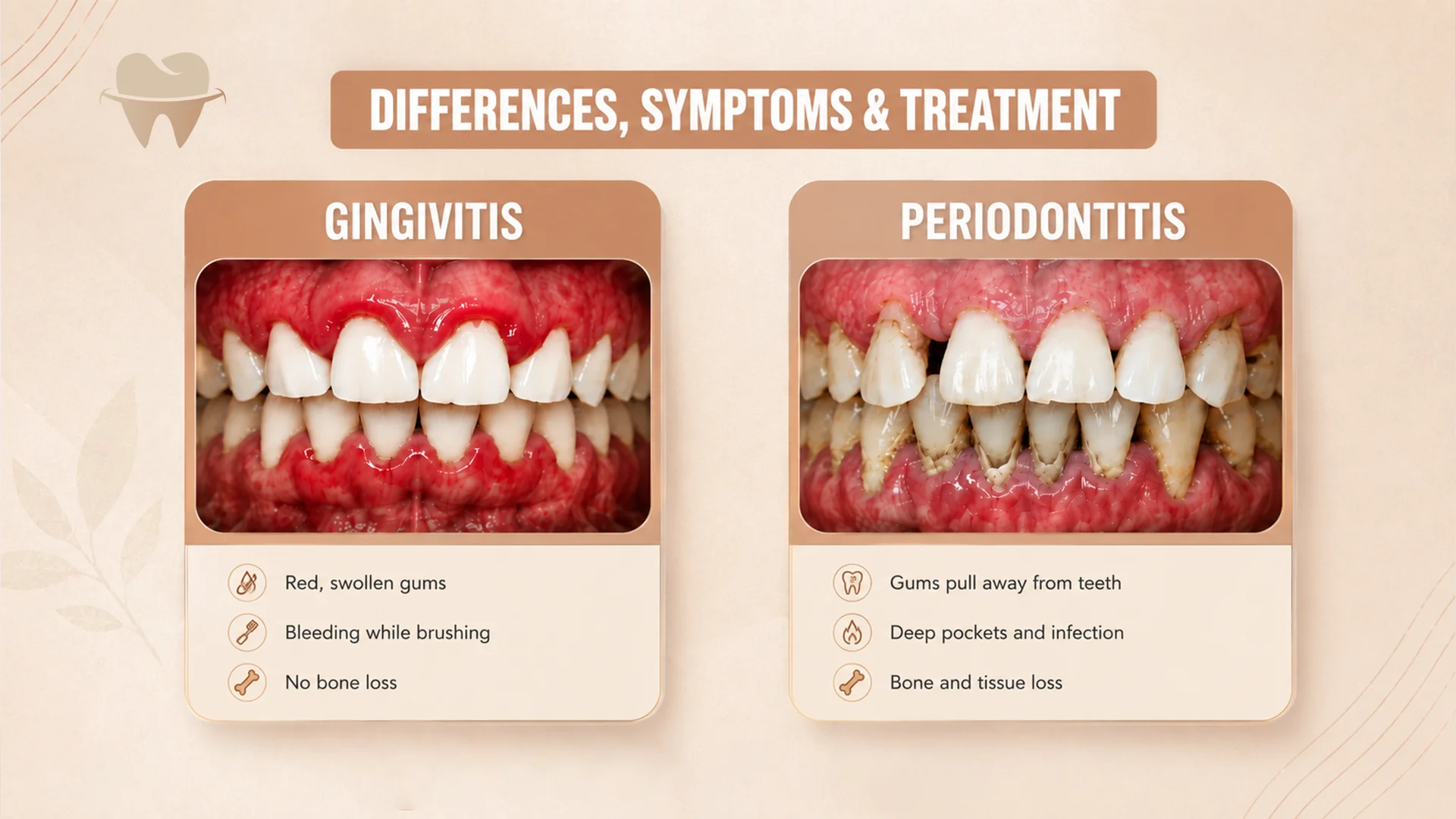
- Gingivitis affects only the gums and is reversible; periodontitis destroys bone and is irreversible.
- Bleeding gums when brushing is never normal—it is the earliest sign of gum disease and requires professional cleaning.
- Gingivitis treatment in Lahore is simple and affordable (PKR 3,000-6,000 for cleaning), but periodontitis treatment costs significantly more.
- Gum disease stages progress from gingivitis (reversible) to early, moderate, and advanced periodontitis (irreversible).
- Gingivitis is fully reversible; periodontitis can only be managed, not cured.
- Prevention through daily brushing, flossing, and regular dental visits is the most effective strategy.
You notice a trace of pink in the sink after brushing. Your gums feel slightly tender. Perhaps there is a persistent, bad taste in your mouth that mouthwash cannot fix. These small signs are easy to dismiss. But they are your body’s earliest warning that something is wrong beneath the surface.
Gum disease is one of the most common chronic conditions worldwide, affecting approximately 50% of adults over 30. In Pakistan, the prevalence is even higher due to low awareness, delayed dental visits, and widespread tobacco use. Yet most people cannot distinguish between its two main forms: gingivitis and periodontitis.
Understanding the difference between gingivitis and periodontitis is not just academic. The distinction determines whether your condition is reversible vs irreversible, whether you need a simple cleaning or complex surgery, and whether your teeth are at risk of falling out.
This comprehensive guide explains everything you need to know about gum disease stages, symptoms, treatment options, and how to protect your smile for life.
Quick Definitions
| Term | Definition |
| What is Gingivitis | The mildest, earliest, and reversible stage of gum disease affects only the gum tissue |
| What is Periodontitis | Advanced gum disease with irreversible damage to bone and ligaments supporting teeth |
| Gum Disease | A general term for infections of the gums, includes both gingivitis and periodontitis |
| Gum Disease vs Periodontitis | Gum disease is the broad term; periodontitis is the advanced, destructive stage |
What Is Gingivitis? The Early Warning Sign
Gingivitis is the mildest and most common form of gum disease. Gingivitis occurs when plaque (a sticky film of bacteria) accumulates along the gumline, causing inflammation of the gingiva (the gum tissue surrounding the teeth).
Key Features of Gingivitis
| Feature | Description |
| Tissue Affected | Only the gums (gingiva) |
| Bone Involvement | None—no bone loss occurs |
| Reversibility | Fully reversible with professional cleaning and improved home care |
| Symptoms | Red, swollen gums, bleeding during brushing or flossing |
| Pain | Usually painless—often goes unnoticed |
The hallmark of gingivitis is bleeding gums when brushing or flossing. Healthy gum tissue does not bleed. If you see blood, gingivitis is present.
Common Gingivitis Symptoms
- Swollen gums that appear puffy or enlarged
- Red gums instead of healthy pink
- Bleeding gums during brushing or flossing
- Bad breath that persists
- Tender gums when touched
- Shiny gum surface (loss of normal stippled texture)
What Causes Gingivitis?
Gingivitis is caused by bacterial plaque accumulating on teeth and along the gumline. Risk factors include:
- Poor oral hygiene
- Tobacco use
- Hormonal changes (pregnancy, menopause)
- Diabetes
- Certain medications
- Genetics
- Vitamin C deficiency
Hence, it is a progressive condition. Without intervention, gingivitis can advance to periodontitis within months to years, depending on individual risk factors.
What Is Periodontitis? The Destructive Stage
Periodontitis is the advanced, destructive stage of gum disease. When gingivitis goes untreated, bacteria spread below the gumline, triggering an inflammatory response that damages not only the gums but also the periodontal ligament and alveolar bone (the tissues that hold teeth in place).
Key Features of Periodontitis
| Feature | Description |
| Tissue Affected | Gums, periodontal ligament, and alveolar bone |
| Bone Involvement | Permanent bone loss occurs |
| Reversibility | Irreversible—cannot be reversed, only managed |
| Symptoms | Receding gums, loose teeth, pain when chewing |
| Pain | Often painless until advanced stages—”silent disease” |
Periodontitis Symptoms
As periodontitis develops, symptoms become more noticeable and severe:
- Receding gums that pull away from teeth (exposing roots)
- Loose teeth or teeth that have shifted position
- Pain when chewing
- Pus between gums and teeth (infection)
- Persistent bad breath
- Changes in bite (teeth no longer fit together properly)
- Deep pockets forming between teeth and gums
The Biological Shift: What Happens Below the Gumline
The critical difference between gingivitis and periodontitis is what happens beneath the surface. In gingivitis, inflammation is confined to the soft gum tissue. The periodontal ligament—the connective tissue that attaches teeth to bone—and the alveolar bone remain intact.
In periodontitis, bacteria penetrate below the gumline, creating deep periodontal pockets (spaces between the tooth and gum that exceed 4mm in depth). The body’s immune response, combined with bacterial toxins, destroys the periodontal ligament and dissolves the alveolar bone. This damage is permanent—the bone does not grow back.
Gum Disease vs Periodontitis: Understanding the Terminology
Many patients are confused by the terms. Gum disease vs periodontitis is not a distinction—periodontitis is a type of gum disease. The relationship is simple:
Gum Disease (General Term)
- Gingivitis (Early, Reversible)
- Periodontitis (Advanced, Irreversible)
All periodontitis is gum disease, but not all gum disease is periodontitis.
Gingivitis and Periodontitis Difference: A Side-by-Side Comparison
Understanding the gingivitis and periodontitis difference helps you recognize your condition and seek appropriate care.
| Feature | Gingivitis | Periodontitis |
| Stage | Early, mild | Advanced, severe |
| Tissues Affected | Gums only | Gums, ligament, bone |
| Bone Loss | None | Permanent bone loss |
| Reversible? | Yes—fully reversible | No—irreversible damage |
| Treatment | Professional cleaning, improved home care | Deep cleaning (scaling/root planing), antibiotics, surgery |
| Tooth Loss Risk | None | High if untreated |
| Symptoms | Bleeding, redness, swelling | All gingivitis symptoms PLUS receding gums, loose teeth, pain |
| Cost of Treatment | Low | High |
Gum Disease Stages: Understanding the Progression
Gum disease stages follow a predictable progression from mild to severe. Understanding these stages helps you recognize where you stand.
Stage 1: Gingivitis
It is the earliest and most common form. Gums become red, swollen, and bleed easily. There is no bone loss. This stage is reversible with professional cleaning and improved daily care.
Stage 2: Early Periodontitis
If gingivitis goes untreated, bacteria accumulate beneath the gums. Periodontal pockets begin to form as gums pull away from teeth. Early bone loss begins. Reversible vs irreversible—at this stage, damage is not yet extensive, but the condition is no longer fully reversible. Prompt treatment can stop progression.
Stage 3: Moderate Periodontitis
Bacteria erode the periodontal ligament and alveolar bone. Gum pockets deepen significantly. Symptoms like receding gums, pus, and bad breath become noticeable. Teeth may begin to shift or feel loose.
Stage 4: Advanced Periodontitis
This is the most destructive gum disease stage. Severe bone and tissue loss occurs. Deep pockets fill with bacteria and pus. Teeth become significantly loose and may fall out or require extraction. Extensive dental treatment is typically required to manage the condition.
Gum Disease Treatments: From Simple to Complex
Gum disease treatments depend entirely on the stage of the disease.
Gingivitis Treatment (Early Stage)
The treatment of gingivitis is straightforward and highly effective:
- Professional dental cleaning: Removes plaque and tartar from above the gumline
- Improved home care: Proper brushing and flossing techniques
- Antibacterial mouthwash: For short-term use as directed
- Follow-up: Re-evaluation at 4-6 weeks
Gingivitis treatment in Lahore is widely available and affordable, typically costing PKR 3,000-6,000 for a professional cleaning.
Periodontitis Treatment (Advanced Stage)
Periodontitis treatment requires more intensive intervention:
Non-Surgical Treatment:
- Scaling and root planing: A deep cleaning that removes plaque and tartar from below the gumline and smooths root surfaces
- Antibiotic therapy: Topical antibiotics placed in gum pockets or oral antibiotics for infection control
- Laser therapy: Some clinics offer laser treatment to remove infected tissue
Surgical Treatment (Severe Cases):
- Flap surgery: Gums are lifted to allow deep cleaning of roots and bone
- Bone grafting: Lost bone is replaced with graft material
- Gum grafting: Receding gums are covered with healthy tissue
- Guided tissue regeneration: Promotes regrowth of lost bone and tissue
Cost Considerations in Lahore
| Treatment | Approximate Cost (PKR) |
| Professional cleaning (gingivitis) | 3,000 – 6,000 |
| Scaling and root planing (per quadrant) | 3,000 – 6,000 |
| Full mouth deep cleaning | 12,000 – 24,000 |
| Gum grafting (per tooth) | 25,000 – 50,000 |
| Bone grafting (per site) | 30,000 – 60,000 |
| Surgical flap procedure (per quadrant) | 15,000 – 30,000 |
Reversible vs Irreversible: The Critical Distinction
The single most important concept in understanding gingivitis and periodontitis is reversible vs irreversible.
Reversible: Gingivitis
Gingivitis is completely reversible. Because there is no bone loss, removing the bacterial cause allows the gum tissue to heal fully. With professional cleaning and improved daily care:
- Bleeding gums stop within 3-7 days
- Swollen gums return to normal size within 7-14 days
- Red gums return to a healthy pink color
Irreversible: Periodontitis
Periodontitis is not reversible. Once bone and ligament are destroyed, they do not grow back. However, periodontitis can be managed and stabilized. Treatment aims to:
- Stop further bone loss
- Reduce pocket depths
- Eliminate infection
- Preserve remaining teeth
- Prevent tooth loss
The goal with periodontitis is not to cure but to control. With proper treatment and maintenance, teeth can be preserved for many years.
Prevention: Better Than Any Treatment
The best gum disease treatment is prevention.
Daily Prevention
- Brush twice daily for two minutes with a soft-bristled toothbrush
- Floss daily to remove plaque between teeth
- Use fluoride toothpaste
- Avoid tobacco completely
- Limit sugary foods and drinks
Professional Prevention
- Visit your dentist every six months for check-up and cleaning
- Get professional cleanings even without symptoms
- Discuss any bleeding gums immediately
Medical Prevention
- Control diabetes if you have it
- Maintain adequate vitamin C intake (citrus fruits, fresh vegetables)
- Stay hydrated to maintain saliva flow
- Manage stress levels
Conclusion
Understanding the difference between gingivitis and periodontitis is essential for protecting your smile. Gingivitis is the early warning sign that should never be ignored. It is your chance to reverse the disease before permanent damage occurs. While periodontitis is the consequence of ignoring that warning.
In Pakistan, where gum disease is widespread, the message is simple: Do not ignore pink in the sink. Do not assume bleeding gums are normal. Visit your dentist. Get a professional cleaning. If you have already progressed to periodontitis, do not despair—modern treatment can stop the disease and preserve your teeth for years to come.
The cost of prevention is far less than the cost of tooth loss. Protect your smile today.
Bleeding gums are not normal. At Teeth and Gums, we provide comprehensive gum disease treatment for all stages—from gingivitis to advanced periodontitis.
Schedule your gum health assessment today and stop gum disease before it stops your smile.
Frequently Asked Questions
What is the difference between gingivitis and periodontitis?
Gingivitis is early, reversible gum inflammation affecting only the gums. Periodontitis is advanced gum disease with irreversible damage to bone and ligaments supporting teeth.
What are the first signs of gingivitis?
The first signs are red, swollen gums and bleeding when brushing or flossing. Healthy gums do not bleed.
How quickly does gingivitis progress to periodontitis?
It varies. Without treatment, gingivitis can progress to periodontitis within months to years, depending on oral hygiene, smoking, genetics, and other risk factors.
Can gingivitis turn into periodontitis?
Yes. Untreated gingivitis progresses to periodontitis in many individuals, as bacteria spread below the gumline and destroy bone and connective tissue.
Is gingivitis reversible?
Yes. Gingivitis is fully reversible with professional dental cleaning and improved daily oral hygiene.
Is periodontitis curable?
No. Periodontitis is not curable because bone loss is permanent. However, it can be managed and stabilized with professional treatment to prevent further damage.
What does gingivitis look like?
Gingivitis appears as red, swollen, or puffy gums that bleed when brushed. The gum surface may look shiny instead of having its normal stippled (orange-peel) texture.
What are the stages of periodontitis?
The stages are: early periodontitis (initial bone loss), moderate periodontitis (significant bone loss, gum pockets), and advanced periodontitis (severe bone loss, loose teeth, risk of tooth loss).
Can I treat gingivitis at home?
Home care (brushing, flossing) prevents gingivitis but cannot remove existing tartar. Professional scaling is required to treat established gingivitis.
How do I know if I have periodontitis?
Signs include receding gums, loose teeth, pus between gums and teeth, persistent bad breath, deep gum pockets, and changes in your bite.
Does periodontitis cause tooth loss?
Yes. Periodontitis is the leading cause of tooth loss in adults, as it destroys the bone and ligaments that anchor teeth.
What is a periodontal pocket?
A periodontal pocket is a space that forms between the tooth and gum when gums pull away from teeth. Normal depth is 1-3mm; pockets over 4mm indicate periodontitis.
How is periodontitis treated?
Treatment includes scaling and root planing (deep cleaning), antibiotic therapy, and surgical procedures like flap surgery, bone grafting, or gum grafting for advanced cases.
Can periodontitis be reversed?
No. Periodontitis is not reversible, but progression can be stopped with professional treatment. Lost bone does not grow back.
Is periodontitis linked to heart disease?
Yes. Research shows links between periodontitis and cardiovascular disease, diabetes, respiratory infections, and adverse pregnancy outcomes due to systemic inflammation from oral bacteria.