
A small cavity today can become a painful emergency tomorrow.
Tooth pain has a way of interrupting everything — your meals, your sleep, and even your mood. Many people ignore early warning signs, such as mild sensitivity or small dark spots, thinking the problem will go away on its own.
But this dental issue persists and does not heal without treatment, ultimately leading to tooth decay. According to the World Health Organization, untreated dental caries in permanent teeth is the most common health condition globally. That means millions of people deal with cavities every day.
In Pakistan, changing diets, sugary drinks, and irregular dental visits have made the issue even more common. The good news is that tooth decay treatment in Pakistan is widely available and more affordable than many people think.
This comprehensive guide explains everything you need to know about tooth decay and the steps you can take to prevent or treat it in your teeth and gums.
Before discussing treatment, it is important to understand what tooth decay is.
What Is Tooth Decay?
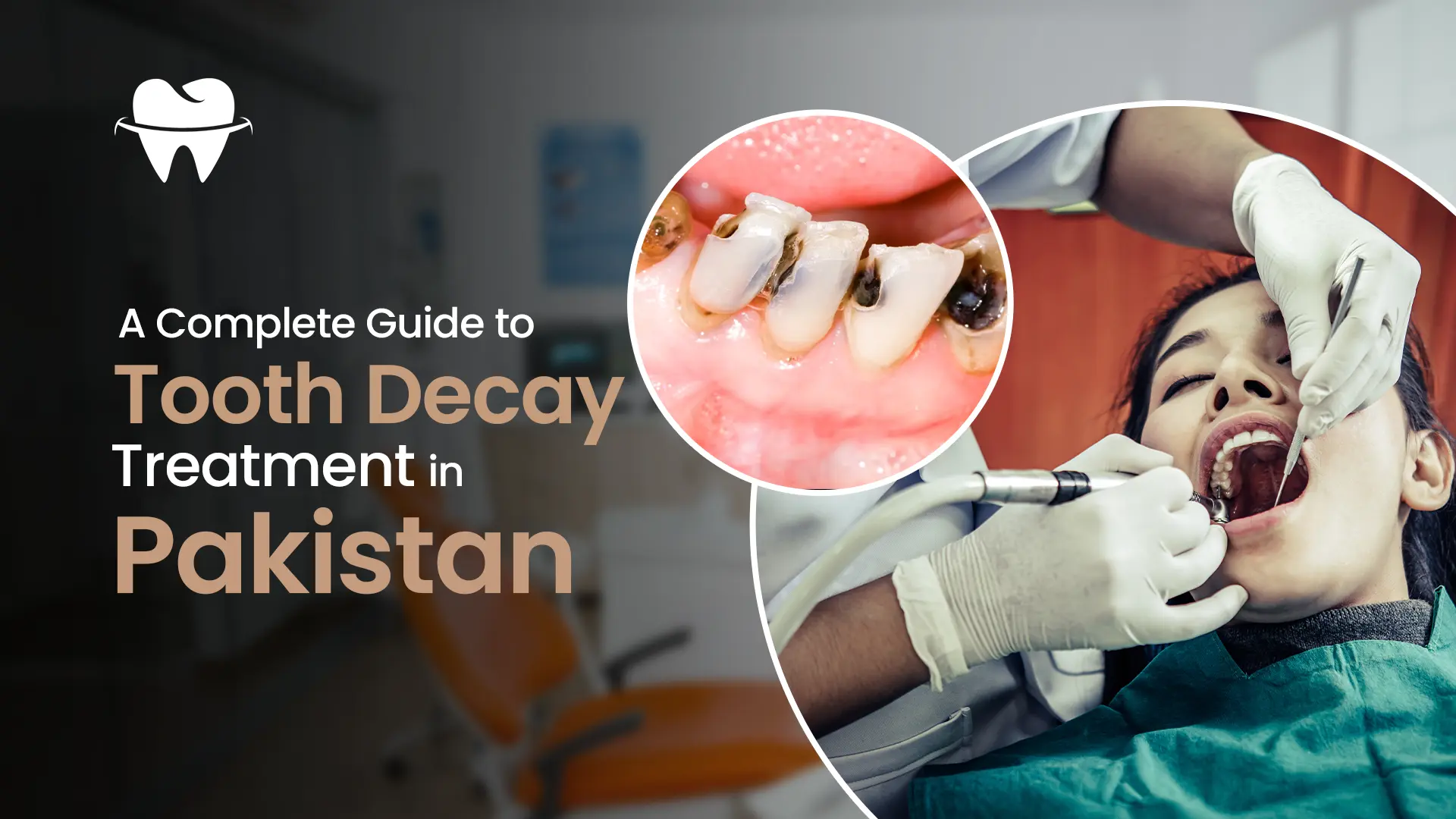
Tooth decay happens when bacteria in your mouth produce acids that slowly damage the outer layer of your tooth. This damage creates tiny holes called cavities. If left untreated, the decay can progress deeper into the tooth and reach the nerve, causing severe pain and infection.
Tooth decay does not appear suddenly. It develops step by step. Early stages may not hurt, which is why regular checkups are important.
Common Tooth Decay Causes
Understanding tooth decay causes can help you avoid future problems.
- One major cause is frequent consumption of sugary foods and drinks. Sweets, fizzy drinks, and packaged juices feed bacteria inside the mouth. Poor brushing habits also allow plaque to build up on teeth.
- Another common cause is skipping online or offline dental consultations. Many people only visit the dentist when pain becomes unbearable.
- Dry mouth, smoking, and poor nutrition can also increase the risk.
Early Signs You Should Not Ignore
Tooth decay usually begins silently. However, there are warning signs to watch for.
- Persistent toothache or pain while chewing or biting.
- Sensitivity to hot, cold, or sweet foods and drinks.
- Visible holes, pits, or dark stains on the tooth.
- Bad breath or unpleasant taste in the mouth.
- Gum swelling, bleeding, or pus around the affected tooth.
Tooth Decay Treatment Options in Pakistan
The right treatment depends on the extent of the decay. Dentists and dental practitioners in Pakistan offer several reliable and affordable options based on the severity of the cavity.
1. Dental Fillings for Small Cavities
If decay is detected early, the dentist removes the damaged portion and fills the cavity. Fillings are simple, minimally invasive, and usually completed on one visit.
In Pakistan, common tooth filling materials include tooth-colored composite and silver amalgam. Composite fillings are more popular today because they blend naturally with teeth and provide good durability.
2. Fluoride Treatment for Early Decay
If decay is in its very early stage (enamel damage only), fluoride treatment may help reverse it. Best dentists in Lahore apply professional fluoride gel or varnish to strengthen enamel and prevent further damage. This option is more common in children and teenagers.
3. Root Canal Treatment for Deep Decay
If decay reaches the pulp (inner part of the tooth), root canal treatment is required. The dentist removes infected tissue, cleans and disinfects the canal, then seals it to prevent reinfection.
Root canal treatment in Pakistan is widely available in both private and government clinics. It saves the natural tooth and eliminates severe pain.
4. Dental Crowns for Protection
After a root canal or when a tooth becomes structurally weak, a dental crown may be placed over it. A crown acts as a protective cap and restores strength and function.
Crowns in Pakistan are available in metal, porcelain-fused-to-metal, zirconia, and full ceramic options. The choice depends on budget and aesthetic preference.
5. Tooth Extraction for Severe Damage
If the tooth is extensively damaged and cannot be saved, extraction becomes necessary. Dentists may later recommend replacement options such as:
- Dental implants
- Dental bridges
- Partial dentures
Replacing missing teeth is important to prevent the shifting of nearby teeth and chewing problems.
6. Dental Implants for Permanent Replacement
Dental implants are a long-term solution for missing teeth. Though more expensive than other options, they offer durability and a natural appearance. Implants are increasingly available in major Pakistani cities.
Pain Management and Antibiotics
In cases of infection, dentists may prescribe antibiotics and toothache tablets before or after treatment to control swelling and discomfort.
Cost of Tooth Decay Treatment in Pakistan (2026)
Understanding treatment costs helps patients plan early and avoid bigger expenses later. In 2026, tooth decay treatment in Pakistan remains affordable compared to many other countries. Prices vary depending on the city, clinic standards, and complexity of the case.
Average Treatment Costs in Major Cities (2026)
Treatment Type | Lahore (PKR) | Karachi (PKR) | Islamabad (PKR) |
Simple Filling | 4,000 – 10,000 | 5,000 – 12,000 | 5,000 – 11,000 |
Root Canal (Front Tooth) | 10,000 – 22,000 | 12,000 – 25,000 | 12,000 – 24,000 |
Root Canal (Molar) | 22,000 – 40,000 | 25,000 – 45,000 | 24,000 – 42,000 |
Dental Crown | 20,000 – 70,000 | 25,000 – 80,000 | 25,000 – 75,000 |
Private clinics in major cities usually charge more due to advanced equipment and specialist care. Public hospitals offer lower rates but may have longer waiting times. Treating decay early with a filling is always far less expensive than needing a root canal and crown later.
Home Remedies for Tooth Decay
Many people search for home remedies to treat tooth decay. While certain habits can support oral health, it is important to understand that home remedies cannot cure cavities once they form. They may help slow bacterial growth, but they do not replace professional dental care.
What May Help
- Saltwater Rinse: Warm salt water can temporarily reduce bacteria and ease minor gum irritation.
- Fluoride Toothpaste: Brushing twice daily with fluoride strengthens enamel and protects against further decay.
- Flossing Daily: Removes plaque and food particles from areas your toothbrush cannot reach.
- Reducing Sugar Intake: Limiting sugary and acidic foods helps prevent enamel erosion.
- Clove Oil (Temporary Relief): May reduce pain slightly, but does not treat the cavity itself.
What Does Not Work
No natural remedy can reverse an established cavity. Once enamel is damaged and decay progresses, only professional treatment, such as fillings, can restore the tooth.
Remember: Home care supports prevention — it does not replace dental treatment.
Summing Up
Tooth decay is common, but it is also preventable and treatable. Understanding what tooth decay is and recognizing its causes helps you take early action. In Pakistan, modern dental clinics offer effective and affordable treatment options, ranging from simple fillings to root canal therapy.
Learning the effective treatment options for tooth decay helps protect your smile and saves future costs. After all, healthy teeth are not just about appearance – they support comfort, confidence, and overall well-being.
Frequently Asked Questions
What is tooth decay, and how does it start?
Tooth decay is damage caused by bacteria producing acid that weakens enamel. It begins with plaque buildup and gradually forms cavities if untreated.
How to remove toothdecay yourselfat home?
You cannot remove tooth decay yourself once a cavity forms. Only a dentist can safely remove damaged tissue and restore the tooth properly.
What are the common causes of tooth decay in Pakistan?
Common causes include sugary foods, poor brushing habits, irregular dental visits, smoking, and limited awareness about proper oral hygiene practices.
Are home remedies for tooth decay effective?
Home remedies may reduce bacteria and slow early damage, but they cannot cure cavities. Professional dental treatment is necessary for complete repair.
How to stop tooth decay from spreading?
Brush twice daily with fluoride toothpaste, floss regularly, reduce sugar intake, and visit a dentist early to prevent decay from worsening.

0 Comments