TL;DR
- Teeth gap filling options range from affordable composite bonding (PKR 7,000-15,000) to permanent solutions like orthodontics (PKR 60,000-300,000) and dental implants (PKR 80,000-200,000).
- Composite bonding for gaps is a quick, same-day solution for small gaps but has a shorter lifespan (5-10 years) and may require replacement.
- Orthodontic treatment (braces or clear aligners) is the most stable option for large gaps, with 95%+ long-term success when combined with permanent retainers.
- Veneers provide superior aesthetics and last 15-20 years, making them ideal for moderate gaps and patients seeking comprehensive smile enhancement.
- Teeth gap filling at home is dangerous and strongly discouraged by dental professionals. DIY attempts can cause permanent damage, decay, and tooth loss.
- Cost in Lahore varies: composite bonding PKR 7,000-15,000 per tooth, veneers PKR 25,000-50,000 per tooth, and full orthodontic treatment PKR 60,000-300,000.
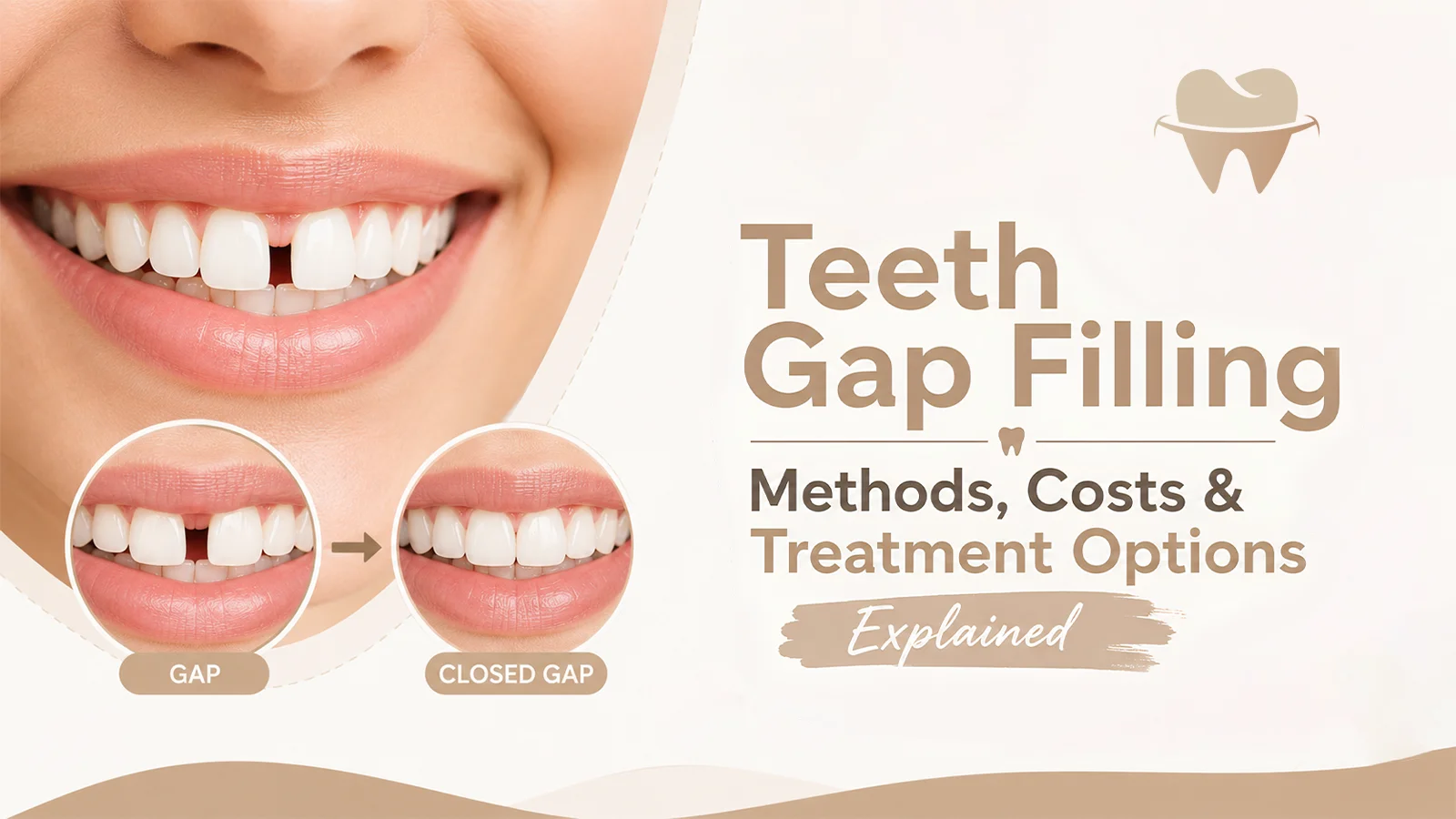
A gap between teeth, clinically known as diastema, is one of the most common dental concerns worldwide. Whether it is a small space between your front teeth or multiple gaps throughout your smile, this condition affects millions of people. For some, it is a unique feature they embrace. For others, it is a source of self-consciousness that impacts confidence in social and professional settings.
Teeth gap filling is not merely a cosmetic procedure. Gaps can trap food particles, making oral hygiene more difficult and increasing the risk of gum disease and decay. Larger gaps can affect your bite, speech, and chewing function.
Fortunately, modern dentistry offers a range of effective solutions for gap between teeth treatment, from quick, non-invasive procedures to comprehensive orthodontic care.
This comprehensive guide explores every tooth gap treatment option available, helping you understand the costs, benefits, and expected outcomes.
Whether you are considering composite bonding for gaps, exploring diastema treatment with veneers, or wondering about teeth gap filling at home, this article provides the information you need to make an informed decision.
What Causes Gaps Between Teeth?
Before exploring treatment options, it is important to understand why gaps develop in the first place. Several factors can contribute to teeth spacing, and identifying the root cause helps determine the most effective gap between teeth treatment.
Common Causes of Teeth Spacing
| Cause | Description |
| Tooth-Jaw Size Mismatch | When teeth are smaller than the available jaw space, gaps naturally occur. This is often genetic and can affect multiple areas of the mouth. |
| Oversized Labial Frenum | The band of tissue connecting the upper lip to the gums can grow too large or attach too low, physically preventing the front teeth from touching. This is responsible for 40-50% of midline gaps. |
| Missing or Undersized Teeth | Congenitally missing teeth or small lateral incisors create extra space, allowing adjacent teeth to drift apart. |
| Gum Disease (Periodontitis) | Bone loss from gum disease reduces tooth support, causing teeth to drift and creating new gaps or widening existing ones. |
| Childhood Habits | Thumb sucking, tongue thrusting, and prolonged pacifier use can push teeth forward, creating gaps. |
| Genetics | Some people inherit a natural predisposition to gaps due to their tooth size, jaw structure, or frenum attachment. |
Understanding these causes is essential because treatment must address not just the gap itself but also the underlying factor. For example, if an oversized frenum is preventing teeth from closing, diastema treatment with bonding alone may fail, requiring a frenectomy to achieve lasting results.
Teeth Gap Filling Methods: Professional Treatment Options
Several effective methods exist for filling gaps between teeth. The best choice depends on the size of the gap, its cause, your budget, and your timeline. Here is a comprehensive breakdown of all teeth spacing treatment options.
1. Composite Bonding for Gaps
Composite bonding for gaps is one of the most popular and accessible teeth gap filling methods. This procedure involves applying a tooth-colored composite resin directly to the edges of the teeth and sculpting it to close the gap. The resin is then hardened with a curing light and polished for a natural appearance.
Procedure time: 30 minutes to 1 hour per tooth; completed in a single appointment.
Best for: Small to moderate gaps (0.5-2.5 mm), especially when no frenum involvement exists.
Advantages
- Same-day results—walk in with a gap, walk out with a closed smile
- Minimally invasive—minimal to no tooth preparation required
- Affordable compared to veneers or orthodontics
- Reversible composite can be removed if needed
Disadvantages
- Shorter lifespan (5-10 years) compared to other options
- May stain over time, especially with coffee, tea, or tobacco
- Can chip or wear over time
- Relapse is possible if the frenum is contributing to the gap
Suitability: If a thick frenum is present, composite bonding alone has a 30-40% relapse rate within 5 years. Combining with a frenectomy dramatically improves stability.
2. Porcelain Veneers
Veneers are thin, custom-made shells of porcelain that cover the front surface of teeth. They are slightly wider than natural teeth, allowing them to conceal gaps while improving color, shape, and size simultaneously.
Procedure time: 2-3 visits over 2-3 weeks.
Best for: Moderate gaps (1.5-2.5 mm), patients seeking comprehensive smile enhancement, and those who want long-lasting results.
Advantages
- Superior aesthetics—porcelain mimics natural tooth translucency
- Stain-resistant
- Lasts 15-20 years with proper care
- Can address multiple cosmetic concerns simultaneously
Disadvantages
- Higher cost than bonding
- Requires irreversible tooth preparation (0.3-0.5 mm enamel removal)
- Once prepared, veneers are required permanently
3. Orthodontic Treatment (Braces and Clear Aligners)
Teeth gap filling through orthodontic treatment is the most stable and predictable option for larger gaps. Braces or clear aligners gradually move teeth into proper alignment, closing gaps and correcting bite issues simultaneously.
Procedure time: 2-4 months for simple gap closure; 12-24 months for comprehensive treatment.
Best for: Large gaps (2.5+ mm), multiple gaps, or cases with associated bite problems.
Braces: Traditional metal or ceramic braces apply controlled force to move teeth. They are highly effective for complex cases and achieving precise results.
Clear Aligners (Invisalign): Transparent plastic trays gently move teeth. They are suitable for mild to moderate gaps and offer discretion but require wearing aligners 20-22 hours daily.
Advantages
- Most stable long-term results with proper retention
- Addresses underlying alignment issues
- Teeth remain natural—no enamel removal required
Disadvantages
- Longer treatment time than cosmetic options
- Higher initial cost
- Requires retention (fixed or removable retainers) to prevent relapse
Post-orthodontic stability: Without retention, about 20-40% of orthodontically closed gaps will reopen over 5 years. Fixed bonded retainers maintain closure in over 95% of cases at 5-year follow-up.
4. Dental Implants
When a gap is caused by a missing tooth, dental implants provide a permanent solution. The implant acts as an artificial root, supporting a crown that looks and functions like a natural tooth.
Procedure time: 3-6 months including healing and crown placement.
Best for: Gaps caused by missing teeth.
Advantages
- Permanent solution
- Preserves jawbone density
- Natural appearance and function
- No impact on adjacent teeth
Disadvantages
- Most expensive option
- Requires surgery
- Longer treatment timeline
- Requires adequate bone density
5. Dental Bridges
Dental bridges consist of crowns on adjacent teeth with a false tooth in between, essentially filling the gap.
Procedure time: 2-3 weeks.
Best for: One or several missing teeth where adjacent teeth are strong enough to support the bridge.
Advantages
- More stable than removable options
- Quicker than implants
- Lower cost than implants
Disadvantages
- Requires recontouring adjacent teeth
- Less stable and shorter lifespan than implants
Teeth Gap Filling Cost in Pakistan
Teeth gap filling cost in Pakistan varies significantly based on the procedure, materials used, the dentist’s expertise, and clinic location. Here is what you can expect in Lahore and other major cities:
Estimated Teeth Gap Filling Cost (PKR)
| Treatment | Cost per Tooth/Unit (PKR) | Treatment Duration |
| Composite Bonding | 7,000 – 15,000 | Same day |
| Porcelain Veneers | 25,000 – 50,000 | 2-3 weeks |
| Orthodontics (Braces) | 60,000 – 150,000 (full treatment) | 12-24 months |
| Clear Aligners | 100,000 – 300,000 (full treatment) | 6-18 months |
| Dental Implant | 80,000 – 200,000 | 3-6 months |
| Dental Bridge | 40,000 – 80,000 | 2-3 weeks |
Teeth gap filling cost in Lahore may range from PKR 7,000 to 15,000 per tooth for composite bonding, while veneers typically cost PKR 25,000 to 50,000 per tooth. Orthodontic treatment is more expensive upfront but provides permanent results with proper retention.
Factors Affecting Cost
- Type of treatment chosen
- Dentist’s experience and qualifications
- Clinic location and technology
- Materials used (composite vs. porcelain vs. implant materials)
- Complexity of the case and any additional procedures required
Teeth Gap Filling at Home: What You Need to Know
Teeth gap filling at home is a topic that frequently appears online, with DIY kits and social media hacks promising quick, affordable results. This is strongly discouraged by dental professionals.
Common DIY Methods and Their Risks
| DIY Method | Risks |
| Gap Bands (Rubber Bands) | Can slide into gums, cause bone loss, damage roots, and even lead to tooth loss |
| DIY Moldable Teeth Putty | Temporary only; does not bond permanently; poses choking hazard; can trap bacteria and cause decay |
| Dental Cement | Prevents flossing, leading to food trapping, decay, and gum disease |
| Filing Teeth with Nail Files | Enamel does not grow back; permanent damage and sensitivity |
Dentists have reported a 30-40% relapse rate within 5 years even with professional composite bonding when the frenum is contributing and DIY attempts have far worse outcomes. The risks far outweigh any potential savings.
Professional warning: “When you file your nails they’re going to grow back, but when you file your teeth, they don’t grow back”. Similarly, “You’re also gluing your two teeth together, which means you can’t floss, which means food and bacteria will get stuck up there”.
Comparing Treatment Options
| Feature | Composite Bonding | Porcelain Veneers | Orthodontics (Braces/Aligners) | Dental Implants |
| Best For | Small gaps (0.5-2.5 mm) | Moderate gaps (1.5-2.5 mm) | Large gaps (2.5+ mm) | Missing teeth gaps |
| Procedure Time | 1 hour/same day | 2-3 weeks | 2-24 months | 3-6 months |
| Lifespan | 5-10 years | 15-20 years | Permanent (with retention) | 15+ years |
| Tooth Preparation | Minimal to none | 0.3-0.5 mm removal | None (teeth remain natural) | Surgical implant placement |
| Cost Range (PKR) | 7,000-15,000 | 25,000-50,000 | 60,000-300,000 | 80,000-200,000 |
| Can It Be Reversed? | Yes | No (preparation is permanent) | Yes (treatment is reversible) | Yes (implant can be removed) |
| Stability with Frenum | 30-40% relapse without frenectomy | Good stability | Best stability (95%+ with retainer) | N/A |
How to Choose the Right Treatment
Choosing the right teeth gap filling method depends on several personal factors:
1. Size of the Gap
- Small gaps (0.5-1.5 mm): Composite bonding is an excellent option.
- Moderate gaps (1.5-2.5 mm): Frenectomy combined with bonding or veneers.
- Large gaps (2.5+ mm): Orthodontic treatment provides the most stable results.
2. Underlying Cause
- Frenum involvement: A frenectomy may be required for lasting results.
- Missing teeth: Implants or bridges are the appropriate solution.
- Gum disease: Periodontal treatment must precede cosmetic procedures.
3. Budget
- Low budget: Composite bonding offers excellent results at an affordable price.
- Moderate budget: Porcelain veneers provide better durability and aesthetics.
- Higher budget: Orthodontics or implants offer the longest-lasting solutions.
4. Timeline
- Immediate results needed: Composite bonding or veneers provide quick results.
- Patience and long-term stability: Orthodontics or implants require more time but offer permanent solutions.
5. Aesthetic Expectations
- Minimal change: Bonding can close gaps without altering natural teeth.
- Comprehensive transformation: Porcelain veneers can address color, shape, and size.
- Natural tooth preservation: Orthodontics moves existing teeth without any removal of enamel.
Post-Treatment Care and Maintenance
Regardless of the teeth gap filling method you choose, maintenance is essential for long-term success.
For Composite Bonding
- Avoid stain-causing foods and drinks for 48 hours after treatment
- Use a soft-bristled toothbrush
- Avoid chewing hard foods directly on the bonded area
- Expect replacement every 5-10 years
For Veneers
- Good oral hygiene and regular check-ups
- Use non-abrasive toothpaste
- Wear a nightguard if you grind your teeth
For Orthodontics
- Wear your retainer as prescribed; this is non-negotiable. Without retention, about 20-40% of gaps will reopen over 5 years.
- Fixed bonded retainers are recommended for indefinite use, especially when the frenum was a factor.
For Dental Implants
- Regular brushing and flossing around the implant
- Regular dental check-ups for professional cleaning
- Avoid chewing hard objects on the implant crown
Conclusion
A gap between teeth is not a permanent feature, modern dentistry offers safe, effective, and affordable solutions for every situation. Whether you choose quick composite bonding for gaps on the same day, invest in porcelain veneers for a complete smile transformation, or opt for the long-term stability of orthodontics, the key is seeking professional care.
Do not be tempted by DIY hacks promising teeth gap filling at home. These can lead to irreversible enamel damage, gum disease, and even tooth loss. A professional diastema treatment plan tailored to your specific needs will deliver the smile you want safely and effectively.
Ready to close the gap in your smile?
At Teeth and Gums, we offer comprehensive teeth gap filling solutions, from composite bonding and porcelain veneers to orthodontics and implants. Our experienced dental team will assess your unique case and recommend the best treatment for your smile goals and budget.
Book your consultation at Teeth and Gums today.
Frequently Asked Questions
How can I fill the gap between my teeth?
You can fill a gap between teeth through professional treatments like composite bonding, porcelain veneers, orthodontic treatment (braces or clear aligners), or dental implants and bridges for gaps caused by missing teeth.
What is the best treatment for gaps between teeth?
The best treatment depends on gap size and cause. Small gaps (0.5-2.5 mm) respond well to composite bonding or veneers. Larger gaps (2.5+ mm) are best treated with orthodontics. Gaps from missing teeth require implants or bridges.
Can gaps between teeth be closed without braces?
Yes. Composite bonding and porcelain veneers can close gaps without braces. Clear aligners also offer a discreet alternative to traditional braces for mild to moderate gaps.
Can composite bonding close a front-tooth gap?
Yes. Composite bonding is an excellent option for closing gaps between front teeth, especially small to moderate spaces (0.5-2.5 mm). It provides same-day results with minimal tooth preparation.
How long does dental bonding for a tooth gap last?
Dental bonding for a tooth gap typically lasts 5-10 years with proper care. It may stain over time or chip, requiring repair or replacement.
Is teeth gap filling painful?
Most teeth gap filling procedures are not painful. Composite bonding requires no anesthesia in most cases. Veneers may involve minor discomfort during tooth preparation. Orthodontic treatment can cause temporary soreness after adjustments.
Is bonding or veneers better for a tooth gap?
Bonding is better for small gaps, lower budgets, and patients who want reversible treatment. Veneers are better for larger gaps, superior aesthetics, and longer-lasting results (15-20 years). Veneers require irreversible enamel removal.
How long does it take to close a gap between teeth?
Composite bonding takes 30-60 minutes per tooth in a single appointment. Veneers require 2-3 weeks. Orthodontic treatment for simple gaps takes 2-4 months; comprehensive cases take 12-24 months.
Can a tooth gap reopen after treatment?
Yes. Without proper retention, gaps can reopen, especially if an oversized frenum is present or if orthodontic retainers are not worn. Fixed bonded retainers maintain closure in over 95% of cases at 5-year follow-up.
What causes gaps between teeth?
Gaps are caused by tooth-jaw size mismatch, oversized labial frenum, missing or undersized teeth, gum disease, childhood habits (thumb sucking, tongue thrusting), and genetics.
Do all gaps between teeth need treatment?
No. Small gaps that do not affect oral hygiene, speech, or chewing do not require treatment. However, gaps that trap food, cause gum disease, or affect confidence may benefit from professional intervention.